
How to Check for Melanoma at Home
Check for melanoma at home with a monthly skin self-exam, the ABCDE signs and the ugly duckling sign. Learn what to look for and when to see a doctor.
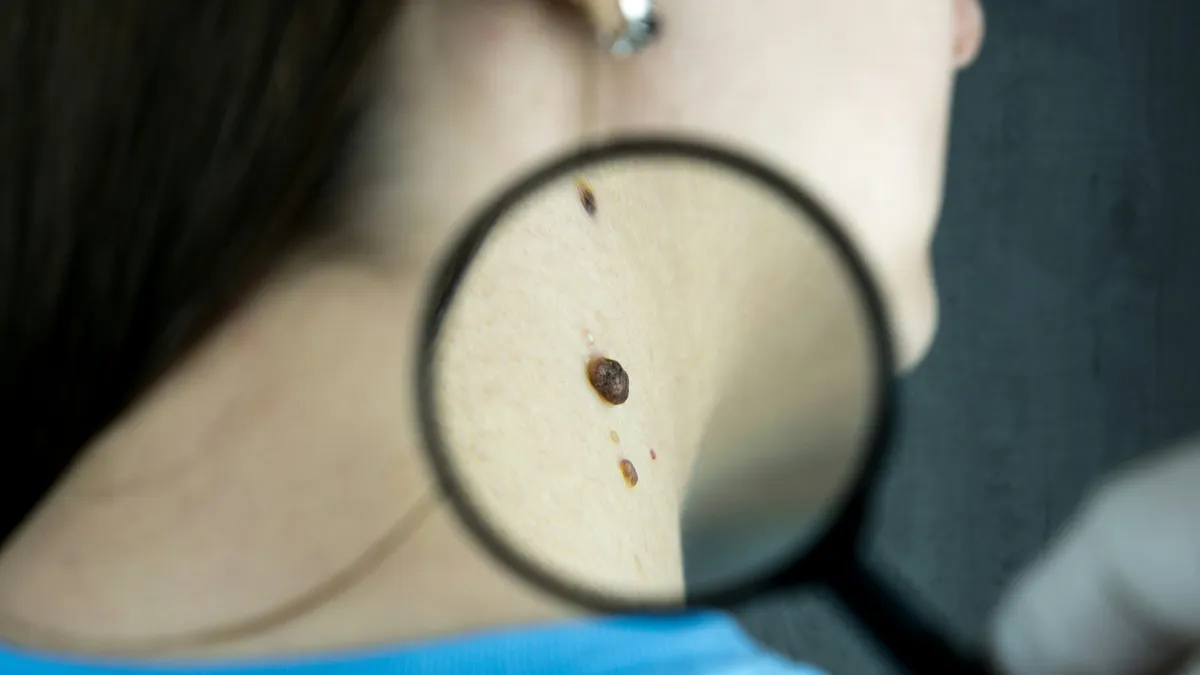
The way to check for melanoma at home is a monthly skin self-exam that looks for new spots and for moles that change, using the ABCDE signs and the ugly duckling sign described by the American Cancer Society and the American Academy of Dermatology.
A home check cannot diagnose melanoma. Any spot that looks new, changing or unusual needs a clinician, because a skin biopsy is part of how doctors confirm skin cancer.
In this article
- How do you check for melanoma at home?
- What are the ABCDE signs of melanoma?
- What is the ugly duckling sign?
- What other changes in the skin need checking?
- Where does melanoma show up on darker skin?
- Does a skin self-exam replace a dermatologist?
- How can you track a spot at home?
- Who should check their skin more carefully?
- What if finding a spot makes you anxious?
- Common questions about melanoma self-checks
How do you check for melanoma at home?
You check for melanoma at home by examining every area of your skin once a month, ideally after a bath or shower, according to Cleveland Clinic. The American Cancer Society describes four steps.
- Face a full-length mirror and check the face, ears, neck, chest and belly, lifting skin folds under the arms, breasts and belly.
- Check both sides of the arms, then the backs and palms of the hands, including between the fingers.
- Sit down to check the front of the thighs, the shins, the tops of the feet, the toes and the toenails.
- Use a hand mirror for the soles, calves, backs of the thighs, buttocks, genital area, back, back of the neck and ears, then part the hair to see the scalp.
A partner or friend can look at the back and scalp. The first exam is the baseline, because you need to learn the pattern of your moles, freckles and marks before changes can stand out.
What are the ABCDE signs of melanoma?
The ABCDE signs of melanoma are five features that separate a suspicious spot from an ordinary mole. The American Academy of Dermatology and Cleveland Clinic describe them the same way.
| Letter | Sign | What to look for |
|---|---|---|
| A | Asymmetry | The two halves of the spot do not match |
| B | Border | Edges are irregular, scalloped or blurry |
| C | Color | Shades vary, including tan, brown, black, white, red or blue |
| D | Diameter | Usually larger than about 6 mm, the size of a pencil eraser, though smaller melanomas exist |
| E | Evolving | The spot changes in size, shape, color or height, or starts to itch or scab |
The NHS adds that melanoma may become swollen, sore, bleeding, itchy or crusty, and that early melanomas can be smaller than 6 mm. The Evolving sign carries the most weight, because change over time is hard to see without a record.
What is the ugly duckling sign?
The ugly duckling sign is a spot that looks different from all the other spots on your skin. The American Cancer Society lists it among the warning signs, and Cleveland Clinic gives examples such as a mole that has grown, scabbed or become more raised than before.
The ugly duckling sign helps when a person has many moles. One mole that does not match its neighbors deserves a closer look even when it passes the ABCDE checklist.
What other changes in the skin need checking?
Other skin changes that need checking include sores that do not heal and new growths. The American Cancer Society lists these warning signs.
- A new, growing or changing spot or bump.
- A sore that itches, bleeds or does not heal after a few weeks.
- A rough or scaly red patch that may crust or bleed.
- A wart-like growth.
Not every one of these is melanoma. Some point to other skin cancers, and a clinician makes that call.
Where does melanoma show up on darker skin?
Melanoma on darker skin often appears on the palms, soles and nails, areas that get little sun. The American Academy of Dermatology states that in people of African descent melanoma tends to develop on the palms, soles, or under and around the nails.
Memorial Sloan Kettering adds that acral melanoma on the palms and soles usually looks like a dark spot but can lack pigment and look red or pink. Under a nail, it can be mistaken for a fungal infection or blood under the nail.
The same source states that melanoma in people of color is often diagnosed at a late stage, and that a common misconception is a low risk for these groups. Reading the Memorial Sloan Kettering page on melanoma in dark skin gives the full detail.
What does melanoma under a nail look like?
Melanoma under a nail can look like a dark brown or black vertical line, according to the American Academy of Dermatology. A band of darker skin around the nail is another possible sign.
The NHS advises seeing a GP about a dark area under a nail that was not caused by an injury. Nail polish hides these changes, so the exam is done with bare nails.
Does a skin self-exam replace a dermatologist?
No, a skin self-exam does not replace a dermatologist or other clinician. A self-exam finds spots to show a professional, and the professional decides what each spot is.
The American Cancer Society says that at a visit the provider asks about symptoms and sun or tanning history, examines and measures the spot, and may refer to a dermatologist or perform a skin biopsy.
The self-exam also leaves several questions open.
- A self-exam cannot tell a harmless mole from melanoma by sight alone.
- A self-exam does not show spots in places you cannot see, such as the middle of the back.
- A self-exam does not measure your personal risk.
What does the USPSTF say about skin cancer screening?
The USPSTF skin cancer screening position is an I statement, meaning the evidence is insufficient to weigh the benefits and harms of a clinician's visual skin exam in adults without symptoms. The task force published the update in April 2023 and it matches its 2016 position.
The recommendation covers adults with no signs of skin cancer. The statement does not cover people with a personal or family history of skin cancer or people with changing or irregular moles, who should see a clinician.
How can you track a spot at home?
You can track a spot at home by photographing it with a ruler beside it and keeping dated notes. Cleveland Clinic suggests recording where spots are and taking photos to monitor changes.
Dated close-up photos can show whether an area is changing while you wait for an appointment. These photos support a visit and never replace it.
The next table shows how to turn what you see into an action.
| What you notice | Suggested action |
|---|---|
| A spot that matches your other moles and has not changed | Note it in the log and keep checking monthly |
| A spot that is new, growing or different from the rest | Photograph it and book a clinician visit |
| A mole that itches, bleeds or crusts | Contact a clinician promptly |
| A dark line or dark area under a nail without an injury | Book a visit and mention it by name |
| A spot you cannot get seen soon | Take dated close-up photos and call the office |
Who should check their skin more carefully?
People who should check their skin more carefully include those with a past skin cancer. The American Cancer Society also names many moles or spots, a strong family history and a weakened immune system as reasons to ask a healthcare team how often to check.
Readers who want to understand their own skin better can start with how to know your skin type or the skin type quiz. Skin type in that sense is about oil and hydration, not cancer risk.
What if finding a spot makes you anxious?
Finding a spot often makes people anxious, and the useful response is to book a visit rather than search the web for answers. Forum advice cannot judge a mole from a description or a photo.
Worry about a spot is common, and the guide to anxiety signs and how to get help covers support options.
Common questions about melanoma self-checks
How often should you check for melanoma at home?
Most sources suggest a skin self-exam about once a month. People at higher risk should ask a healthcare team how often to check.
Can you see melanoma on the soles of your feet?
Yes, melanoma can appear on the soles and palms. A hand mirror lets you check the bottoms of the feet.
Is a mole bigger than a pencil eraser always melanoma?
No, size alone does not decide it. The 6 mm figure is a guide, and melanomas can be smaller, so color, border and change matter as much.
Action checklist
Monthly melanoma self-check
Use these steps to check your skin once a month.
0 of 8 done