Why Is My Blood Sugar High in the Morning? 3 Causes
Blood sugar is high in the morning due to the dawn phenomenon, waning insulin or the Somogyi effect. See normal fasting figures and how to find the cause.
Blood sugar is high in the morning for 3 main reasons: the dawn phenomenon, waning insulin or medication, and the Somogyi effect. The dawn phenomenon is the most common cause: early-morning hormones signal the liver to release glucose between about 3 and 8 a.m. Checks at bedtime, around 2 to 3 a.m. and on waking show which cause fits.
Action checklist
Actions for High Morning Blood Sugar
Use these steps from the article to find the cause of high morning blood sugar and to know when to get help.
0 of 10 done
In this article
- Why is my blood sugar high in the morning?
- What is a normal blood sugar in the morning?
- How to find the cause of high morning blood sugar
- What helps high morning blood sugar?
- High morning blood sugar in specific situations
- When to call a doctor about high morning blood sugar
- High morning blood sugar: common questions
Why is my blood sugar high in the morning?
Blood sugar is high in the morning because the body releases glucose overnight and too little working insulin is available to match it. The American Diabetes Association (ADA) names 3 causes of high morning blood sugar in people with diabetes.
The table below compares the 3 causes of high morning blood sugar by what happens, how common each cause is and what the overnight readings look like.
| Cause | What happens | How common | Overnight pattern |
|---|---|---|---|
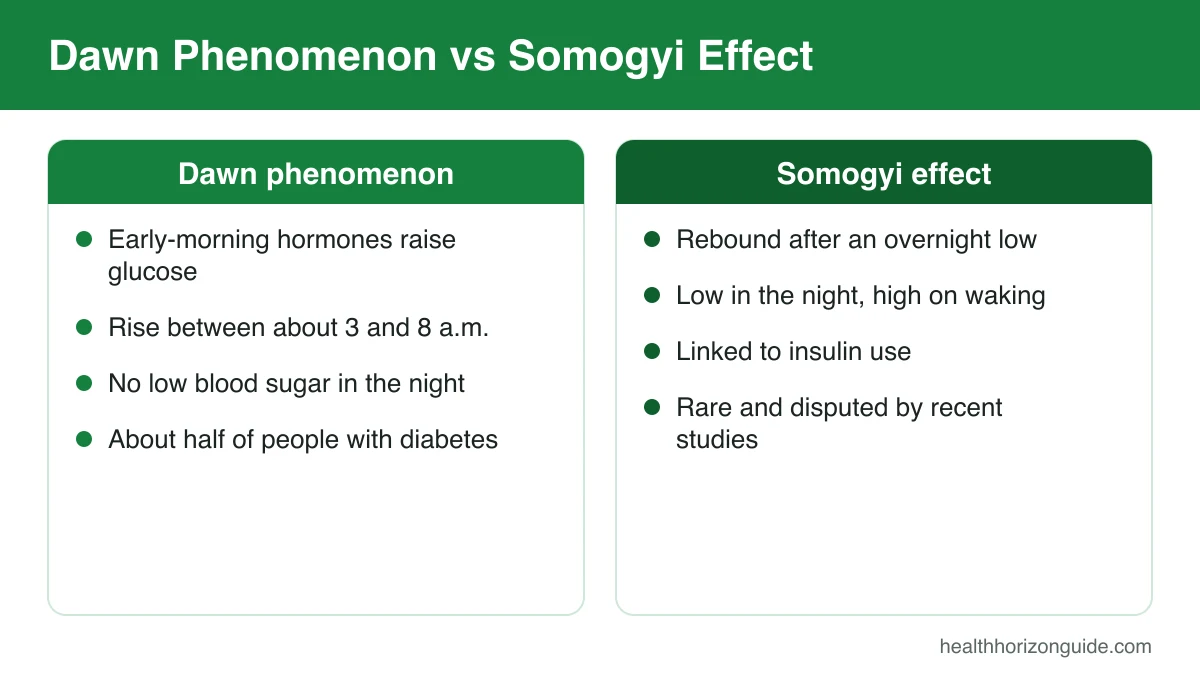
| Dawn phenomenon | Hormones such as cortisol and growth hormone signal the liver to make more glucose between about 3 and 8 a.m. | Most common cause. About half of people with type 1 or type 2 diabetes experience the dawn phenomenon. | No low in the night, then a rise in the early morning hours |
| Waning insulin or medication | Insulin levels fall too low overnight, for example when a long-acting dose wears off before morning | Not stated by the sources we reviewed | Glucose climbs overnight as the insulin level falls |
| Somogyi effect | A low blood sugar in the night makes the body release glucose, and the person wakes with a high reading | Rare, and disputed by recent research | A low reading in the night, then a high reading on waking |
What is the dawn phenomenon?
The dawn phenomenon is an early-morning rise in blood sugar caused by hormones the body releases naturally before waking. Cortisol and growth hormone signal the liver to release more glucose between roughly 3 a.m. and 8 a.m., according to Cleveland Clinic.
A person with diabetes makes too little insulin, or responds too weakly to insulin, to offset that glucose. Cleveland Clinic reports that the dawn phenomenon affects over 50% of people with type 1 or type 2 diabetes.
What is the Somogyi effect?
The Somogyi effect is a rebound to high morning blood sugar that follows a low blood sugar episode during the night. The theory states that an overnight low triggers hormones that push glucose up by morning. Cleveland Clinic states that the Somogyi effect applies to people with diabetes who take insulin.
The evidence for the Somogyi effect is disputed. Recent studies with continuous glucose monitors have questioned whether the Somogyi effect causes high morning blood sugar at all, and the ADA describes the effect as rare.
What is waning insulin?
Waning insulin is a drop in insulin levels overnight that lets morning blood sugar climb. The ADA links waning insulin to insulin pump settings that deliver too little background insulin overnight, or to a long-acting insulin dose that is too low.
Any change to insulin or other diabetes medication belongs with the prescribing care team, including changes aimed at high morning blood sugar.
What is a normal blood sugar in the morning?
A normal blood sugar in the morning is a fasting reading below 100 mg/dL, according to the ADA diagnosis criteria. Fasting means nothing to eat or drink except water for at least 8 hours before the test. The 3 fasting plasma glucose ranges that the ADA uses are listed below.
- Normal: less than 100 mg/dL.
- Prediabetes: 100 to 125 mg/dL.
- Diabetes: 126 mg/dL or higher.
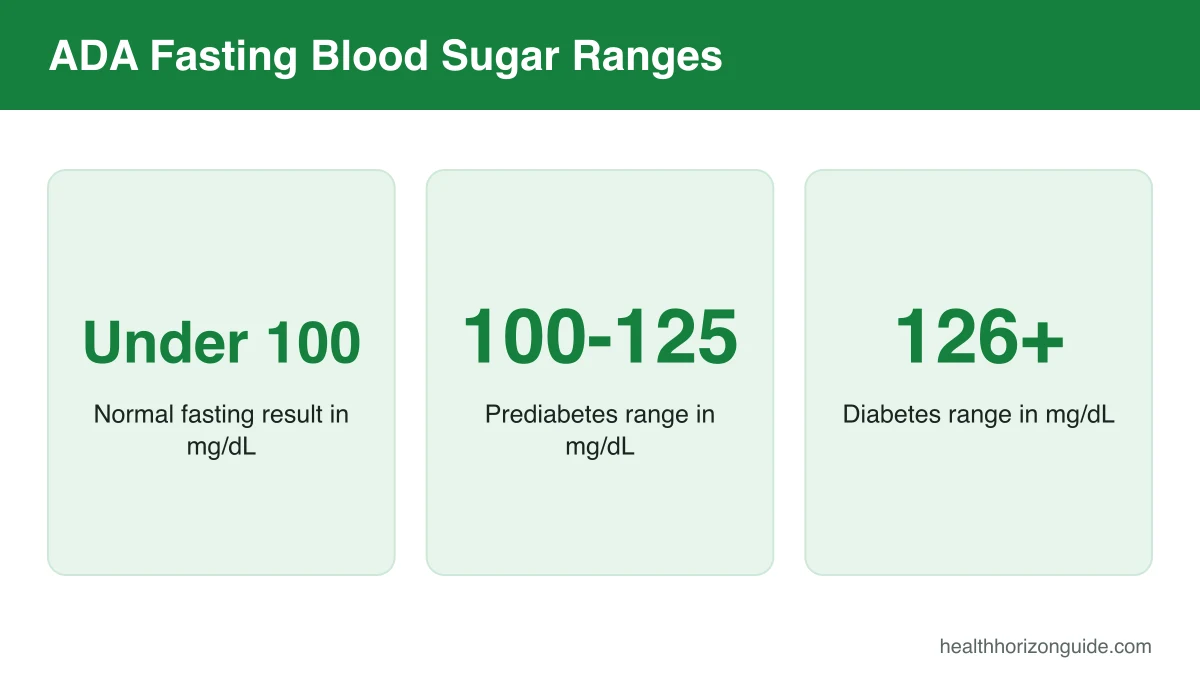
These ranges apply to a fasting laboratory test, and a diabetes diagnosis usually needs a repeat test on a second day. People who already have diabetes follow a different goal for morning blood sugar.
The ADA sets a target of 80 to 130 mg/dL before a meal for most nonpregnant adults with diabetes, and individual targets vary. Readers who use mmol/L can convert a morning blood sugar reading with our blood sugar converter.
How to find the cause of high morning blood sugar
The cause of high morning blood sugar is found by checking glucose at bedtime, in the middle of the night and on waking. The ADA recommends these 3 checks for people with frequent morning highs.
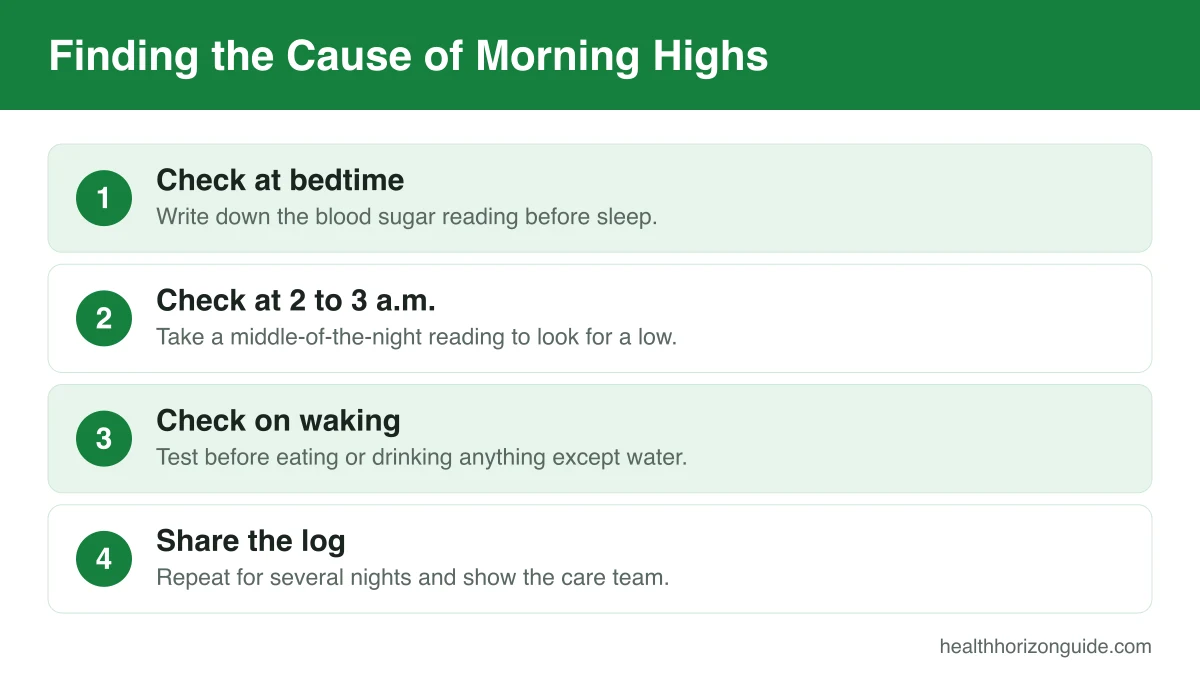
A fingerstick between 2 and 3 a.m. is the usual middle-of-the-night check when no continuous glucose monitor is available, according to StatPearls. The 4 steps for tracking high morning blood sugar are listed below.
- Check blood sugar at bedtime and write the reading down.
- Check blood sugar again between 2 and 3 a.m.
- Check blood sugar on waking, with nothing to eat or drink except water beforehand.
- Repeat the checks for several nights and take the log to a doctor or diabetes care team.
The 4 overnight patterns of high morning blood sugar that the ADA and Cleveland Clinic describe are listed below.
- High at bedtime: food or medication is the likely cause, such as a large dinner or a bedtime snack.
- In range at bedtime, then high by morning: too little medication overnight is the likely cause.
- High only in the early morning hours: the dawn phenomenon is the likely cause.
- Low in the night, then high on waking: the pattern suggests the Somogyi effect. Cleveland Clinic defines low blood sugar as below 70 mg/dL.
A continuous glucose monitor collects the same overnight data without a broken night of sleep. The ADA suggests asking a doctor about a temporary loaner device when high morning blood sugar keeps returning.
What helps high morning blood sugar?
High morning blood sugar improves with changes matched to the cause and agreed with a doctor or diabetes care team. The 5 measures that the ADA and Cleveland Clinic describe are listed below.
- Walk or work out after dinner, which the ADA says can help keep glucose down overnight.
- Avoid exercise right before bed, since late exercise carries a risk of overnight lows.
- Exercise in the morning, which the ADA says can help burn off extra glucose from the dawn phenomenon.
- Eat a dinner with a higher ratio of protein to carbohydrate, as Cleveland Clinic reports providers may suggest.
- Ask the care team to review dinner size, bedtime snacks and medication timing when the bedtime reading is high.
Cleveland Clinic states that the dawn phenomenon cannot be prevented, since the hormone release is a natural body process. Finding the right plan for high morning blood sugar can take trial and error, according to the ADA.
Our article on whether drinking a lot of water can lower your blood sugar covers water intake and morning blood sugar.
High morning blood sugar in specific situations
High morning blood sugar has a different meaning in people without diabetes, in pregnancy and in people whose daytime readings are normal. The 4 situations below build on the 3 causes described above.
Why is my blood sugar high in the morning but normal all day?
Blood sugar that is high in the morning but normal all day fits the dawn phenomenon, since the hormone surge happens only in the early morning hours. The ADA states that occasional morning highs have little effect on A1C, while consistent morning highs can raise A1C.
Why is my blood sugar high in the morning when I have not eaten anything?
Blood sugar is high in the morning after fasting because the liver releases glucose overnight without any food. Cortisol and growth hormone signal the liver to do so, which explains a waking reading that is higher than the bedtime reading.
High morning blood sugar without diabetes
High morning blood sugar is not expected in people without diabetes. The pancreas of a person without diabetes releases enough insulin to offset the early-morning rise in glucose, according to Cleveland Clinic.
Fasting results of 100 to 125 mg/dL on a laboratory test fall in the ADA prediabetes range and deserve a conversation with a doctor. Our guides explain whether prediabetes can be reversed and list the 10 warning signs of diabetes.
High morning blood sugar during pregnancy
High morning blood sugar during pregnancy is judged against tighter targets than outside pregnancy. The National Institute of Diabetes and Digestive and Kidney Diseases lists 70 to 95 mg/dL as the target most often recommended for fasting, before meals, at bedtime and overnight.
Targets in pregnancy are individual. Pregnant readers whose fasting readings sit above the target set by their health care team should report those readings to that team.
When to call a doctor about high morning blood sugar
A doctor or diabetes care provider should be contacted when morning blood sugar is consistently high or low blood sugar happens often overnight, according to Cleveland Clinic. Signs of a low during the night include restless sleep, nightmares, sweating through pajamas or sheets, and tiredness or confusion on waking.
High morning blood sugar with signs of diabetic ketoacidosis (DKA) needs emergency care. The Centers for Disease Control and Prevention (CDC) advises calling 911 or going to an emergency room in the 5 situations listed below.
- Blood sugar stays at 300 mg/dL or above.
- Breath smells fruity.
- Vomiting prevents the person from keeping food or drinks down.
- Breathing is difficult.
- Several DKA signs appear together, such as great thirst, frequent urination, stomach pain and extreme tiredness.
High morning blood sugar: common questions
Does the dawn phenomenon happen in type 2 diabetes?
Yes, the dawn phenomenon happens in both type 1 and type 2 diabetes. The ADA states that about half of people with either type experience high morning blood sugar from the dawn phenomenon.
Does a bedtime snack cause high morning blood sugar?
Yes, a bedtime snack can keep blood sugar high overnight and into the morning. The ADA lists a large dinner and a bedtime snack among the likely causes when the bedtime reading is already high.
Is high morning blood sugar harmful?
The main risk of untreated high morning blood sugar is a rise in A1C over time, according to Cleveland Clinic. A persistently higher A1C increases the risk of eye, kidney, nerve and heart complications.