Can Prediabetes Be Reversed? What the Evidence Shows
Prediabetes can often be reversed with weight loss, diet and exercise. See the A1C ranges, the real trial results and how long reversal takes.
Yes, prediabetes can often be reversed. Blood sugar returns to the normal range in many people who lose a modest amount of weight, eat well and move more. Reversal is not guaranteed and is not a cure, so blood sugar needs regular retesting.
Action checklist
Prediabetes action checklist
Use these steps from the article to act on a prediabetes result with a doctor.
0 of 9 done
In this article
- Can prediabetes be reversed to normal?
- What is prediabetes?
- Can prediabetes be reversed with diet and exercise?
- Can prediabetes be reversed permanently?
- How long does it take to reverse prediabetes?
- Can prediabetes be reversed with medication?
- What to watch after a prediabetes diagnosis
- Signs that prediabetes is improving
- What happens if prediabetes is not treated?
- When to see a doctor about prediabetes
- Frequently asked questions about reversing prediabetes
Can prediabetes be reversed to normal?
Yes, prediabetes can be reversed to normal blood sugar in many people, mainly through lifestyle changes. The Centers for Disease Control and Prevention (CDC) states that people can reverse prediabetes to prevent or delay type 2 diabetes. The 3 lifestyle changes that the CDC links to reversing prediabetes are listed below.
- Weight loss: losing a small amount of body weight.
- Healthy eating: making healthy food choices.
- Physical activity: becoming more active.
Reversal means that blood test results fall back below the prediabetes range. The American Diabetes Association (ADA) states that early treatment can sometimes return blood glucose to normal. Type 2 diabetes does not develop automatically in a person with prediabetes, according to the ADA.
What is prediabetes?
Prediabetes is a blood sugar level that is higher than normal but not high enough for a diabetes diagnosis. More than 2 in 5 adults in the United States have prediabetes, according to the CDC. About 8 in 10 of those adults do not know. Prediabetes usually involves insulin resistance or too little insulin, as MedlinePlus explains.
Three blood tests diagnose prediabetes. The table below shows the ADA ranges for normal blood sugar, prediabetes and diabetes on each test.
| Test | Normal | Prediabetes | Diabetes |
|---|---|---|---|
| A1C | Below 5.7% | 5.7% to 6.4% | 6.5% or higher |
| Fasting plasma glucose | Below 100 mg/dL | 100 to 125 mg/dL | 126 mg/dL or higher |
| Oral glucose tolerance test (OGTT), 2-hour value | Below 140 mg/dL | 140 to 199 mg/dL | 200 mg/dL or higher |
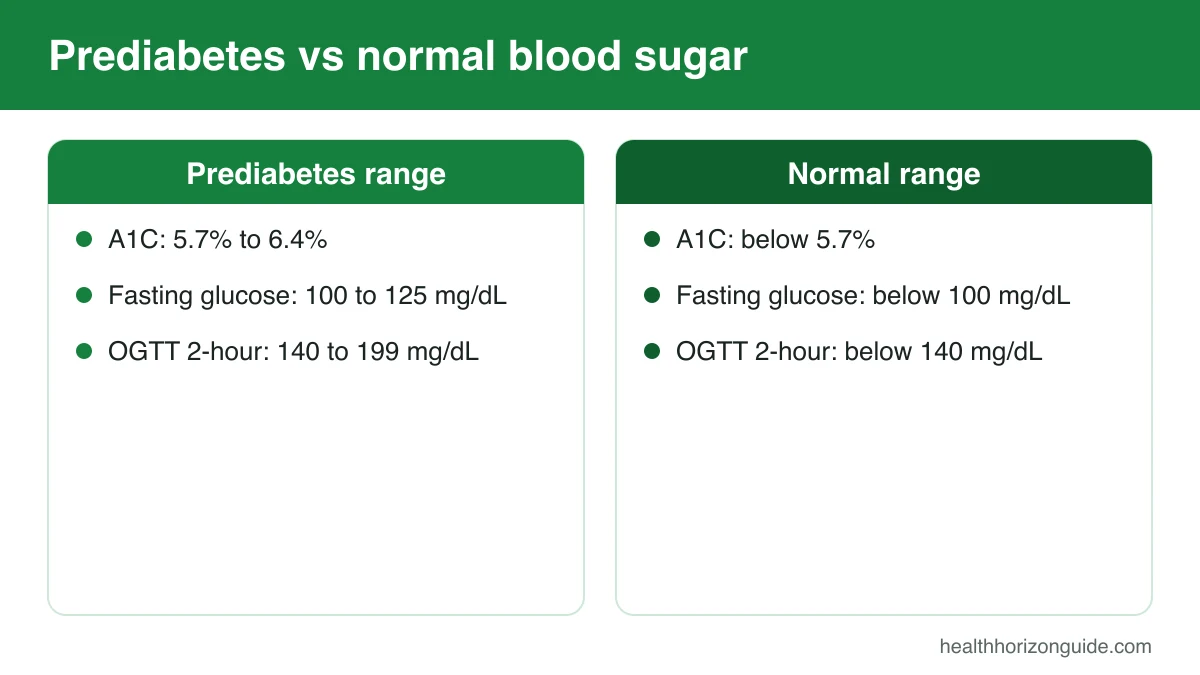
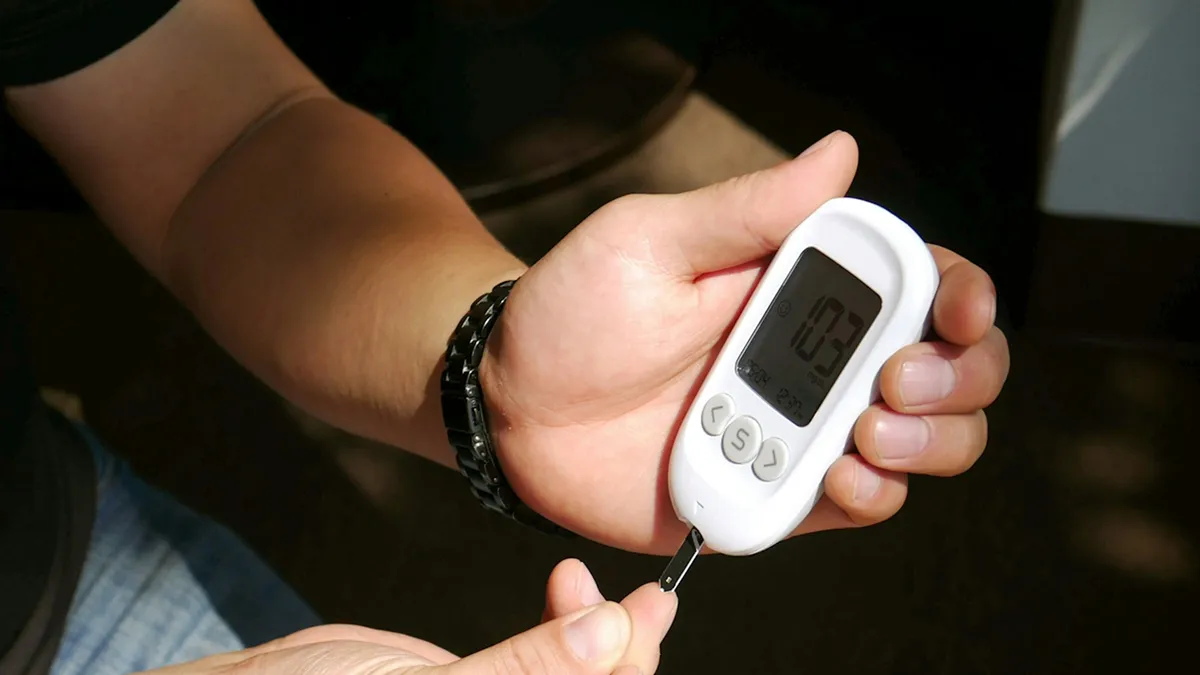
The A1C test shows average blood glucose over the past 2 to 3 months and needs no fasting. The fasting test follows at least 8 hours without food or drink other than water. The OGTT measures blood glucose before a sweet drink and 2 hours later.
Readers who use mmol/L can convert the prediabetes ranges with our blood sugar converter.
Can prediabetes be reversed with diet and exercise?
Yes, prediabetes can be reversed or held back with diet and exercise, and the strongest evidence comes from the Diabetes Prevention Program (DPP). The National Institute of Diabetes and Digestive and Kidney Diseases (NIDDK) funded the trial.
The DPP enrolled 3,234 adults at high risk of type 2 diabetes at 27 clinical centers. The lifestyle group aimed to lose 7% of body weight and exercise 150 minutes per week.
The table below shows how much each DPP group lowered or delayed type 2 diabetes compared with placebo.
| DPP group | About 3 years in | 10-year follow-up | 15-year follow-up |
|---|---|---|---|
| Lifestyle program | 58% lower risk | 34% delay | 27% delay |
| Lifestyle program, ages 60 and older | 71% lower risk | 49% delay | Not reported |
| Metformin | 31% lower risk | 18% delay | 18% delay |
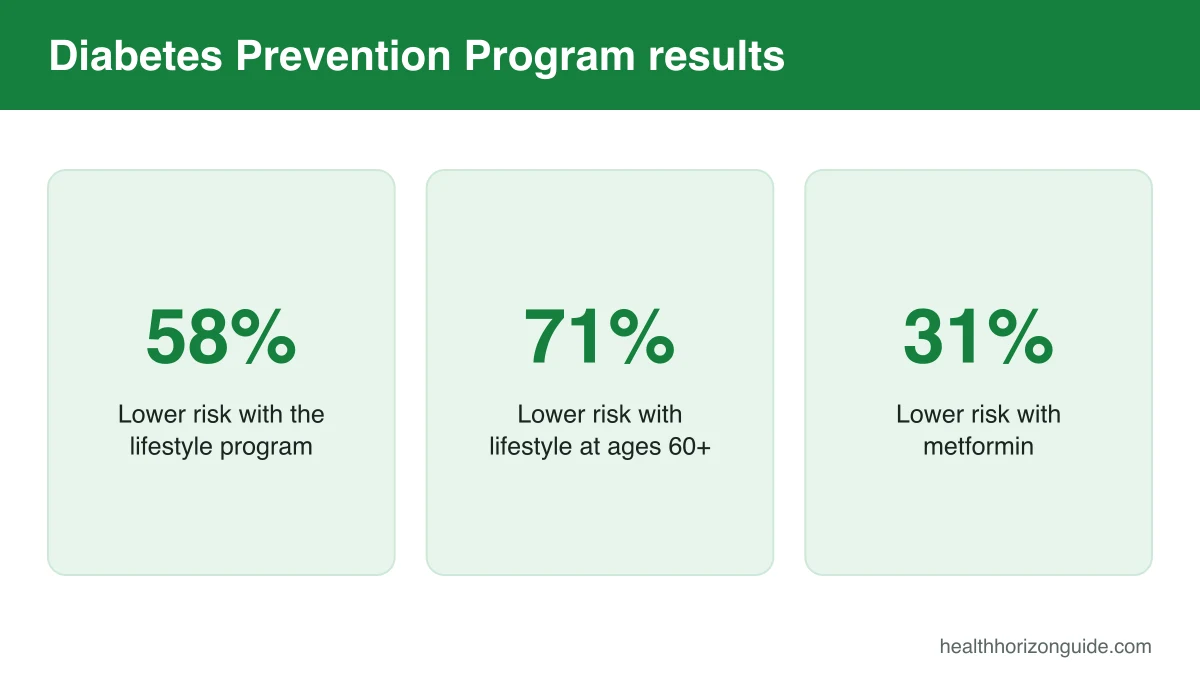
These figures count new cases of type 2 diabetes. The figures do not show the share of people whose prediabetes reversed.
The 7% weight goal equals about 15 pounds for a person who weighs 200 pounds, according to the ADA. The activity goal equals moderate exercise, such as brisk walking, for 30 minutes a day on 5 days a week.
MedlinePlus advises a healthy, reduced-calorie eating plan for prediabetes. Our comparison of the Mediterranean diet and keto describes two eating patterns that readers often ask about.
Can prediabetes be reversed without medication?
Yes, prediabetes can be reversed without medication in many cases. The DPP lifestyle program used no drug and lowered diabetes risk by 58%, compared with 31% for metformin. The CDC describes lifestyle changes as a proven and achievable way to reverse prediabetes.
Can prediabetes be reversed permanently?
No, prediabetes cannot be reversed permanently with certainty, since blood sugar can rise again over time. The DPP follow-up shows the limit. Type 2 diabetes had developed in 55% of the lifestyle group and 56% of the metformin group by the 15-year follow-up. The placebo group figure was 62%.
A return to normal blood sugar still matters for people with prediabetes. A 2012 analysis of DPP participants in The Lancet found a 56% lower diabetes risk in people who reached normal glucose during the trial. The comparison group was people whose prediabetes persisted.
The authors reported that a return to normal glucose was linked to lower risk even when the return was temporary. The analysis was observational, so the finding shows a link and does not prove cause.
Prediabetes therefore calls for lasting habits and retesting. The ADA advises testing for type 2 diabetes every 1 to 2 years in people with prediabetes.
How long does it take to reverse prediabetes?
Reversing prediabetes takes months to years, and no fixed timeline applies to everyone. None of the health agencies we reviewed states a set number of weeks. The DPP measured its main results after about 3 years of sustained weight loss and activity.
Can prediabetes be reversed in 3 months?
A 3-month window is a first checkpoint and not a deadline for reversing prediabetes. The A1C test reflects average blood glucose over the past 2 to 3 months, so an earlier A1C retest mixes old and new habits. Some people reach a normal result at the first retest, and other people need longer.
Can prediabetes be reversed with medication?
Medication can lower the risk that prediabetes becomes type 2 diabetes, and metformin is the drug tested in the DPP. Metformin lowered diabetes risk by 31% compared with placebo over about 3 years. The lifestyle program lowered risk by 58% in the same trial.
The 3 groups in which metformin worked best in the DPP are listed below.
- Women with a history of gestational diabetes.
- People aged 25 to 44.
- People with a body mass index (BMI) of 35 or higher.
Our BMI calculator shows where a reader's height and weight fall. The decision to use metformin for prediabetes belongs to a clinician who knows the person's history. MedlinePlus notes that a health care provider may recommend diabetes medicines in some cases.
What to watch after a prediabetes diagnosis
Life after a prediabetes diagnosis centres on tracking test results and acting early. The next sections cover the signs of improvement, the risks of untreated prediabetes and the right time to see a doctor.
Signs that prediabetes is improving
The signs that prediabetes is improving are mainly numbers on a blood test, since prediabetes has no clear symptoms. The 4 signs of improvement are listed below.
- A1C: a result that falls below 5.7%.
- Fasting plasma glucose: a result that falls below 100 mg/dL.
- OGTT: a 2-hour value that falls below 140 mg/dL.
- Body weight: steady loss toward the 7% goal used in the DPP.
Some people with prediabetes have darkened skin in the armpit or on the back and sides of the neck, according to MedlinePlus. A lab test remains the reliable measure of progress.
Readers who check fasting glucose at home can read our guide to why blood sugar is high in the morning.
What happens if prediabetes is not treated?
Untreated prediabetes carries a risk of type 2 diabetes, heart disease and stroke. The CDC states that many people with prediabetes could develop type 2 diabetes within 5 years without action.
Type 2 diabetes raises the risk of heart attack, stroke, blindness, kidney failure and loss of toes, feet or legs, according to the CDC. Early action on prediabetes lowers the chance of reaching that stage.
When to see a doctor about prediabetes
A doctor visit for prediabetes is needed for diagnosis, for retesting and for any new symptoms. Only a blood test confirms prediabetes or shows that blood sugar is back to normal. New symptoms may mean that blood sugar has risen further, and our list of 10 warning signs of diabetes describes what to look for.
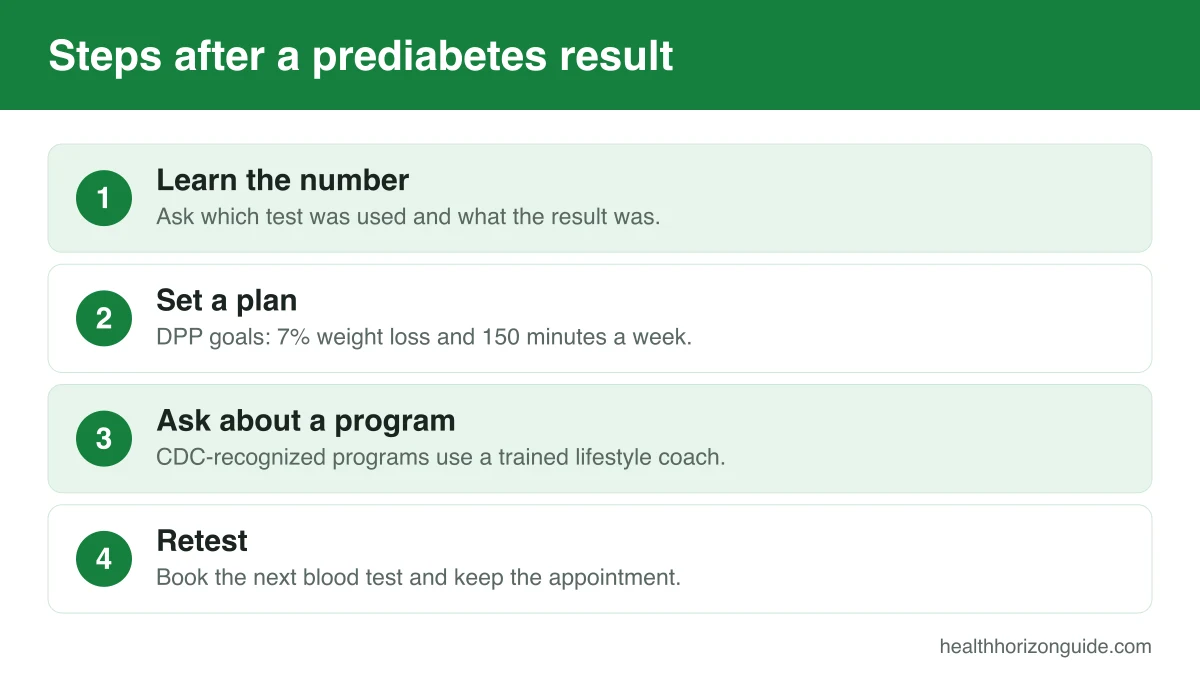
The 4 steps to take after a prediabetes result are listed below.
- Ask the doctor which test was used and what the result was.
- Agree a weight and activity plan. The DPP goals were 7% weight loss and 150 minutes of exercise per week.
- Ask about a CDC-recognized lifestyle change program, which pairs people with a trained lifestyle coach.
- Book the next blood test and keep the appointment.
Frequently asked questions about reversing prediabetes
Does prediabetes always turn into type 2 diabetes?
No, prediabetes does not always turn into type 2 diabetes. The ADA states that type 2 diabetes does not develop automatically in people with prediabetes.
How much weight loss helps reverse prediabetes?
Prediabetes research points to a weight loss of 7% of body weight, which was the DPP goal linked to a 58% lower diabetes risk. The ADA adds that losing 10 to 15 pounds can make a meaningful difference.
Can prediabetes come back after it is reversed?
Yes, prediabetes can come back after blood sugar returns to normal. Regular retesting shows whether blood sugar has stayed in the normal range.
Does prediabetes cause symptoms?
No, prediabetes usually causes no clear symptoms. A blood test is the only way to confirm prediabetes.