Newborn Hiccups: Why They Happen and How to Stop Them
Newborn hiccups are normal and usually stop within a few minutes. See why they happen, 5 safe steps to stop them, what to avoid and when to call a doctor.
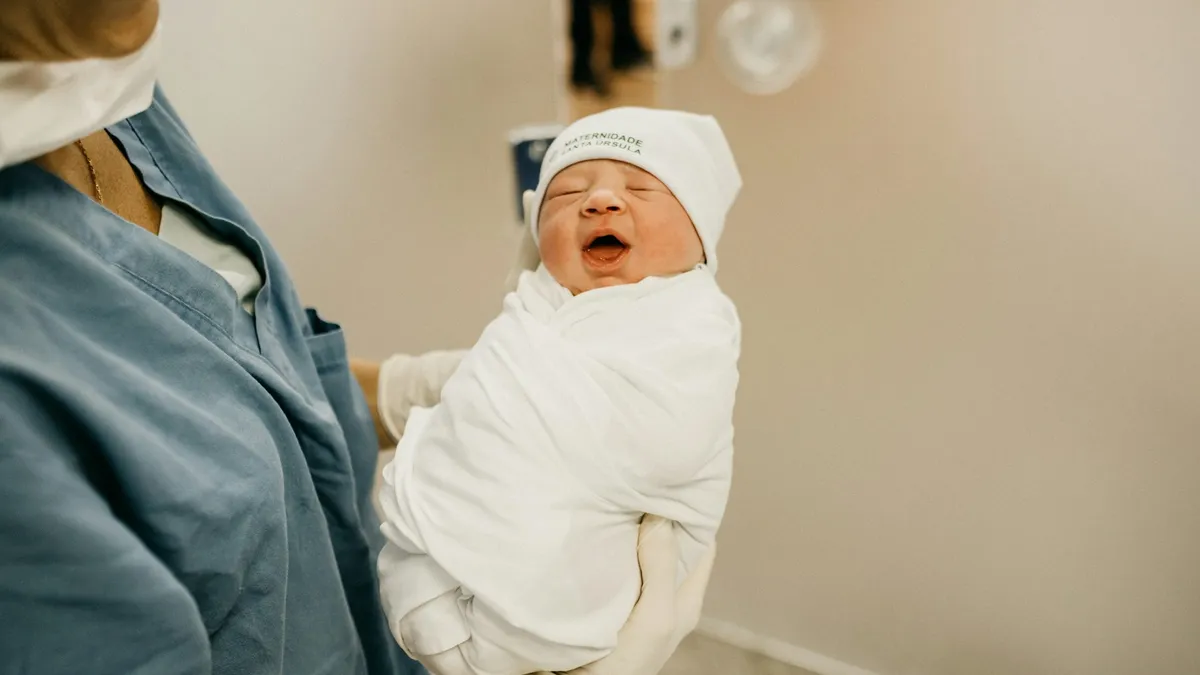
Newborn hiccups are normal, harmless and very common in the first months of life. Most bouts stop on their own within a few minutes and do not bother the baby. A pediatrician should check newborn hiccups that come with vomiting, poor feeding, breathing trouble or poor weight gain.
Action checklist
Newborn hiccups: what to do checklist
Use these steps from the article to handle newborn hiccups calmly and safely.
0 of 10 done
In this article
- What are newborn hiccups?
- How to stop newborn hiccups
- Why do newborns hiccup so much?
- How long do newborn hiccups last?
- What not to do for newborn hiccups
- Newborn hiccups during sleep, feeds and lying down
- When do newborn hiccups signal reflux?
- When to call a pediatrician about newborn hiccups
- Newborn hiccups: frequently asked questions
What are newborn hiccups?
Newborn hiccups are sudden spasms of the diaphragm followed by a quick closing of the vocal cords, which produces the "hic" sound. The diaphragm is the muscle at the base of the lungs. MedlinePlus states that hiccups are common and normal in newborns and infants.
Babies hiccup before birth as well. Many pregnant women feel those early hiccups as small flutters, so newborn hiccups are a continuation of a reflex that started in the womb.
How to stop newborn hiccups
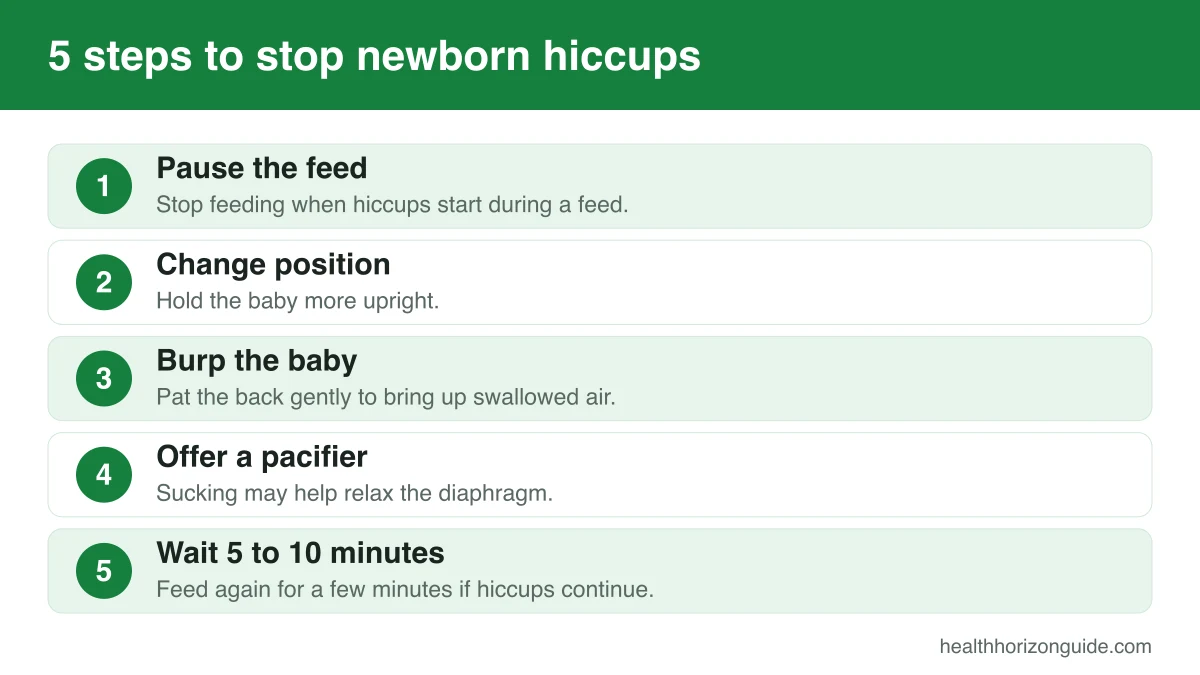
The way to stop newborn hiccups is to pause, burp the baby and wait, since most bouts end without any treatment. The American Academy of Pediatrics (AAP) and Cleveland Clinic describe the same gentle approach. The 5 steps for newborn hiccups are listed below.
- Pause the feed when the hiccups start during feeding.
- Change the baby's position and hold the baby more upright.
- Burp the baby with gentle pats on the back.
- Offer a pacifier, since the sucking motion may help relax the diaphragm.
- Wait 5 to 10 minutes, then feed again for a few minutes when the hiccups continue.
Parents do not need to treat every bout of newborn hiccups. Cleveland Clinic states that hiccups usually do not bother babies and stop on their own.
Why do newborns hiccup so much?
Newborns hiccup so much for reasons that doctors do not fully understand. MedlinePlus states that hiccups usually have no specific cause. Cleveland Clinic names extra gas in the stomach as a likely trigger of newborn hiccups, since the gas can push against the diaphragm.
The table below lists the 3 feeding triggers linked to newborn hiccups and the response that the sources recommend.
| Trigger | What the source says | What to do |
|---|---|---|
| Swallowed air | Gulped air adds gas to the stomach, and the gas can push against the diaphragm. | Feed in a more upright position and burp during the feed. |
| A very full stomach | Overfeeding is a possible source of extra gas in the stomach. | Take a burp break after every 2 to 3 ounces (60 to 90 ml) of a bottle. |
| Feeding a very hungry or upset baby | The AAP advises feeding a baby who hiccups often while the baby is calm. | Start the feed before the baby becomes extremely hungry. |
Brain development may play a part too. A 2019 University College London study recorded brain activity in 13 newborns and found a burst of brain waves following each hiccup. The researchers suggest that newborn hiccups may help the brain learn to monitor the breathing muscles.
The same research team reports that hiccups begin at about 9 weeks of pregnancy. Pre-term babies spend an estimated 1% of their time hiccuping, which equals roughly 15 minutes a day. The study was small, so the link between newborn hiccups and brain development remains a hypothesis.
Why do newborns get hiccups after feeding or breastfeeding?
Newborn hiccups after feeding or breastfeeding are linked to swallowed air and a very full stomach. Feeds are the moment when both triggers occur together. Parents on forums often describe hiccups after nearly every feed, and that pattern fits what MedlinePlus calls common and normal.
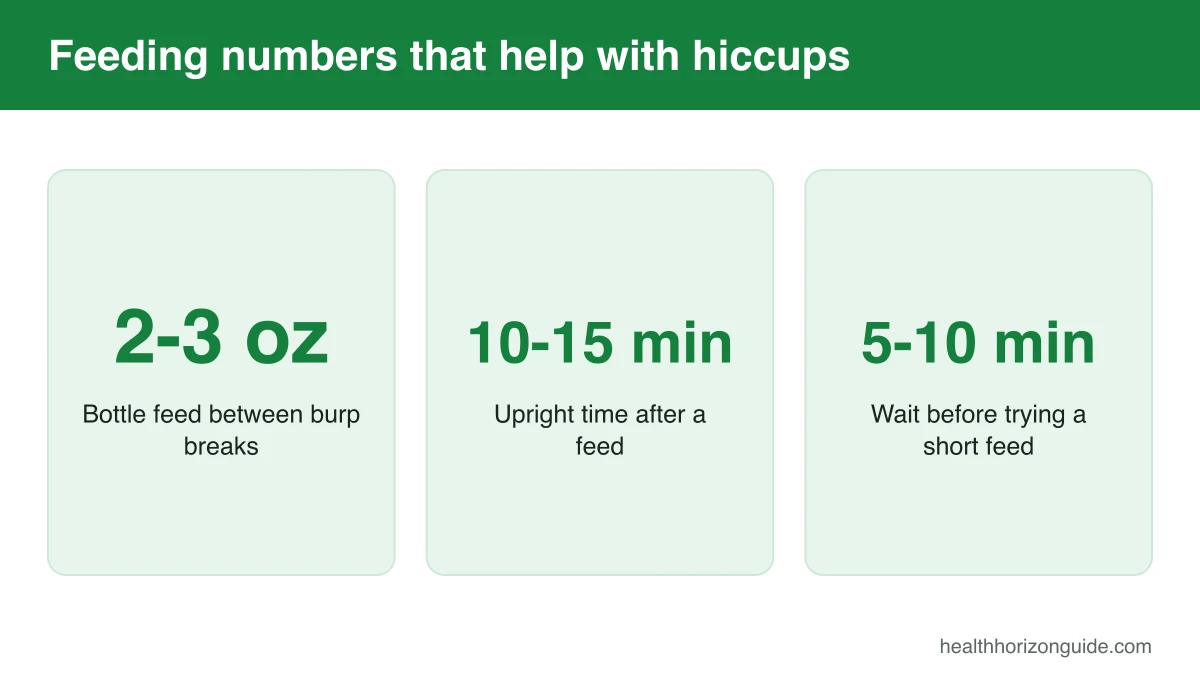
Regular burping is the main response to newborn hiccups after a feed. The AAP advises burping a bottle-fed baby after every 2 to 3 ounces (60 to 90 ml) and a breastfed baby at each switch between breasts. Holding the baby upright for 10 to 15 minutes after the feed helps to prevent spit-up.
How long do newborn hiccups last?
Newborn hiccups last a few minutes in most cases. MedlinePlus states that hiccups usually disappear after a few minutes. The AAP advises waiting 5 to 10 minutes for the hiccups to pass before trying a short feed.
No source that we reviewed gives a fixed number of normal bouts per day. A baby who feeds well, breathes comfortably and gains weight is unlikely to have a problem behind frequent newborn hiccups.
What not to do for newborn hiccups
Adult hiccup remedies are not suitable for newborn hiccups, and some carry a real risk for a young baby. The 5 folk remedies to avoid are listed below.
- Honey. The CDC advises against honey before 12 months, including honey on a pacifier, due to the risk of infant botulism.
- Water or sugar. A newborn gets the needed fluid from breast milk or formula, and neither water nor sugar is a recommended hiccup remedy.
- Startling or scaring the baby. A fright upsets a newborn and has no proven effect on hiccups.
- Pulling the tongue or pressing on the eyes or the soft spot. These actions can hurt a baby.
- Holding the nose or covering the mouth. Breath-holding tricks are unsafe for a baby.
Newborn hiccups during sleep, feeds and lying down
Newborn hiccups raise practical questions at sleep time, feed time and bedtime. The 3 answers below cover the situations that parents ask about most.
Newborn hiccups in sleep
Newborn hiccups in sleep are normal and do not need treatment. A sleeping baby does not need to be woken, picked up or burped for hiccups alone.
Safe sleep rules stay the same during newborn hiccups. The NHS advises placing a baby to sleep flat on the back and not raising the head of the cot. Parents who are also coping with mixed-up days and nights can read our guide to a newborn who sleeps all day and stays awake all night.
Can you feed a newborn with hiccups?
Yes, a newborn with hiccups can feed, although a short pause comes first. The AAP advises changing the baby's position, burping and waiting for the hiccups to stop when they start during a feed. Feeding again for a few minutes usually stops newborn hiccups that last longer than 5 to 10 minutes.
Can you lay a baby down with hiccups?
Yes, a baby with hiccups can lie down on the back. None of the sources that we reviewed advises keeping a baby upright for hiccups alone.
The AAP does advise holding a baby upright for 10 to 15 minutes after a feed to limit spit-up. Newborn hiccups that start right after a feed fit naturally into that upright time.
When do newborn hiccups signal reflux?
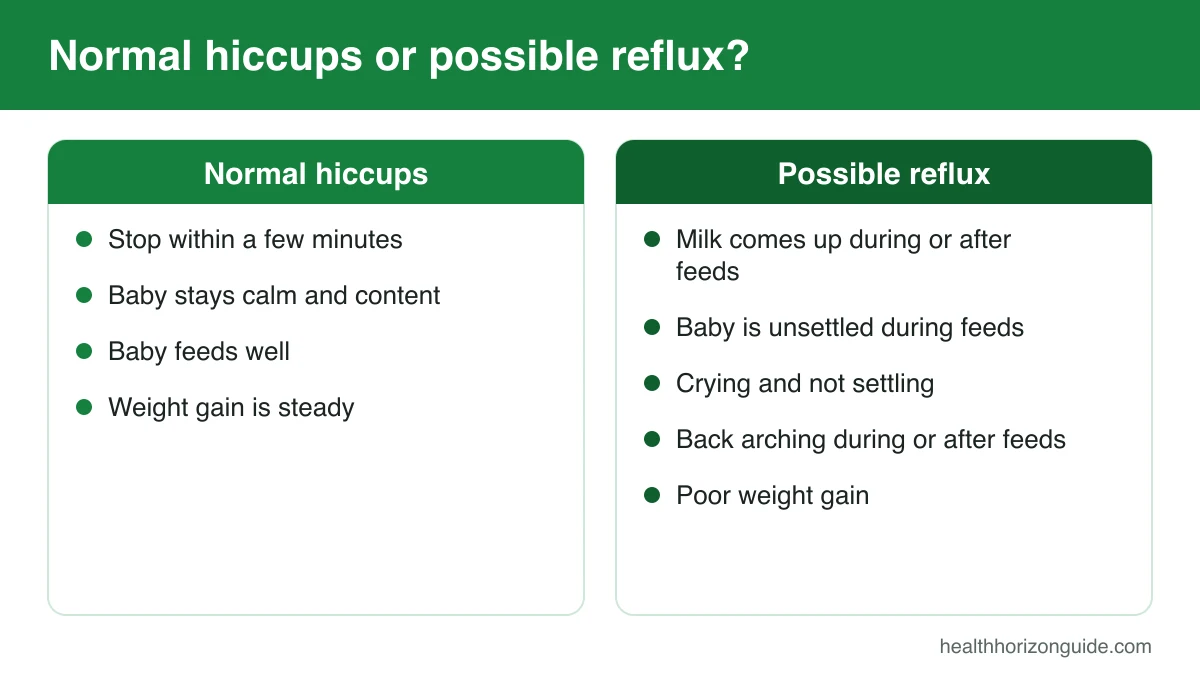
Newborn hiccups signal reflux only when other reflux symptoms appear with them. Hiccups alone are not a reason to suspect reflux. The NHS lists coughing or hiccupping during feeds as one symptom of reflux in babies, alongside the 4 symptoms below.
- Bringing up milk or being sick during or shortly after feeds.
- Being unsettled during feeds.
- Crying and not settling.
- Not gaining weight, since not enough food stays down.
Cleveland Clinic adds arching of the back during or after feeds as a further sign. Reflux usually starts before a baby is 8 weeks old and improves by the age of 1, according to the NHS.
A baby with reflux who is happy, healthy and gaining weight does not usually need to see a doctor. Our guide to a baby crying after feeding covers reflux, gas and the other feed-related causes that sometimes appear with newborn hiccups.
When to call a pediatrician about newborn hiccups
A pediatrician should assess newborn hiccups when they come with signs of illness or feeding problems. The NHS advises urgent medical advice for a baby with any of the 6 signs listed below.
- Green or yellow vomit, or vomit that contains blood.
- Projectile vomiting.
- Blood in the stool.
- A swollen or tender tummy.
- Refusing to feed.
- Crying that does not stop, with great distress.
Emergency help is needed for a baby who struggles to breathe, turns blue or pale, or goes limp. Newborn hiccups that last far longer than usual, or that interfere with feeding or sleep, are a reason to call the pediatrician.
Crying without a clear trigger is a separate question. Our article on why a baby cries for no reason explains the common causes.
Newborn hiccups: frequently asked questions
Do newborn hiccups hurt or bother a baby?
No, newborn hiccups do not usually hurt or bother a baby. Cleveland Clinic states that hiccups do not cause discomfort to babies in most cases, and many babies sleep or feed through them.
When do babies outgrow hiccups?
Babies outgrow frequent hiccups gradually, with no fixed age. Newborn hiccups tend to become less frequent as the baby grows. Our baby development timeline for the first year shows the other changes to expect month by month.
Does gripe water help newborn hiccups?
Gripe water is not a proven remedy for newborn hiccups. Cleveland Clinic notes that some parents find gripe water helpful, and a pediatrician should approve any herbal product before a newborn receives it.
Are newborn hiccups a sign of overfeeding?
Newborn hiccups are sometimes linked to a large or fast feed, but hiccups alone do not prove overfeeding. Smaller pauses for burping during the feed are the usual first step.