When Do Babies Start Laughing? Timeline by Month
Babies start laughing at around 3 to 4 months, and laugh fully by about 6 months. See the timeline by month, how to make a baby laugh and when to ask a doctor.
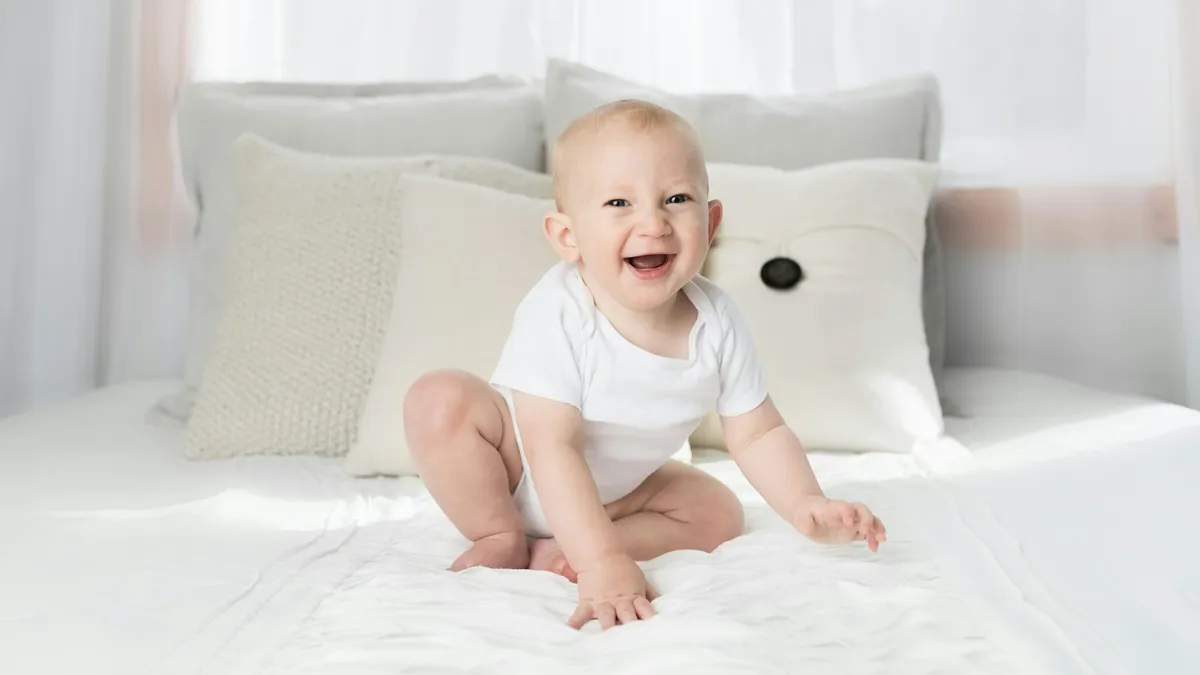
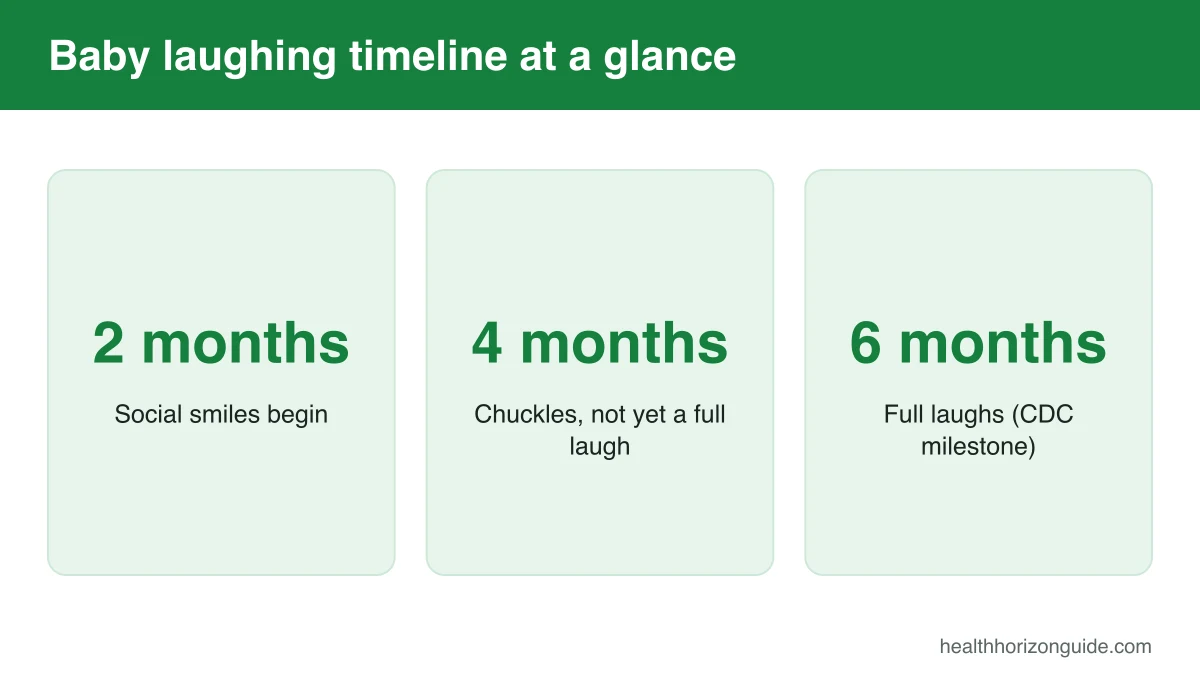
Babies start laughing at around 3 to 4 months of age, and a full laugh is expected by about 6 months. The first laugh is usually a short chuckle that follows weeks of smiling and cooing. The CDC lists a chuckle as a 4-month milestone and a full laugh as a 6-month milestone.
Action checklist
Baby laughing checklist for parents
Use these steps to encourage a first laugh and to know when a late laugh needs a doctor.
0 of 10 done
In this article
When do babies start laughing?
Babies start laughing between 3 and 4 months of age in most cases, beginning with a soft chuckle. A survey of about 1,500 parents from 62 countries, led by developmental psychologist Caspar Addyman, placed the first laugh at around 3 months. The Cleveland Clinic places baby laughter at around 4 to 6 months.
A first laugh anywhere in this 3 to 6 month window fits the published ranges. Babies start laughing at different ages, and a quiet baby is not automatically a delayed baby.
Baby laughing and giggling by month
Baby laughing and giggling by month follows a steady order: reflex smiles, social smiles, chuckles, then full laughs. The table below shows when babies start laughing and which skill comes before each stage.
| Age | What most babies do | Source |
|---|---|---|
| First few weeks | Reflex smiles, often after a feed or during sleep. No laughing yet. | Cleveland Clinic |
| Around 2 months | Social smiles in response to a voice or a face. | Cleveland Clinic, AAP |
| Around 3 months | First laughs reported by parents in a 62-country survey. | Addyman survey |
| 4 months | Chuckles, not yet a full laugh, when a parent tries to make the baby laugh. | CDC, AAP |
| 4 to 6 months | Laughter becomes established alongside cooing. | Cleveland Clinic |
| 6 months | Laughs, makes squealing noises and blows raspberries. | CDC |
When do babies laugh out loud?
Babies laugh out loud by about 6 months of age, according to the CDC milestone checklists. The CDC 4-month checklist describes a chuckle that is "not yet a full laugh". The CDC 6-month checklist lists "laughs" as a social and emotional milestone.
The loud laugh arrives with other noisy skills. Babies start laughing fully at about the same age that babies squeal and take turns making sounds with a parent.
When do babies laugh on purpose or at you?
Babies laugh on purpose from about 4 months, when a chuckle answers a parent who tries to make the baby laugh. The American Academy of Pediatrics milestone list describes the same 4-month chuckle. A 4-month-old baby smiles alone to get a parent's attention as well.
Parents often ask whether a baby is laughing at them. Addyman's research suggests that babies start laughing mainly in response to people and adult attention, not to a toy or a trick alone.
Smiling vs laughing: which comes first?
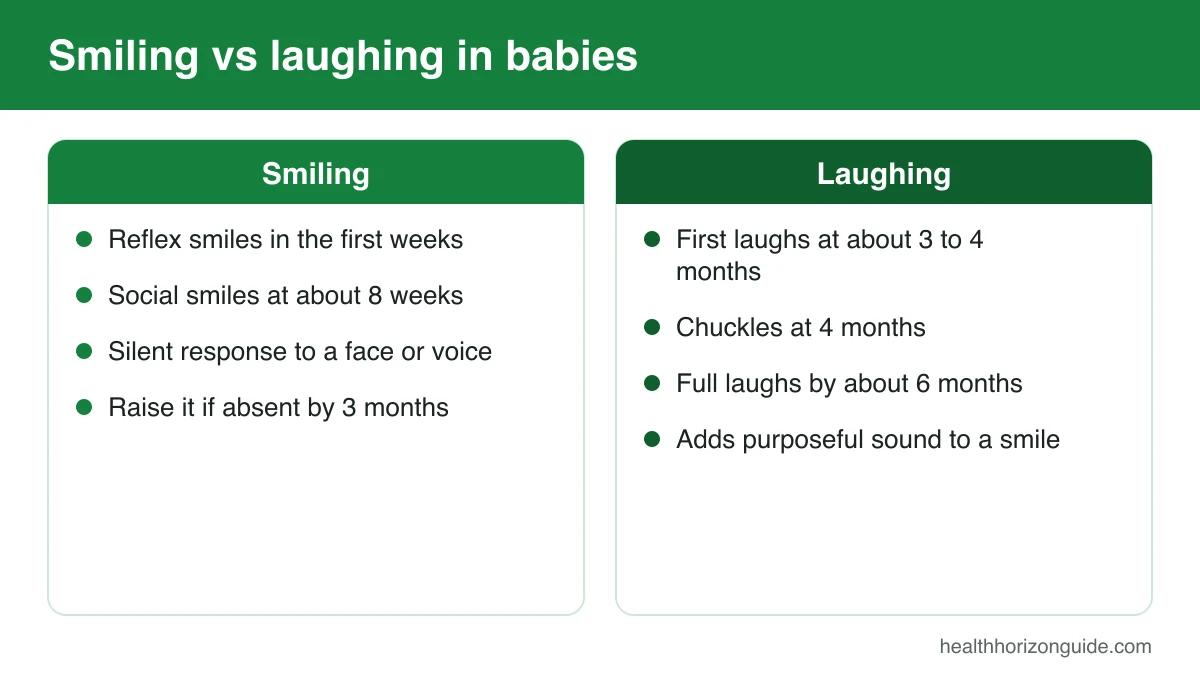
Smiling comes first, and the social smile appears about 2 months before babies start laughing. Newborn smiles in the first few weeks are reflexes, not responses to a person. Social smiles start at around 8 weeks, according to the Cleveland Clinic. Our guide explains when a baby smiles for the first time in more detail.
Laughing needs one more skill than smiling, which is purposeful sound. The Cleveland Clinic notes that chuckles appear when babies begin to make sounds on purpose, around the time of cooing.
Why do babies laugh in their sleep?
Babies laugh in their sleep most likely as a reflex during active sleep, the infant stage that resembles adult REM sleep. The Sleep Foundation reports that most newborn sleep smiles occur while the eyes move rapidly. Infants are not paralyzed during active sleep, so a sleeping baby can smile, twitch and move.
A laugh during sleep does not count as the milestone, since babies start laughing socially while awake. Researchers remain unsure whether babies dream when a sleep smile or sleep laugh happens.
Is a baby laughing in sleep ever a concern?
A baby laughing in sleep is harmless in almost all cases. The Sleep Foundation describes one extremely rare cause, the gelastic seizure, which produces uncontrolled laughter without amusement. A gelastic seizure typically lasts 10 to 20 seconds and sometimes comes with squirming, grunting or lip smacking. Parents who see this pattern should tell a pediatrician.
How to make a baby laugh
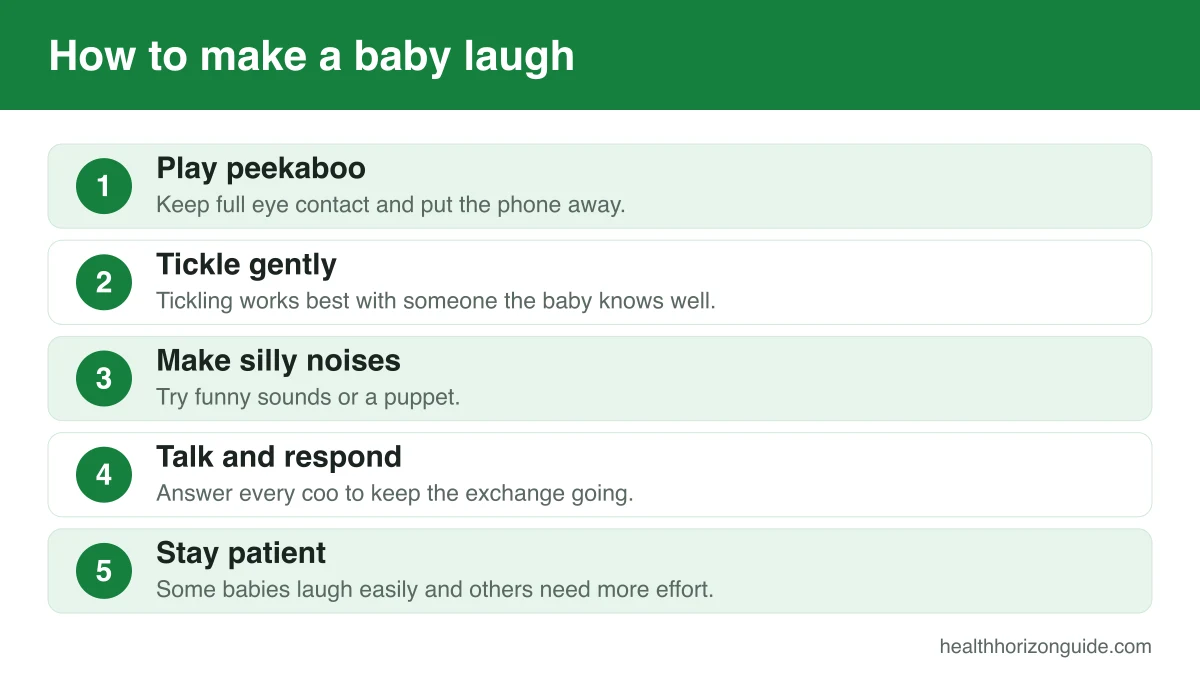
The most reliable way to make a baby laugh is face-to-face play with a familiar person. Peekaboo was the clear winner across countries in Addyman's parent survey, and tickling was the most common single answer. The 5 ways to encourage babies to start laughing are listed below.
- Play peekaboo with full eye contact, and put the phone away.
- Tickle gently. Tickling works best with someone the baby knows well.
- Make silly noises or use a puppet.
- Talk to the baby often and answer every coo, as the Cleveland Clinic advises.
- Stay patient. Some babies laugh easily and other babies take more effort, and both patterns are normal.
Short play sessions when the baby is fed and alert give the best chance of a laugh. Stop the game when the baby turns away or fusses.
What should parents know when a baby is not laughing yet?
A baby who is not laughing yet needs a look at the whole picture, not the laugh alone. Laughing is one of several social skills that develop together. The sections below explain when a late laugh is normal and when a pediatrician should check a baby who has not started laughing.
What if my baby is not laughing yet?
A baby who is not laughing yet is usually within the normal range before 6 months. The CDC expects a chuckle at 4 months and a full laugh at 6 months. A 4 or 5-month-old baby who smiles, coos and responds to a parent's voice is showing the skills that come before laughing.
Temperament plays a part. The Cleveland Clinic states that some babies start laughing and smiling with little effort and other babies need more, and both are normal.
When should I talk to a pediatrician about a baby not laughing?
Parents should talk to a pediatrician when a baby is not laughing by 6 months, or shows other social differences at any age. The CDC advice is to act early and not to wait. The 5 signs that deserve a call to the doctor are listed below.
- No smiling by 3 months.
- No chuckle at 4 months or no laugh at 6 months, together with other missed milestones.
- No response to a parent's voice.
- No interest in toys or in the surroundings.
- Loss of a skill the baby once had.
Poor eye contact alongside a missing laugh is worth raising too. Our article on a baby not making eye contact covers that concern.
The CDC recommends that parents share the concern with the child's doctor and ask about developmental screening. A doctor can refer a baby who has not started laughing to a specialist or to a local early intervention program.
Which milestones come around the same time as the first laugh?
The milestones that come around the same time as the first laugh are cooing, turning toward voices and steady head control. The CDC 4-month checklist includes all three. Babies start laughing fully at about 6 months, when the CDC also lists knowing familiar people and enjoying a mirror.
Our first-year baby development timeline places the laugh among the other milestones. Laughing does not replace crying, and our guide on why a baby cries for no clear reason explains that side of baby communication.
Frequently asked questions about baby laughing
Can a 2-month-old baby laugh?
A 2-month-old baby rarely laughs. The expected skill at 2 months is the social smile, and babies start laughing at around 3 to 4 months.
Is it normal for a 5-month-old baby not to laugh?
Yes, a 5-month-old baby who is not laughing is within the 4 to 6 month range given by the Cleveland Clinic. The baby should still smile, coo and respond to voices.
Do babies laugh when tickled?
Yes, babies laugh when tickled, and tickling was the most common answer in Addyman's parent survey. Babies start laughing at a tickle most readily with a familiar person.
Do babies laugh before they talk?
Yes, babies laugh months before the first word. Babies start laughing at around 3 months, and first words typically arrive at 9 to 12 months.