
How to Lower Cortisol: 6 Evidence-Based Ways
Learn how to lower cortisol with 6 evidence-based habits, what supplements can and cannot do, and how ordinary stress differs from Cushing syndrome.

Lowering cortisol depends on six steady habits: quality sleep, regular exercise, mindfulness or relaxation practice, less caffeine and alcohol, close relationships and a balanced diet. These habits reduce the stress that triggers cortisol release. Cortisol that stays high from a medical disorder such as Cushing syndrome needs medical treatment, since lifestyle changes alone do not correct that disorder.
Action checklist
Daily checklist to lower cortisol
Use these actions from the article to support a healthy cortisol pattern.
0 of 10 done
In this article
What is cortisol?
Cortisol is a steroid hormone made by the adrenal glands, which sit on top of the kidneys, according to the Cleveland Clinic. Cortisol manages the stress response, regulates how the body uses glucose, limits inflammation, influences blood pressure and helps control the sleep-wake cycle.
The body needs cortisol every day, so the goal is a healthy pattern and not the lowest possible level.
What is the normal daily rhythm of cortisol?
The normal daily rhythm of cortisol is a peak in the morning and a low point in the evening. Cortisol reaches peak levels right before waking and is lower in the evening at bedtime. Stress, illness, surgery and pregnancy raise cortisol for a short time on top of that rhythm.
How to lower cortisol naturally
Lowering cortisol naturally means reducing ongoing stress and protecting sleep. The 6 evidence-based ways to lower cortisol are listed below.
- Sleep: protect quality sleep with a consistent nighttime routine. Chronic insomnia and night-shift work are linked with higher cortisol.
- Exercise: stay physically active on a regular basis. Regular activity improves sleep quality and reduces stress.
- Mindfulness and relaxation: practise meditation, deep breathing, yoga or tai chi. Controlled breathing stimulates the "rest and digest" nervous system and helps lower cortisol.
- Caffeine and alcohol: limit both. Excessive caffeinated drinks and alcohol may raise cortisol and stress, and both can disrupt sleep late in the day.
- Social connection: invest in healthy relationships and make time for laughter. Tense relationships cause frequent stress, and laughing suppresses cortisol.
- Diet: follow a balanced, plant-focused pattern such as the Mediterranean diet, and cut back on added sugar.
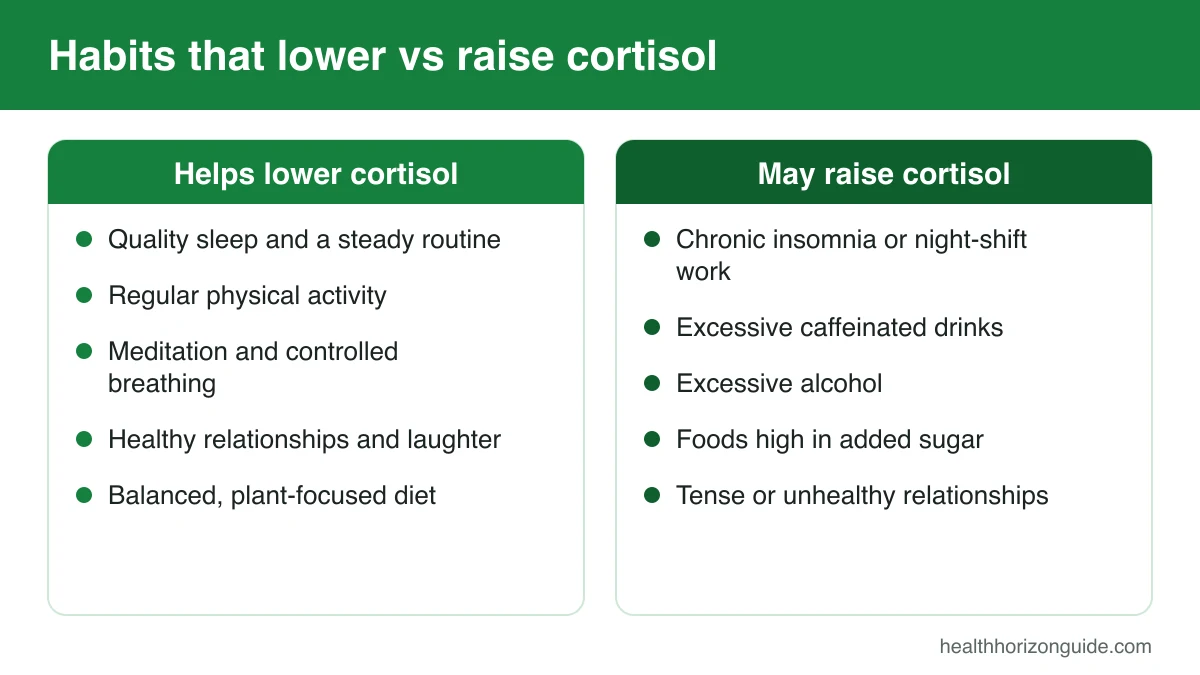
These six ways to lower cortisol come from Cleveland Clinic guidance on reducing cortisol, which gives no fixed amounts of sleep or exercise. No single diet is known to balance cortisol, so food works as one part of the wider routine.
Does stress management lower cortisol?
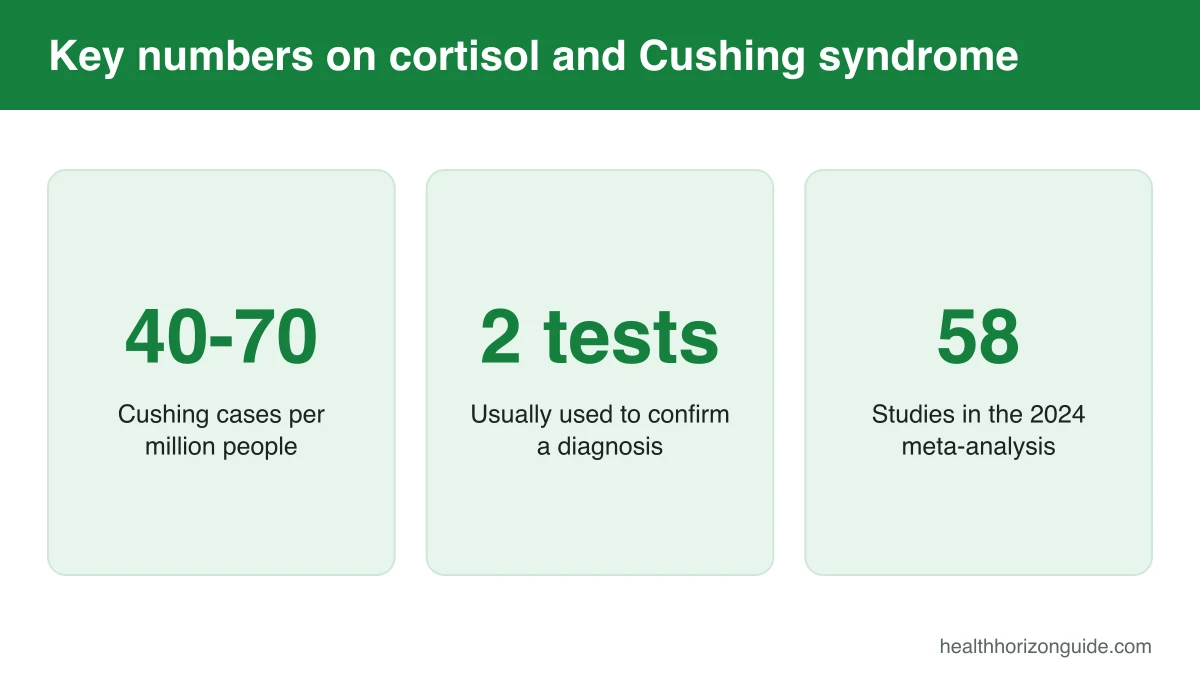
Stress management lowers cortisol by a modest to medium amount in research studies. A 2024 meta-analysis of 58 studies with 3,508 participants found that stress management programs changed cortisol levels more than control conditions. Mindfulness and relaxation programs produced the largest effects. Talking therapies produced smaller effects that were not statistically significant.
The pooled studies measured cortisol in blood, saliva or hair. The results describe group averages and do not promise a set change in cortisol for one person.
How to lower cortisol fast vs long term
Lowering cortisol fast relies on calming the body in the moment, while lowering cortisol long term relies on daily habits. None of the sources we reviewed gives a measured time for how quickly cortisol falls. The table below compares fast and long-term ways to lower cortisol.
| Approach | What to do | What the sources say |
|---|---|---|
| Fast | Slow, controlled breathing, laughter or an enjoyable activity | Controlled breathing stimulates the parasympathetic nervous system and helps lower cortisol. No timeframe is given. |
| Long term | Sleep routine, regular exercise, mindfulness practice, less caffeine and alcohol, healthy relationships, balanced diet | Mindfulness and relaxation programs lowered cortisol in pooled trials. Steady habits matter most. |
How to lower cortisol in the morning
Lowering cortisol in the morning is not necessary for most people, since a morning peak is normal. The morning rise in cortisol helps the body wake up. People who feel tense on waking can apply the same habits: a consistent sleep routine, slow breathing after waking and a limit on caffeinated drinks.
How to lower cortisol in women and in men
Lowering cortisol in women and in men uses the same six habits. Gender did not change how well stress management lowered cortisol in the 2024 meta-analysis. Pregnancy raises cortisol for a time as a normal change, and our guide on how much stress is too much during pregnancy covers that stage.
Do supplements lower cortisol?
Supplements that claim to lower cortisol have limited evidence and real cautions. Ashwagandha and magnesium are the two supplements discussed most often. A supplement does not address the root cause of stress, and a doctor or pharmacist should review any supplement before use.
Does ashwagandha lower cortisol?
Ashwagandha has limited evidence for stress and unclear evidence for anxiety. The National Center for Complementary and Integrative Health states that some ashwagandha preparations may be effective for stress and insomnia. Many studies were small, and the NCCIH page makes no claim about cortisol.
Ashwagandha may be safe for up to 3 months, and long-term safety is not established. Side effects include drowsiness, stomach upset, diarrhea and vomiting. Rare cases of liver injury have been linked to ashwagandha supplements.
The NCCIH advises against ashwagandha during pregnancy and breastfeeding, before surgery, and for people with thyroid disorders, autoimmune disorders or hormone-sensitive prostate cancer. Ashwagandha may interact with medicines for diabetes, blood pressure, thyroid conditions and seizures, and with sedatives and immunosuppressants.
Does magnesium lower cortisol?
Magnesium has weak evidence for lowering cortisol. A 2020 narrative review in the journal Nutrients describes one small study in which male students who took magnesium for four weeks had lower blood cortisol.
The review was funded by a pharmaceutical company, and the authors conclude that more research on magnesium is needed. Our comparison of magnesium glycinate vs citrate explains the common forms.
Ordinary stress vs a medical cortisol disorder
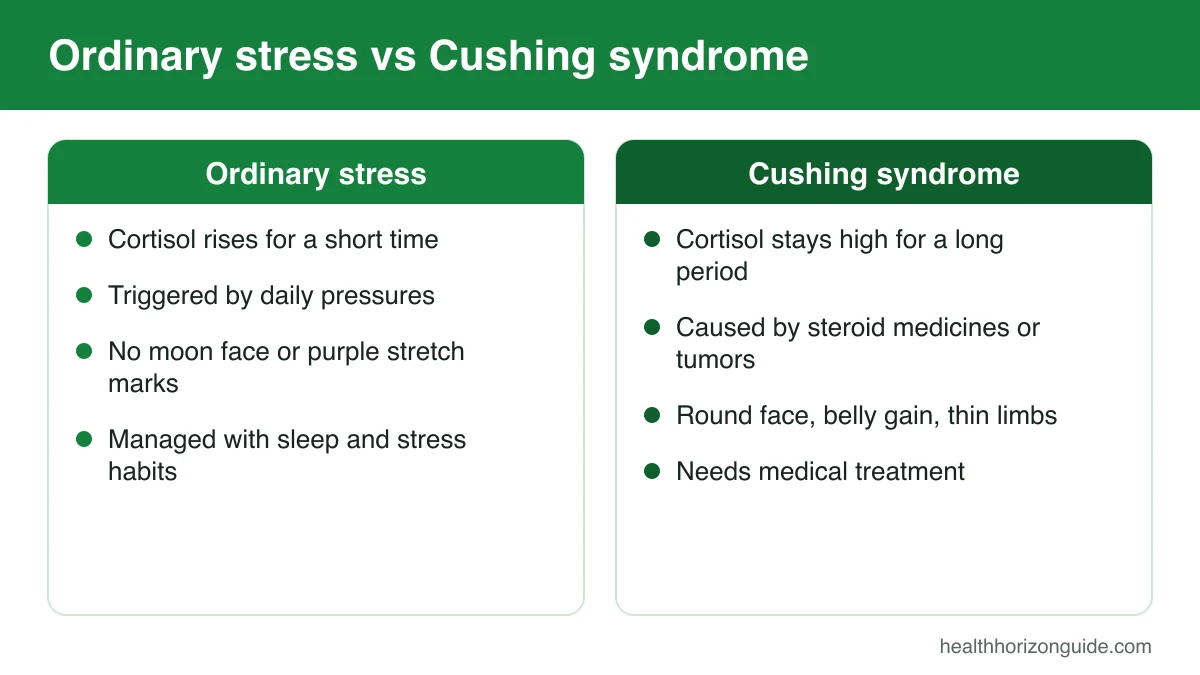
Ordinary stress and a medical cortisol disorder differ in how long cortisol stays high and what causes the rise. Stress raises cortisol temporarily, and those short rises do not usually produce the body changes seen in Cushing syndrome. Cushing syndrome develops when cortisol stays too high over a long period.
The most common cause of Cushing syndrome is long-term, high-dose use of glucocorticoid medicines, according to the National Institute of Diabetes and Digestive and Kidney Diseases (NIDDK). Tumors of the pituitary or adrenal glands are rarer causes of excess cortisol.
Chronic stress still matters for health. Cortisol that stays elevated for weeks or months may contribute to inflammation, anxiety, weight gain and heart disease. Stress that shows up as constant worry is covered in our guide to anxiety signs and how to get help.
What are the symptoms of high cortisol?
The symptoms of high cortisol are the signs of Cushing syndrome, which appear when cortisol stays very high over time. The 8 symptoms of high cortisol named by the Cleveland Clinic are listed below.
- Weight gain, especially in the face and belly.
- Fatty deposits between the shoulder blades.
- Wide, purple stretch marks on the belly.
- Muscle weakness in the upper arms and thighs.
- High blood sugar, which often turns into type 2 diabetes.
- High blood pressure.
- Excess hair growth in women.
- Weak bones and fractures.
Not every person with Cushing syndrome has every symptom. Women may have irregular or stopped periods, and men may have lower interest in sex and erectile dysfunction. A racing heart and tense muscles are not on the list of high cortisol symptoms, and our guide to the physical symptoms of anxiety describes them.
Cortisol face and cortisol belly: social media trend vs Cushing syndrome
Cortisol face and cortisol belly are social media terms, not medical diagnoses. The clinical term for fat buildup in the face is moon facies. Christie Turin More, MD, an endocrinologist at the University of Colorado, explains in a CU Anschutz article that a round face alone rarely points to cortisol.
Everyday stress raises cortisol for a short time and typically does not cause the persistent high cortisol linked to facial changes. Steroid medicines are the most common cause of a true moon face. Facial puffiness that improves with diet changes or supplements is less likely to come from cortisol.
Cushing syndrome from a tumor is rare, with about 40 to 70 cases per million people. The condition affects about three times as many women as men. Belly weight gain from excess cortisol usually comes with thin arms and legs, wide purple stretch marks and easy bruising.
When to get cortisol tested
Cortisol testing is worth discussing with a doctor when a persistent body change appears together with other symptoms of high cortisol.
A primary care doctor is the first contact for cortisol concerns. Doctors review medicines first and rule out conditions with similar signs, such as polycystic ovary syndrome and metabolic syndrome. The 3 main cortisol tests described by the NIDDK are listed below.
- 24-hour urinary free-cortisol test: all urine is collected over 24 hours and checked for cortisol.
- Late-night salivary cortisol test: saliva is collected late in the evening, often at home.
- Low-dose dexamethasone suppression test: a steroid pill is taken at night and blood cortisol is measured the next morning.
No single cortisol test is perfect, so doctors usually use two tests to confirm a diagnosis. People who take steroid medicines should speak with the prescriber before changing a dose. Stress that disrupts daily life is a reason to see a provider even without signs of a cortisol disorder, and our anxiety self-check tool offers a starting point.
How to lower cortisol FAQ
The 3 questions below cover common worries about lowering cortisol.
Does caffeine raise cortisol?
Caffeine may raise cortisol and stress when intake is excessive, according to the Cleveland Clinic. Limiting caffeinated drinks, especially late in the day, supports sleep as well.
Can stress cause Cushing syndrome?
No, stress is not a listed cause of Cushing syndrome. Cushing syndrome comes from long-term glucocorticoid medicines or from tumors that drive excess cortisol.
How long does it take to lower cortisol?
Lowering cortisol has no fixed timeline in the sources we reviewed. Controlled breathing acts in the moment, and sleep, exercise and mindfulness habits work through steady practice over time.