Mediterranean Diet vs Zone Diet: Which Is Healthier?
Compare the Mediterranean diet and the Zone diet: the 40/30/30 ratio, food blocks, evidence for weight loss and heart health, downsides, and who each suits.
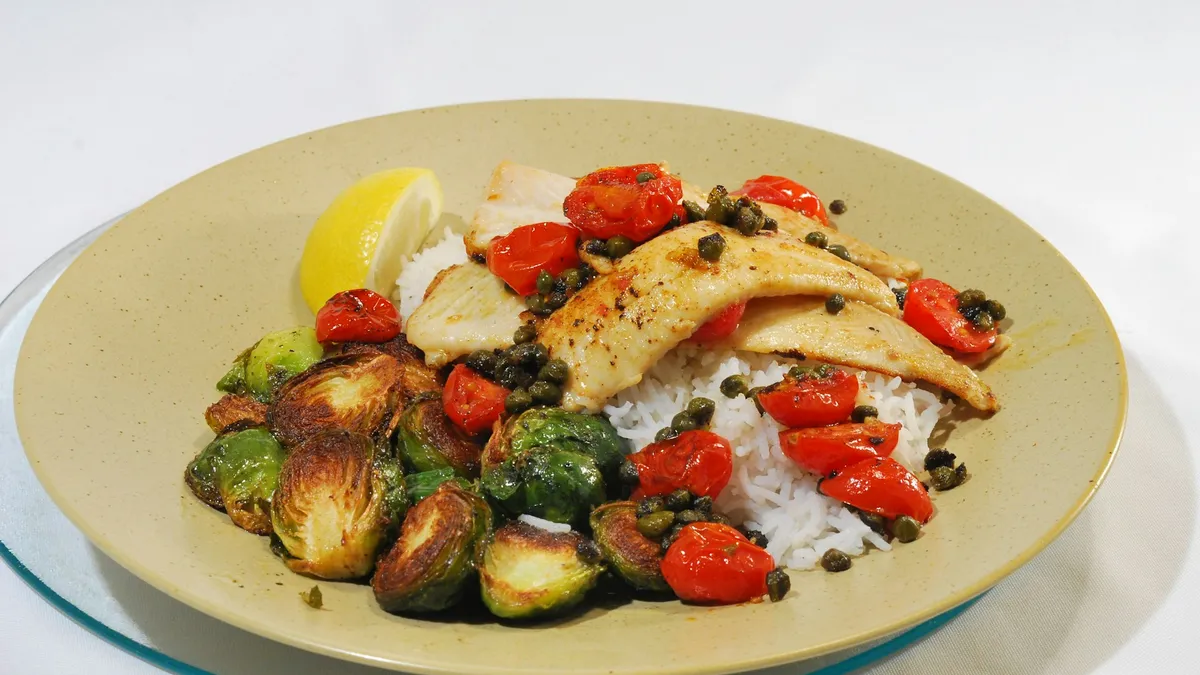
The Mediterranean diet is the healthier choice for most people, based on current evidence. The Mediterranean diet has large trials and long-term studies behind it for heart health, while the Zone diet rests on a theory that independent reviews have not confirmed. Both diets share many foods, such as fish, olive oil, nuts and vegetables, so the gap is mostly in structure and proof.
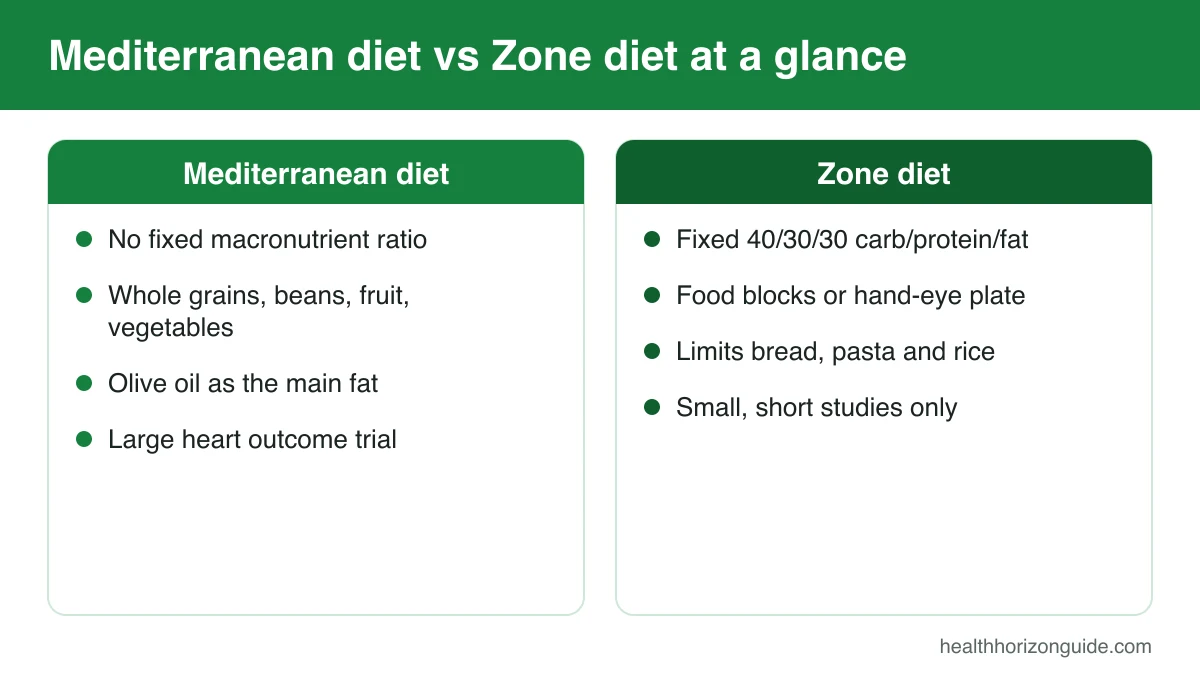
The 5 key differences between the Mediterranean diet and the Zone diet are listed below:
- Structure: the Zone diet sets a fixed 40/30/30 ratio of carbohydrate, protein and fat, and the Mediterranean diet sets no ratio.
- Tracking: the Zone diet uses food blocks or a hand-eye portion method, and the Mediterranean diet uses general food guidance.
- Grains: the Zone diet limits starches such as bread, pasta and rice, and the Mediterranean diet includes whole grains daily.
- Evidence: the Mediterranean diet has a large heart outcome trial, and the Zone diet has small, short studies.
- Ease: the Mediterranean diet is easier to follow long term, and the Zone diet takes more planning.
Action checklist
Mediterranean or Zone diet: action checklist
Use these steps to compare the Mediterranean diet and the Zone diet before you change how you eat.
0 of 8 done
In this article
- What is the Zone diet?
- What is the Mediterranean diet?
- Mediterranean diet vs Zone diet: side-by-side comparison
- Which diet is better for weight loss?
- Which diet is better for heart health?
- What does research say about long-term outcomes?
- What are the downsides of each diet?
- Who might prefer the Mediterranean diet or the Zone diet?
- Related diets and health conditions
- When to talk to a doctor or dietitian
- Frequently asked questions
What is the Zone diet?
The Zone diet is a structured eating plan built on a 40/30/30 ratio of calories from carbohydrate, protein and fat at every meal and snack. Dr. Barry Sears created the Zone diet and published The Zone in 1995, according to Healthline. The stated goal of the Zone diet is to reduce inflammation through hormone balance.
How do Zone diet blocks work?
Zone diet blocks are fixed units of food that keep each meal at the 40/30/30 ratio. One Zone block contains 7 grams of protein, 9 grams of carbohydrate and 1.5 grams of fat, per Healthline's Zone diet overview. Meals hold several blocks and snacks hold one block.
The simpler Zone diet option is the hand-eye method. A plate is split into thirds: lean protein on one third, low-glycemic carbohydrates on two thirds, and a small amount of monounsaturated fat such as olive oil or almonds.
What is the Mediterranean diet?
The Mediterranean diet is a flexible eating pattern based on the traditional foods of countries around the Mediterranean Sea. Fruits, vegetables, whole grains, legumes and nuts sit at the heart of the Mediterranean diet, and extra virgin olive oil is the main fat, according to Mayo Clinic.
The Mediterranean diet includes fish several times a week, poultry more often than red meat, and limited sweets. Cleveland Clinic suggests fish about 3 times a week and red meat no more than once a week. No food group needs exact measuring.
Mediterranean diet vs Zone diet: side-by-side comparison
The table below compares the Mediterranean diet and the Zone diet across five practical features.
| Feature | Mediterranean diet | Zone diet |
|---|---|---|
| Macronutrient approach | No fixed ratio; focus on food quality and unsaturated fats | Fixed 40% carbohydrate, 30% protein, 30% fat |
| Main foods | Vegetables, fruit, whole grains, legumes, nuts, olive oil, fish | Lean protein, low-glycemic vegetables, some fruit, olive oil, nuts |
| Flexibility | High; portions and meals vary | Moderate; each meal follows blocks or the hand-eye plate |
| Evidence base | Large randomized trial and long-term studies on heart outcomes | Small, short trials; reviews find little support for the theory |
| Ease | Easier; no counting needed | Harder; block math and planning take time |
Which diet is better for weight loss?
Neither diet has proven better for weight loss in a direct, independent comparison. A randomized trial of 160 adults compared the Zone, Atkins, Weight Watchers and Ornish diets for one year. The 2005 JAMA trial found modest weight loss on each diet, and adherence mattered more than diet type.
Weight loss on the Zone diet appears to come from portion control and calorie reduction, not the 40/30/30 ratio itself, according to Healthline. The same logic applies to the Mediterranean diet: weight change depends on total food intake over time.
A rough sense of personal energy needs can help with either diet. The daily calorie calculator gives a general estimate, and a dietitian can turn that into a plan.
Which diet is better for heart health?
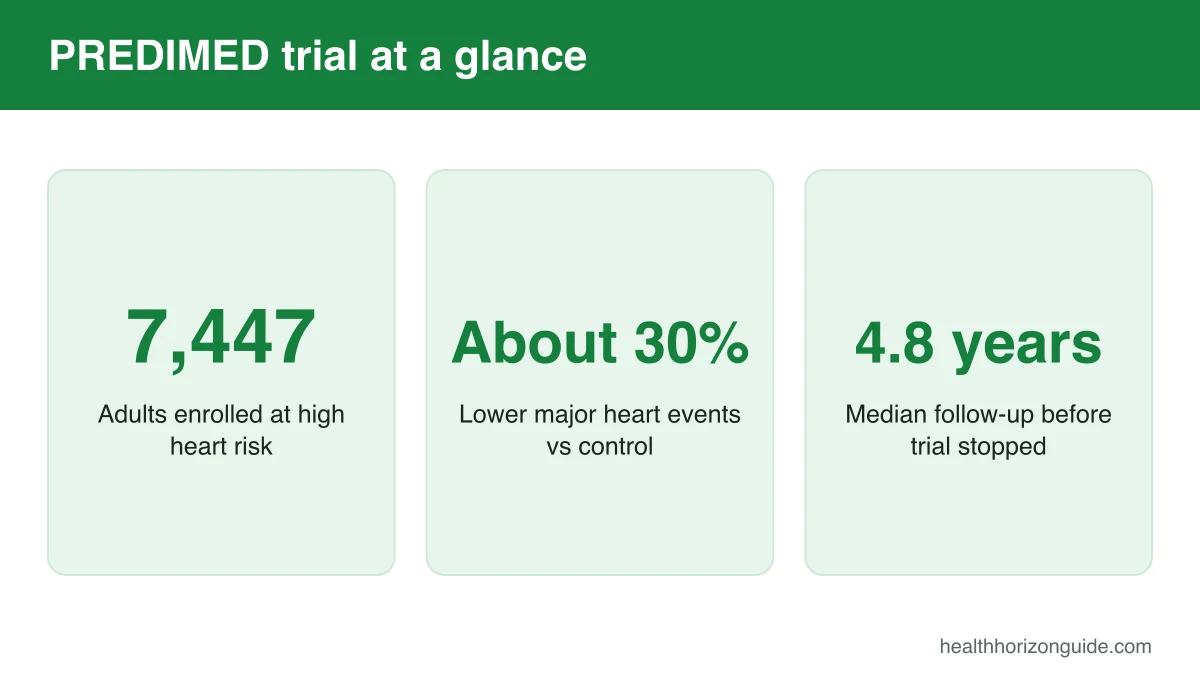
The Mediterranean diet has much stronger evidence for heart health than the Zone diet. The PREDIMED trial randomized 7,447 adults at high cardiovascular risk to a Mediterranean diet with extra virgin olive oil, a Mediterranean diet with nuts, or a reduced-fat control diet.
Major cardiovascular events were about 30% lower in the Mediterranean diet groups than in the control group, according to Harvard's Nutrition Source. The original 2013 paper was retracted for a randomization error and republished in 2018 with reanalyzed data that kept the main finding.
The Zone diet has no comparable heart outcome trial. In the 2005 JAMA trial, each diet, including the Zone diet, lowered the LDL to HDL cholesterol ratio by a similar amount, and the gains tracked with weight loss rather than diet type.
What does research say about long-term outcomes?
Long-term evidence favors the Mediterranean diet, while the Zone diet lacks long-term outcome data. Mayo Clinic notes that people who follow the Mediterranean diet tend to have lower cholesterol and blood pressure, and that benefits depend on following it long term.
A 2003 review in the Journal of the American College of Nutrition examined the Zone diet's claims. The review found no evidence that the 40/30/30 ratio lowers the insulin response more than standard healthy meals, and it called the diet's eicosanoid theory oversimplified.
Much of the research that favors the Zone diet over the Mediterranean diet comes from the Zone diet's creator. Independent replication of those results is limited, so readers should weigh those claims with care.
What are the downsides of each diet?
Each diet has practical drawbacks, though the Zone diet's are more about effort and evidence. The 4 main downsides of the Zone diet are listed below:
- Block counting and meal planning take time and practice.
- Eating out and family meals are harder to fit into a fixed ratio.
- The Zone diet promotes omega-3 and polyphenol supplements, and evidence for polyphenol supplements is mixed.
- Independent reviews find little support for the Zone diet's core theory.
The Mediterranean diet has 3 main downsides, listed below:
- The loose structure can make portion sizes easy to overlook.
- Olive oil, nuts and fish can raise the weekly food budget.
- Optional wine is not a reason to start drinking, and Mayo Clinic advises against starting alcohol for health reasons.
Who might prefer the Mediterranean diet or the Zone diet?
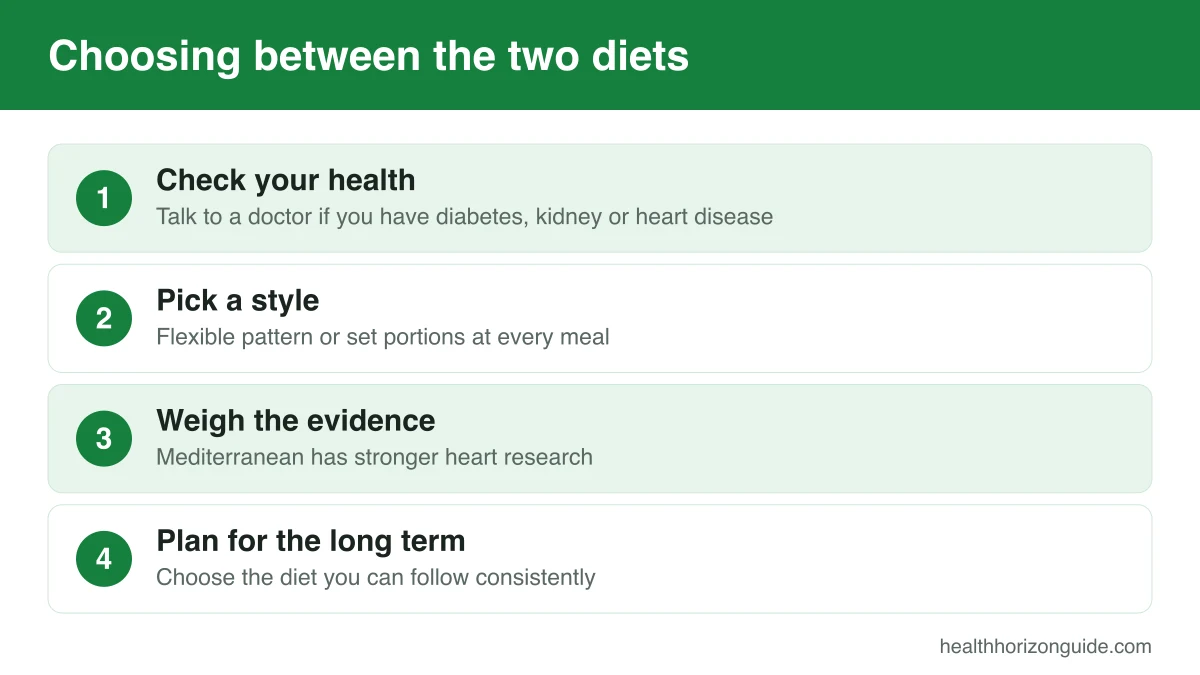
The Mediterranean diet suits people who want a flexible, well-studied pattern for everyday eating and heart health. The Zone diet may suit people who like clear rules, set portions and a fixed structure at every meal.
People who enjoy whole grains, beans and shared family meals often find the Mediterranean diet easier to keep up. People who already track macros may find Zone diet blocks familiar. Comparing other popular plans can help too, such as the Mediterranean diet versus keto.
Related diets and health conditions
The Mediterranean diet overlaps with other regional eating patterns that share plant foods and olive oil. Our guide to the Mediterranean and Balkan diets covers how two similar patterns differ.
Blood sugar is a common reason people look at the Zone diet and the Mediterranean diet. Readers with raised blood sugar can learn more in our article on whether prediabetes can be reversed.
When to talk to a doctor or dietitian
A doctor or registered dietitian should guide diet changes for anyone with a medical condition. Diabetes, kidney disease, heart disease and pregnancy can all change how much protein, carbohydrate or fat is safe, and the Zone diet's set protein share may not fit every condition.
People who take medicines for blood sugar or blood pressure should keep taking them as prescribed and ask a doctor before switching diets. Cleveland Clinic advises speaking with a primary care doctor or dietitian before making major changes to a diet.
Frequently asked questions
Is the Zone diet the same as the Mediterranean diet?
No, the Zone diet is not the same as the Mediterranean diet. The two share foods such as fish, olive oil and nuts, but the Zone diet adds a fixed 40/30/30 ratio and limits starchy grains.
Can you combine the Zone diet and the Mediterranean diet?
Yes, some people build Zone diet meals from Mediterranean foods. The Zone diet's own materials describe its food choices as similar to Mediterranean ones, although the ratio still requires planning.
Is the Zone diet safe?
The Zone diet relies on whole foods and bans no food outright, but its health claims lack strong evidence. People with kidney disease or diabetes should check the protein and carbohydrate levels with a doctor first.
Which diet is easier to stick to?
The Mediterranean diet is usually easier to stick to because it needs no counting. Adherence matters most, since research shows people lose more weight on whichever diet they follow consistently.