Combination Skin Routine: Steps for Oily and Dry Areas
A combination skin routine treats the oily T-zone and dry cheeks differently. See the steps, ingredients and mistakes to avoid, based on dermatology sources.

A combination skin routine uses a gentle cleanser, a light hydrating layer, a moisturizer matched to each zone and daily sunscreen. Combination skin is oilier in the T-zone (forehead, nose and chin) and drier on the cheeks, according to Cleveland Clinic's guide to skin types.
The aim is to treat each area for what it needs. The steps below follow dermatology guidance from the American Academy of Dermatology and Cleveland Clinic.
In this article
- What is the best skin care routine for combination skin?
- How do you know if you have combination skin?
- How should you cleanse combination skin?
- How do you moisturize combination skin?
- Which ingredients suit combination skin, and which need care?
- What mistakes make combination skin worse?
- How does combination skin differ from dry or dehydrated skin?
- When should you see a dermatologist about combination skin?
- Quick answers about combination skin routines
What is the best skin care routine for combination skin?
The best skin care routine for combination skin is a short routine that cleanses gently, hydrates, moisturizes by zone and protects with sunscreen. The table shows the four steps with the reasoning behind each one.
| Step | Morning | Evening | Why it suits combination skin |
|---|---|---|---|
| Cleanse | Rinse or use a gentle cleanser | Gentle cleanser | Removes oil without stripping the dry cheeks |
| Hydrate | Water-binding serum if needed | Same serum if needed | Adds water without adding oil |
| Moisturize | Light on the T-zone, richer on dry areas | Same pattern | Matches each zone |
| Protect | Broad-spectrum SPF 30 or higher | Not needed | Daily sun protection suits every skin type |
The American Academy of Dermatology advises a broad-spectrum sunscreen with an SPF of 30 or higher every day. The same page notes that people with combination skin can moisturize the dry areas and skip the oily T-zone.
How do you know if you have combination skin?
You know you have combination skin when some areas feel oily and others feel dry about 30 minutes after washing. Cleveland Clinic describes this pattern, and it counts the reverse pattern as combination skin as well.
Cleveland Clinic gives two ways to check. The first is blotting paper: wash and dry the face, wait 30 minutes, then press paper gently along the T-zone and cheeks. The second is simple observation at the same 30-minute mark, which clinicians call the best indicator.
The skin type quiz gives a quick estimate before you build a routine. The guide to knowing your skin type compares all five types.
Is combination skin oily or dry?
Combination skin is both oily and dry, with the oily areas usually in the T-zone. The cheeks and eye area tend to feel dry, according to Cleveland Clinic.
Skin type can change with the seasons, hormones, stress, diet and medications, so a routine may need small adjustments during the year.
How should you cleanse combination skin?
Combination skin should be cleansed with a gentle, soap-free cleanser. Cleveland Clinic advises a soap-free, fragrance-free cleanser, warm water and no long massaging, because longer massaging offers no benefit in its barrier guide.
The PubMed Central review of the skin barrier says a good cleanser removes debris and excess sebum without disrupting skin pH or damaging the outer skin layer. Harsh or alkaline cleansers appear on the review's list of factors that compromise the barrier.
A strong oil-control wash can leave the cheeks tight and flaky. Many people with combination skin describe that trade-off: the forehead feels clean, and the cheeks sting by afternoon.
How do you moisturize combination skin?
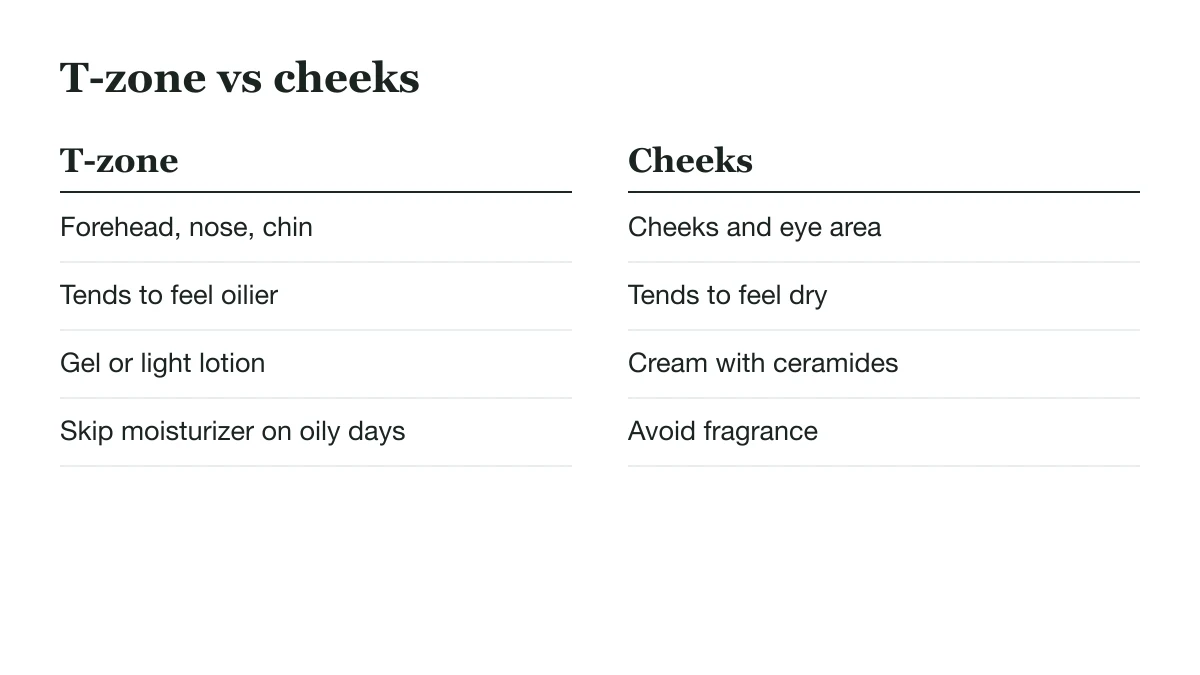
Combination skin is best moisturized by zone, with a lighter product on the T-zone and a richer one on the dry areas. The American Academy of Dermatology says gels are the lightest option, creams hydrate more, and ointments are thickest.
A zone approach has three parts.
- Use a gel or light lotion on the forehead, nose and chin.
- Use a cream on the cheeks and around the eyes.
- Skip the T-zone moisturizer on days when that area feels oily.
The American Academy of Dermatology names ceramides and hyaluronic acid as ingredients to look for, and it advises avoiding fragrance. The PubMed Central review prefers moisturizers that combine occlusive, humectant and emollient agents, with physiologic lipids or natural moisturizing factor components.
What does a zone map look like in practice?
A zone map divides the face into areas and assigns one product to each. The example below uses the T-zone and cheek pattern described by Cleveland Clinic, and it is a planning aid, not a prescription.
- Forehead, nose and chin: gel moisturizer, or none on oily days.
- Cheeks: cream with ceramides.
- Under the eyes: the same cream, applied lightly.
- Whole face in the morning: sunscreen with SPF 30 or higher.
Review the map each season. Combination skin often feels different in dry winter air than in humid summer weather, because skin type shifts with the seasons.
Which ingredients suit combination skin, and which need care?
Ingredients for combination skin should hydrate the dry zones and avoid heavy irritation on the oily zones. The table compares the ingredients named by dermatology sources.
| Ingredient type | Source statement | Where to use it |
|---|---|---|
| Ceramides | Help hydrate skin (American Academy of Dermatology) | Cheeks and any dry area |
| Hyaluronic acid | Known for intense moisturizing (American Academy of Dermatology) | All zones, under moisturizer |
| Mild alpha hydroxy acid | Preferred for gentle exfoliation (Cleveland Clinic) | Occasional gentle exfoliation |
| Fragrance | Can irritate dry skin (American Academy of Dermatology) | Avoid |
| Microbead scrubs | Avoid (Cleveland Clinic) | Avoid |
Cleveland Clinic adds that products for combination skin often use lower concentrations of active ingredients than products for oily skin. Its example is a combination-skin product with 2% benzoyl peroxide, compared with 10% in an oily-skin product.
Active ingredients also change how the barrier behaves. The PubMed Central review notes that benzoyl peroxide increases transepidermal water loss and that topical retinoids cause peeling and redness at first. The guide on using niacinamide and vitamin C together covers one common pairing in detail.
What mistakes make combination skin worse?
Combination skin gets worse mainly through over-treating the oily areas and under-protecting the dry ones. Four mistakes come up most often.
- Over-cleansing, which Cleveland Clinic lists among habits that damage the barrier.
- Over-exfoliating or scrubbing, also on the Cleveland Clinic list.
- Skipping moisturizer entirely, which is a listed cause of barrier damage.
- Using one heavy product across the whole face, which the American Academy of Dermatology warns can clog pores on oily skin.
A stinging or burning feeling when applying products suggests the barrier is stressed. The guide to a damaged skin barrier explains how to simplify a routine while the skin recovers.
How does combination skin differ from dry or dehydrated skin?
Combination skin differs from dry skin because combination skin has oily zones, while dry skin has low oil production everywhere. Dehydration is a separate state of low water that can affect combination skin.
A forehead that looks shiny but feels tight can mean dehydration on top of oiliness. The comparison in dry skin vs dehydrated skin explains how to tell the two apart with a pinch test.
When should you see a dermatologist about combination skin?
You should see a dermatologist when combination skin causes ongoing breakouts, burning or irritation despite a simple routine. The American Academy of Dermatology advises professional care when products cause burning, stinging or irritation.
Cleveland Clinic also advises working with a dermatologist when skin trouble comes from an underlying condition such as adult acne, eczema, rosacea or psoriasis. Signs of infection or severe swelling need prompt medical care.
Quick answers about combination skin routines
How many steps does a combination skin routine need?
A combination skin routine needs as few as three steps: cleanse, moisturize and apply sunscreen. A hydrating serum is optional, and no required number of steps exists.
Can you use different products on different areas?
Yes, you can use different products on different areas of the face. Cleveland Clinic says to treat areas differently or to avoid certain products in one area but not another.
What should you avoid on combination skin?
Combination skin should avoid fragrance, microbead scrubs, harsh soaps and over-exfoliation. The American Academy of Dermatology and Cleveland Clinic both list these as irritants for the skin barrier.
Does combination skin need sunscreen?
Yes, combination skin needs sunscreen like every other skin type. The American Academy of Dermatology recommends a broad-spectrum product with SPF 30 or higher every day.
Action checklist
Combination skin routine checklist
Follow these steps from the article for a simple daily routine.
0 of 9 done