Chiropractor for Neck Pain: Does It Help and Is It Safe?
A chiropractor for neck pain may ease pain in the short term. Learn what the evidence shows, the risks of neck manipulation and the red flags to check first.

A chiropractor for neck pain uses hands-on treatment, mainly spinal manipulation and mobilization, together with exercises and posture advice. Research shows low to moderate quality evidence that this care may reduce neck pain and improve function. Neck manipulation often causes mild, short-lived soreness and carries a very rare but serious artery-injury concern, so screening comes first.
Action checklist
Before seeing a chiropractor for neck pain
Use these steps from the article to prepare for a chiropractor visit for neck pain and to stay safe.
0 of 9 done
In this article
- What does a chiropractor do for neck pain?
- Does a chiropractor help neck pain?
- Is it safe to see a chiropractor for neck pain?
- Red-flag symptoms that need a doctor first
- What does a chiropractor visit for neck pain involve?
- How many chiropractor visits does neck pain need?
- Related neck problems and home care
- Can a chiropractor help with a pinched nerve in the neck?
- Chiropractor for neck and shoulder pain
- Chiropractor for neck hump
- Is cracking your neck bad for you?
- Home care and the best sleeping position for neck pain
- Chiropractor for neck pain: common questions
What does a chiropractor do for neck pain?
A chiropractor treats neck pain with manual therapy, exercise and advice, without medicine or surgery. The 4 main treatments a chiropractor uses for neck pain are listed below.
- Spinal manipulation: a controlled thrust applied to a joint of the spine by hand or with a device, as defined by the National Center for Complementary and Integrative Health (NCCIH).
- Spinal mobilization: slower joint movement with no thrust.
- Soft-tissue therapy: hands-on work on tight neck and shoulder muscles.
- Exercises and stretches: movements to practise at home, with posture and desk-setup advice.
Does a chiropractor help neck pain?
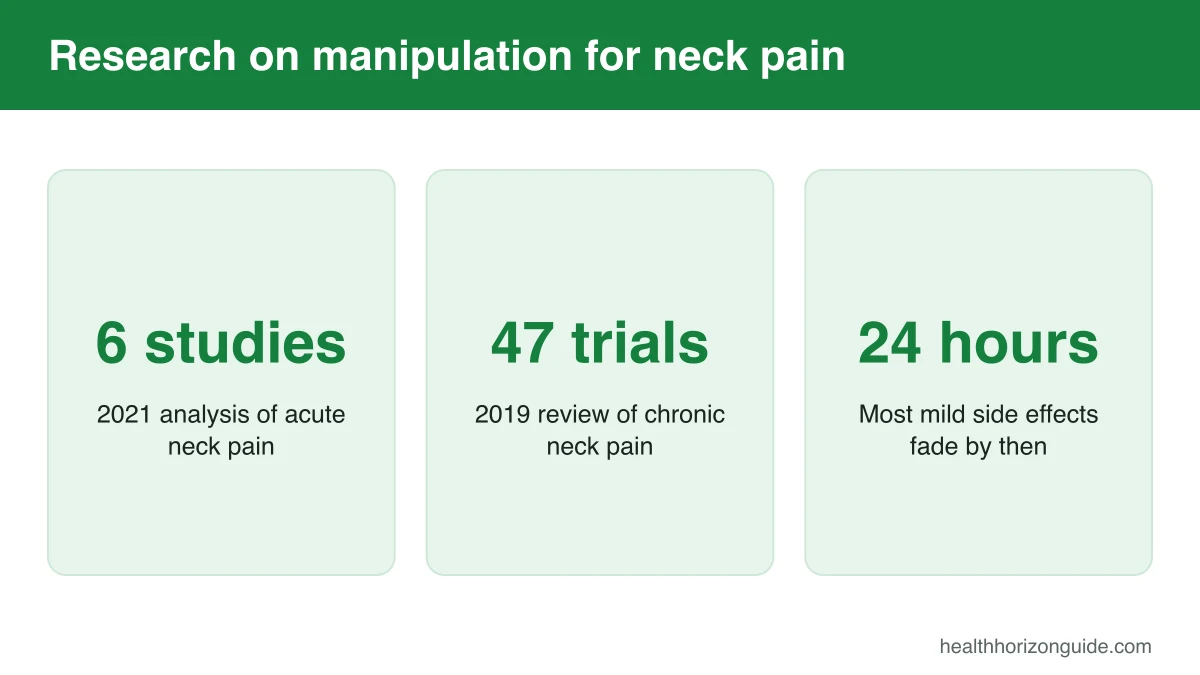
A chiropractor may help neck pain, and the supporting evidence is low to moderate in quality. The NCCIH fact sheet summarises two research reviews of spinal manipulation for neck pain. The table below shows what each review found for each type of neck pain.
| Type of neck pain | Research reviewed | Finding |
|---|---|---|
| Acute neck pain (under 6 weeks) | 2021 analysis of 6 studies with 446 participants | Spinal manipulation, alone or with other treatments, helped reduce pain intensity. The reviewers urged caution because the evidence was small and varied. |
| Chronic neck pain (12 weeks or longer) | 2019 review of 47 trials with 4,460 participants | Manipulation or mobilization may reduce pain and improve function. Evidence quality was low to moderate because most studies were small. |
Neither review shows that a chiropractor cures neck pain.
Is it safe to see a chiropractor for neck pain?
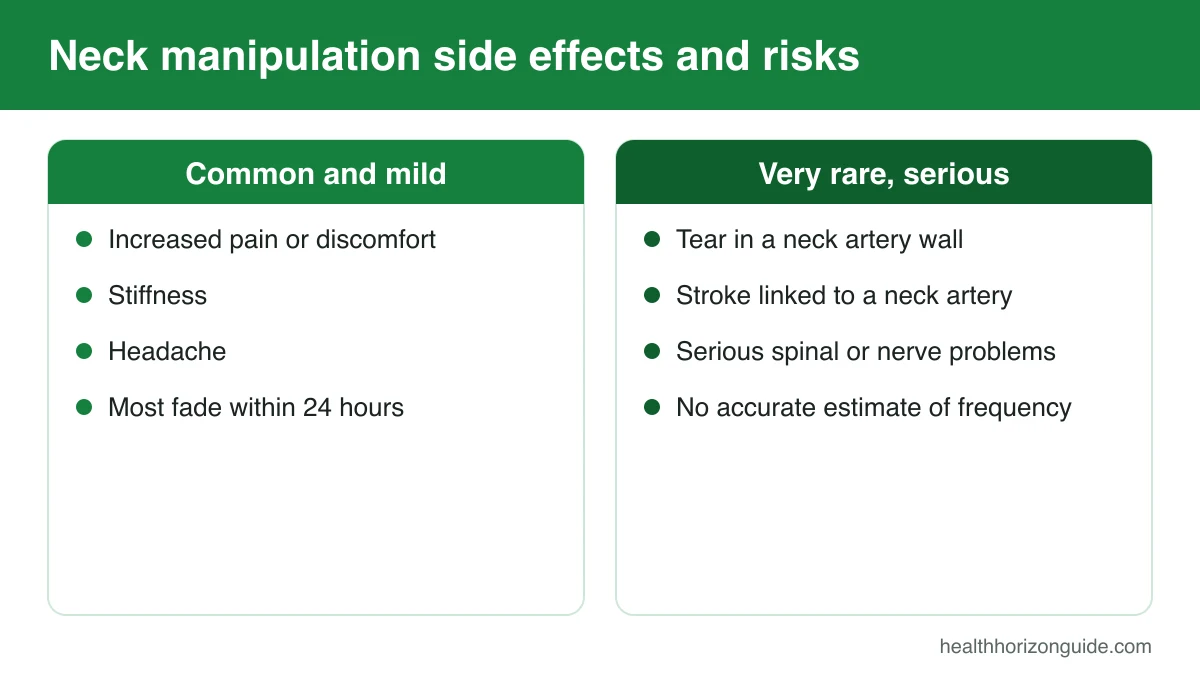
Seeing a chiropractor for neck pain is usually safe, with common mild side effects and very rare serious harms. A 2017 review of 250 publications, cited by the NCCIH, found that mild to moderate side effects are common after spinal manipulation. Those side effects are mainly increased pain or discomfort, stiffness and headache, and most go away within 24 hours. Some people also feel worn out, which we explain in our guide to tiredness after a chiropractic adjustment.
Neck manipulation and artery injury
The artery-injury concern with neck manipulation is a small tear in a neck artery wall, called cervical artery dissection, which can lead to a stroke. The NCCIH states that the tear appears to be uncommon in people who see a chiropractor for neck manipulation, and that experts disagree about whether manipulation causes the tear. A 2014 statement from the American Heart Association and American Stroke Association reported a statistical association, noted that cause and effect has not been established, and advised providers to tell patients about the association before neck manipulation. The 7 symptoms that need emergency evaluation after neck manipulation or neck trauma are listed below.
- Pain in the back of the neck or in the head
- Dizziness or vertigo
- Double vision
- Unsteadiness when walking
- Slurred speech
- Nausea and vomiting
- Jerky eye movements
Who should avoid neck manipulation?
People who should avoid neck manipulation from a chiropractor are those with conditions that raise the risk of injury. The Mayo Clinic advises against chiropractic adjustment for the 5 groups listed below.
- People with severe osteoporosis
- People with numbness, tingling or loss of strength in an arm or leg
- People with cancer in the spine
- People with an increased risk of stroke
- People with a known bone abnormality in the upper neck
Red-flag symptoms that need a doctor first
Red-flag symptoms with neck pain need a medical doctor before a chiropractor. MedlinePlus advises emergency help for a fever and headache with a neck too stiff to bring the chin to the chest, which can signal meningitis. Emergency help is also needed for neck pain with heart attack signs such as shortness of breath, sweating, nausea, or arm or jaw pain. The 6 other red-flag symptoms that call for a medical appointment are listed below.
- Numbness, tingling or weakness in an arm or hand
- Neck pain that started with a fall, blow or injury
- Loss of control over urination or bowel movements
- Trouble walking or balancing
- Trouble swallowing or breathing
- Pain that gets worse when lying down or wakes a person at night
What does a chiropractor visit for neck pain involve?
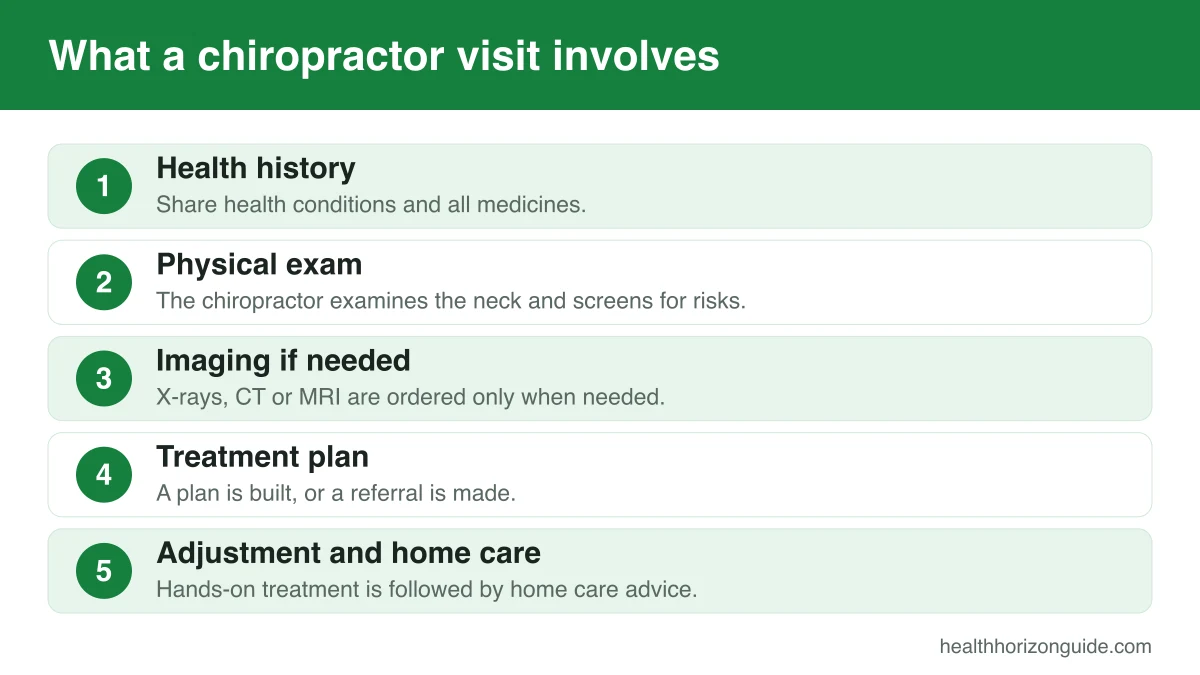
A chiropractor visit for neck pain involves a health history, a physical exam and then hands-on treatment. The Cleveland Clinic describes the visit in the 5 steps listed below.
- The chiropractor reviews the medical history, including health conditions and medicines.
- The chiropractor performs a physical exam.
- Imaging such as X-rays, CT scans or MRI is ordered only when needed.
- The chiropractor builds a treatment plan, or refers the patient elsewhere when chiropractic care is not appropriate.
- The chiropractor applies a quick, controlled force to a joint or gently stretches the joint, then suggests home care.
The popping sound during a neck adjustment comes from gases released from the joint. Our guide on what to wear for a chiropractic appointment covers clothing for the exam.
How many chiropractor visits does neck pain need?
The number of chiropractor visits for neck pain has no fixed figure in the medical sources we reviewed. The NCCIH advises asking the chiropractor about the expected number of sessions, the out-of-pocket cost and insurance coverage before treatment starts. A Cleveland Clinic article describes one visit a week as standard and states that three or four visits a week signal a problem. The NHS notes that most neck pain lasts only a few weeks, so an open-ended plan deserves a question.
Related neck problems and home care
Related neck problems change what a chiropractor for neck pain can safely offer. The sections below cover pinched nerves, shoulder pain, neck humps, neck cracking, sleep and home care.
Can a chiropractor help with a pinched nerve in the neck?
A chiropractor is not a proven treatment for a pinched nerve in the neck, and arm numbness or weakness needs a medical check first. The American Academy of Orthopaedic Surgeons (AAOS) lists the symptoms of a pinched nerve in the neck as burning or sharp pain that spreads into the shoulder or arm, pins and needles in the fingers or hand, weakness and numbness. The AAOS states that most patients get better over time, some within days or weeks. Relief options named by the AAOS are a short period in a soft collar, physical therapy exercises, anti-inflammatory medicine and steroid injections. Physical therapy may include traction, a gentle stretch of the neck that we describe in our guide to cervical decompression treatment. Spinal manipulation is absent from the AAOS list, and a physical therapist should choose pinched nerve exercises.
Chiropractor for neck and shoulder pain
A chiropractor for neck and shoulder pain should first check whether the shoulder pain starts in the neck. MedlinePlus names muscle strain or tension from desk work, slouching or an awkward sleeping position as a common cause of neck pain. Shoulder pain with tingling or weakness in the arm points toward a pinched nerve. Our article on seeing a chiropractor for shoulder pain covers the shoulder joint.
Chiropractor for neck hump
A chiropractor for a neck hump can help when poor posture is the cause. The Cleveland Clinic calls bad posture the most common cause of a neck hump and states that chiropractors or physical therapists can help with posture-related humps. Improvement can take months and depends on age and severity. Osteoporosis can also cause a neck hump, and a hump of fat behind the neck can be a symptom of Cushing's disease, so a doctor should confirm the cause. Our posture and back pain self-check tool helps readers review daily posture habits.
Is cracking your neck bad for you?
Cracking your neck is normal once or twice a day and a concern when frequent or forced. The Cleveland Clinic warns that repeated cracking can loosen neck ligaments and that forceful cracking can strain a muscle or, rarely, injure a neck artery. A constant urge to crack the neck, or pain with cracking, is a reason to see a healthcare provider or a chiropractor for neck pain.
Home care and the best sleeping position for neck pain
The best sleeping position for neck pain is any position off the stomach, with the head level with the rest of the body. The NHS advises against sleeping on the front. Home care is the usual first step, and a chiropractor for neck pain often suggests the same measures. The 5 home care steps from the NHS and MedlinePlus are listed below.
- Use a low, firm pillow and a firm mattress.
- Put heat or cold packs on the neck.
- Try gentle neck flexibility exercises and keep the neck moving.
- Ask a pharmacist or doctor about over-the-counter pain relievers.
- Avoid a neck collar unless a doctor advises one.
Chiropractor for neck pain: common questions
How long does neck pain usually last?
Neck pain usually lasts only a few weeks, according to the NHS. Pain that continues beyond a few weeks needs a doctor, with or without a chiropractor for neck pain.
Does a chiropractor neck adjustment hurt?
A chiropractor neck adjustment should not feel painful, according to the Cleveland Clinic. Mild soreness is common afterward and usually fades within 24 hours.
Should a doctor or a chiropractor see neck pain first?
A doctor should see neck pain first when any red-flag symptom is present. The Cleveland Clinic also advises telling a primary care physician about pain that lasts more than three months, even when a chiropractor is treating the neck pain.
What should a person do when symptoms appear after a neck adjustment?
A person with weakness, numbness or worsening pain after a chiropractor neck adjustment should contact a healthcare provider right away. Stroke-like symptoms such as slurred speech or double vision need emergency care.