Mediterranean Diet vs Macrobiotic Diet: Key Differences
Mediterranean diet vs macrobiotic diet: compare foods, evidence, cancer claims, nutrient risks and sodium, and learn who should avoid strict macrobiotic eating.
The Mediterranean diet and the macrobiotic diet both build meals on whole grains, vegetables and legumes, but the Mediterranean diet is more flexible and far better studied. A macrobiotic diet takes about 40 to 60 percent of daily food from whole grains, according to WebMD, and strict versions can fall short on vitamin B12, vitamin D and calcium. Cancer Research UK states that no scientific evidence shows the macrobiotic diet treats or cures cancer.
Action checklist
Choosing between Mediterranean and macrobiotic eating
Use these steps from the article to choose between the Mediterranean diet and the macrobiotic diet.
0 of 10 done
In this article
- What is the difference between the Mediterranean diet and the macrobiotic diet?
- What is the macrobiotic diet?
- What does the evidence say about the macrobiotic diet?
- Nutrient risks of a strict macrobiotic diet
- Mediterranean diet vs macrobiotic diet: which is better?
- What do the Mediterranean and macrobiotic diets share?
- Who should avoid a strict macrobiotic diet?
- When should you see a doctor or dietitian about the macrobiotic diet?
- Mediterranean diet vs macrobiotic diet: common questions
What is the difference between the Mediterranean diet and the macrobiotic diet?
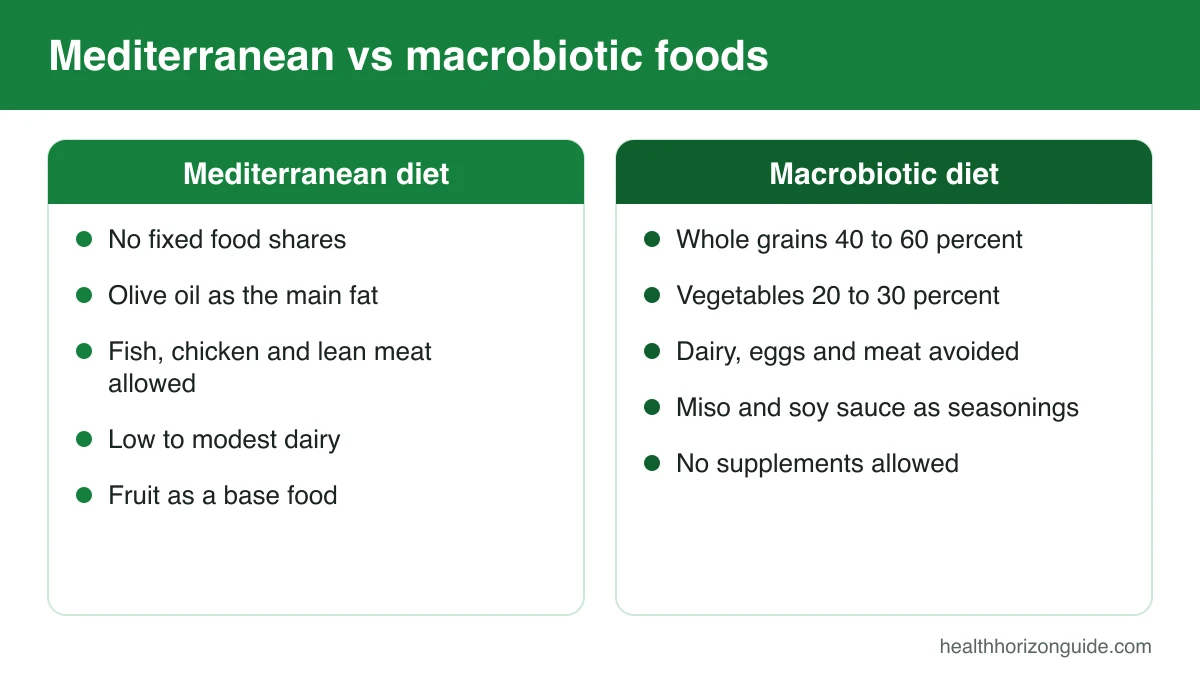
The difference between the Mediterranean diet and the macrobiotic diet is how strict the food rules are and how much research supports each diet. The macrobiotic diet sets fixed shares for grains, vegetables and beans, and it excludes dairy, eggs and meat. The Mediterranean diet is a looser pattern of plant foods, fish and olive oil, with no fixed shares.
Mayo Clinic describes the Mediterranean diet as less of a restricted diet and more of a lifestyle. Fruits, vegetables, whole grains, legumes and nuts form its base, and extra virgin olive oil is the main fat. Our Mediterranean diet food list covers each group in detail.
Mediterranean diet and macrobiotic diet foods compared
Mediterranean diet and macrobiotic diet foods overlap on grains, vegetables and beans, and differ on dairy, eggs, meat and fruit. The table below compares the Mediterranean diet and the macrobiotic diet across 8 food groups.
| Food group | Mediterranean diet | Macrobiotic diet |
|---|---|---|
| Whole grains | Eaten regularly | About 40 to 60 percent of daily food |
| Vegetables | A base of every meal | About 20 to 30 percent, locally grown, with some vegetables avoided |
| Beans and legumes | A base of the diet | About 5 to 10 percent, with bean products and sea vegetables |
| Fruit | A base of the diet | Local fruit occasionally, tropical fruit and juice avoided |
| Fish and seafood | Allowed | Several times a week in some versions |
| Meat, poultry and eggs | Chicken and lean meat in modest amounts | Avoided |
| Dairy | Low to modest amounts | Avoided |
| Main fat and flavour | Extra virgin olive oil | Miso, soy sauce and pickles as common seasonings |
What is the macrobiotic diet?
The macrobiotic diet is a grain-based eating plan rooted in a philosophy of balance. Japanese philosopher George Ohsawa developed the macrobiotic diet in the 1920s and believed it could cure cancer and other serious illnesses, according to Cancer Research UK.
Michio Kushi, a student of Ohsawa, helped spread macrobiotics in the United States after the Second World War. WebMD describes the macrobiotic diet as drawing on an Asian yin and yang philosophy, which sorts foods by their supposed balancing qualities.
How much of the macrobiotic diet is whole grains?
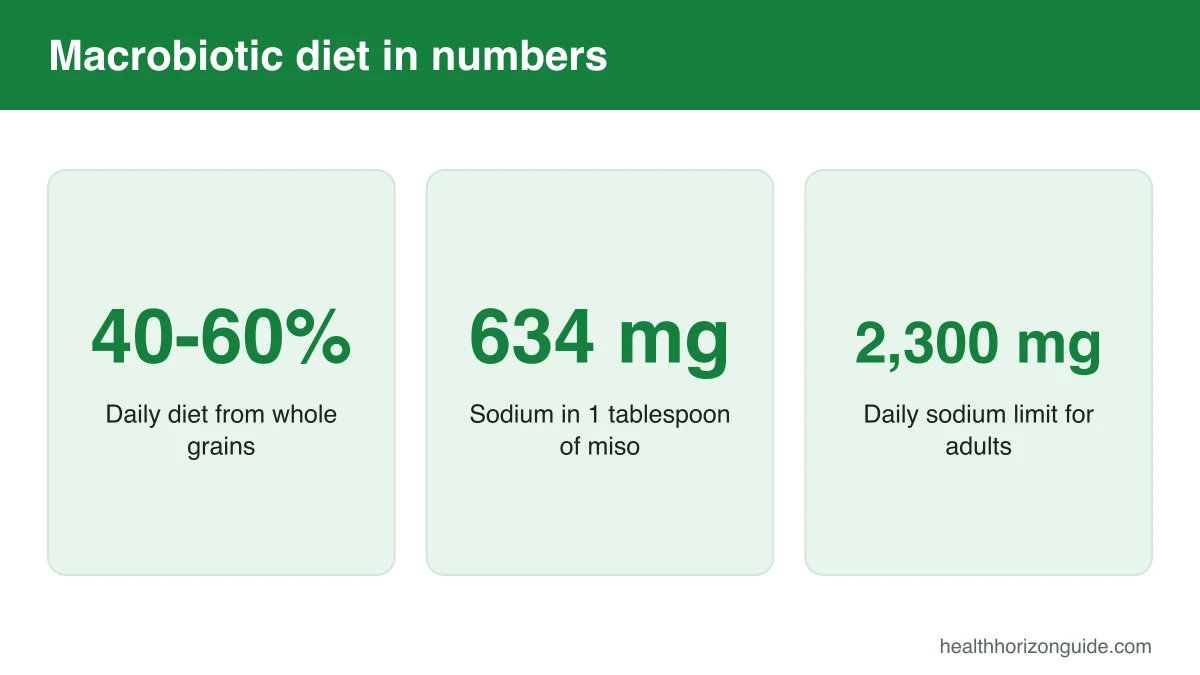
Whole grains make up about 40 to 60 percent of the macrobiotic diet in the WebMD guide. Cancer Research UK puts organic whole grains, such as brown rice, barley, oats and buckwheat, at about half of food intake.
The 3 main food shares of the macrobiotic diet are listed below.
- Whole grains: about 40 to 60 percent of the daily diet.
- Locally grown vegetables: about 20 to 30 percent of the daily diet.
- Beans, bean products such as miso, and sea vegetables: about 5 to 10 percent of the daily diet.
Foods avoided on the macrobiotic diet
Foods avoided on the macrobiotic diet include dairy, eggs, poultry, meat, refined sugar and processed foods. WebMD lists tropical fruit, fruit juice, coffee, soda, strong alcohol and spicy foods as other exclusions.
What does the evidence say about the macrobiotic diet?
The evidence on the macrobiotic diet is very limited and comes mostly from small or modelled studies. A 2015 analysis in Nutrition and Cancer modelled a Kushi Institute menu plan against a United States national dietary sample from 2009 to 2010.
The modelled macrobiotic plan had a lower share of energy from fat, more fibre and a more anti-inflammatory dietary index score. The same plan fell short of recommended intakes for vitamin D, vitamin B12 and calcium. The analysis measured a menu, not people.
The Mediterranean diet has a much larger research base. Mayo Clinic reports that studies connect the Mediterranean diet with lower cholesterol and blood pressure, and that long-term adherence matters for heart benefit.
Does the macrobiotic diet cure cancer?
No, the macrobiotic diet does not cure cancer, and leading cancer organisations do not recommend it for treatment. Cancer Research UK states that it does not support macrobiotic diets for people with cancer. WebMD reports that the American Cancer Society does not recommend the macrobiotic diet to prevent cancer, because scientific evidence is lacking.
Long-term macrobiotic followers often have low fat and cholesterol levels, which may lower the risk of some cancers. Cancer Research UK adds that a normal healthy diet can offer the same benefit.
Nutrient risks of a strict macrobiotic diet
The nutrient risks of a strict macrobiotic diet are low intakes of vitamin B12, vitamin D, calcium and protein. Cancer Research UK states that followers may not get enough calories, vitamins, calcium, protein or iron, and may lose a lot of weight.
The 4 main nutrient gaps of a strict macrobiotic diet are listed below.
- Vitamin B12: found mainly in animal foods, which the macrobiotic diet excludes or limits.
- Vitamin D: low in modelled macrobiotic menus, with no supplements allowed.
- Calcium: harder to reach without dairy, so WebMD advises fortified non-dairy foods.
- Protein and calories: at risk of falling short, especially for people who are ill.
Early, very strict versions of the macrobiotic diet, which allowed only whole grains, caused severe malnutrition and sometimes death, according to Cancer Research UK. A Dutch follow-up study of 73 adolescents fed a macrobiotic diet until about age 6 found that many still had poor vitamin B12 status after moving to diets with some animal foods.
How much sodium do miso and soy sauce add?
Miso and soy sauce add a large amount of sodium to macrobiotic meals. One tablespoon (17 grams) of miso contains 634 milligrams of sodium, according to WebMD. Adults are advised to eat no more than 2,300 milligrams of sodium a day.
Soy sauce and pickled vegetables are other salty staples of macrobiotic cooking. People with high blood pressure or heart disease may need even less sodium, so lower-sodium miso and smaller amounts suit them better.
Mediterranean diet vs macrobiotic diet: which is better?
The Mediterranean diet is the better choice for most people. The Mediterranean diet has stronger evidence and fewer nutrient gaps than the macrobiotic diet.
The 3 main reasons the Mediterranean diet suits most people better are listed below.
- Evidence: the Mediterranean diet is linked in studies to lower cholesterol and blood pressure.
- Nutrients: dairy, fish and lean meat in the Mediterranean diet supply vitamin B12 and calcium.
- Cost and effort: the macrobiotic diet calls for organic foods and seaweed, which Cancer Research UK notes can be expensive.
The day-to-day experience differs too. A person on a strict macrobiotic diet shops for organic and local produce and cooks most meals from scratch, while the Mediterranean diet adapts to ordinary supermarket food and restaurant menus.
What do the Mediterranean and macrobiotic diets share?
The Mediterranean and macrobiotic diets share a focus on whole foods, vegetables, legumes and whole grains. Both diets limit refined sugar and processed food.
The fibre from grains, beans and vegetables in both diets feeds gut bacteria, a topic covered in our science-backed gut health guide. Other restrictive plans make a useful contrast, such as the raw food diet compared with the Mediterranean diet and the blood type diet compared with the Mediterranean diet.
Can you combine the Mediterranean diet and the macrobiotic diet?
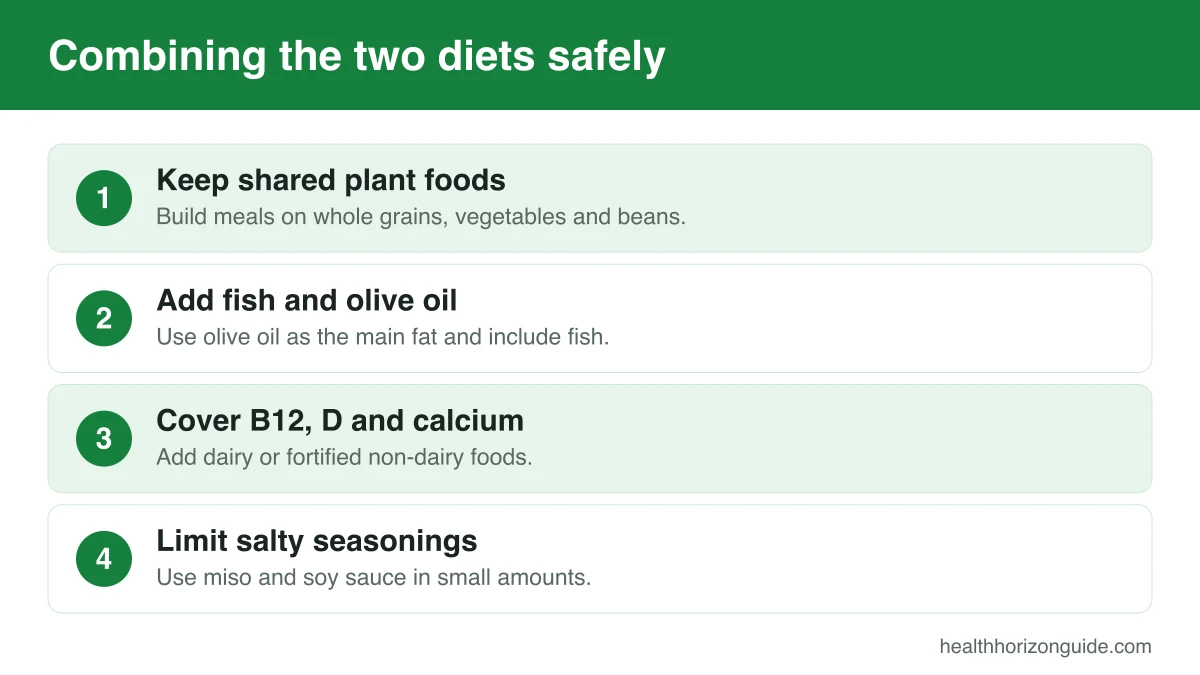
Yes, you can combine the Mediterranean diet and the macrobiotic diet by keeping the shared plant foods and adding the nutrients a strict macrobiotic plan lacks. A combined plan keeps whole grains, vegetables, beans and sea vegetables, and adds fish, olive oil and calcium-rich or fortified foods.
Miso and soy sauce work best in small amounts on a combined plan. We found no trials that test a combined Mediterranean and macrobiotic diet, so the combination rests on the evidence for each part.
Who should avoid a strict macrobiotic diet?
People who should avoid a strict macrobiotic diet include children, pregnant and breastfeeding women, and people with cancer acting without their oncology team. The 4 groups below need medical guidance before any macrobiotic eating.
- Infants and children, because Dutch studies linked macrobiotic diets in early childhood to lasting vitamin B12 shortfalls.
- Pregnant and breastfeeding women, because a Dutch study of macrobiotic infants found less vitamin B12 in macrobiotic mothers' breast milk.
- People with cancer, who often need more calories and should speak to their cancer specialist first.
- People with high blood pressure or heart disease, because miso and soy sauce add sodium.
A macrobiotic diet must never replace conventional cancer treatment, according to Cancer Research UK.
When should you see a doctor or dietitian about the macrobiotic diet?
A doctor or dietitian is needed before starting the macrobiotic diet during pregnancy, for a child, or with cancer or another long-term illness. A dietitian can plan a menu that covers vitamin B12, vitamin D, calcium and protein.
Medical advice is also needed when unplanned weight loss happens on the macrobiotic diet. A doctor can check vitamin B12 and vitamin D levels with a blood test.
Mediterranean diet vs macrobiotic diet: common questions
Is the macrobiotic diet vegan?
No, the macrobiotic diet is not always vegan. Many macrobiotic followers are fully vegan, while others eat small amounts of fish or meat, according to Cancer Research UK.
Is the Mediterranean diet easier to follow than the macrobiotic diet?
Yes, the Mediterranean diet is easier to follow than the macrobiotic diet for most people. The Mediterranean diet sets no fixed food shares and allows dairy, eggs and lean meat in modest amounts.
Does the macrobiotic diet allow supplements?
No, the traditional macrobiotic diet does not allow vitamin or mineral supplements. WebMD advises calcium and vitamin D fortified non-dairy foods for people who avoid dairy.