Mediterranean Diet vs Blood Type Diet: Which Is Better?
Mediterranean diet vs blood type diet: compare foods by blood type, what the research shows, why some people feel better, and which diet to choose.

The Mediterranean diet has strong trial evidence for heart health, while the blood type diet has no evidence that matching food to blood type improves health. A 2013 systematic review in the American Journal of Clinical Nutrition found no studies showing health benefits from blood type diets. Any gains people notice on the blood type diet appear to come from eating more whole foods, which is the core of the Mediterranean diet.
Action checklist
Choosing between the Mediterranean and blood type diet
Use these steps from the article to choose between the Mediterranean diet and the blood type diet.
0 of 8 done
In this article
- What is the difference between the Mediterranean diet and the blood type diet?
- What does the blood type diet claim?
- Foods by blood type vs Mediterranean diet foods
- What does the evidence say about the blood type diet?
- Why do some people feel better on the blood type diet?
- What is the evidence for the Mediterranean diet?
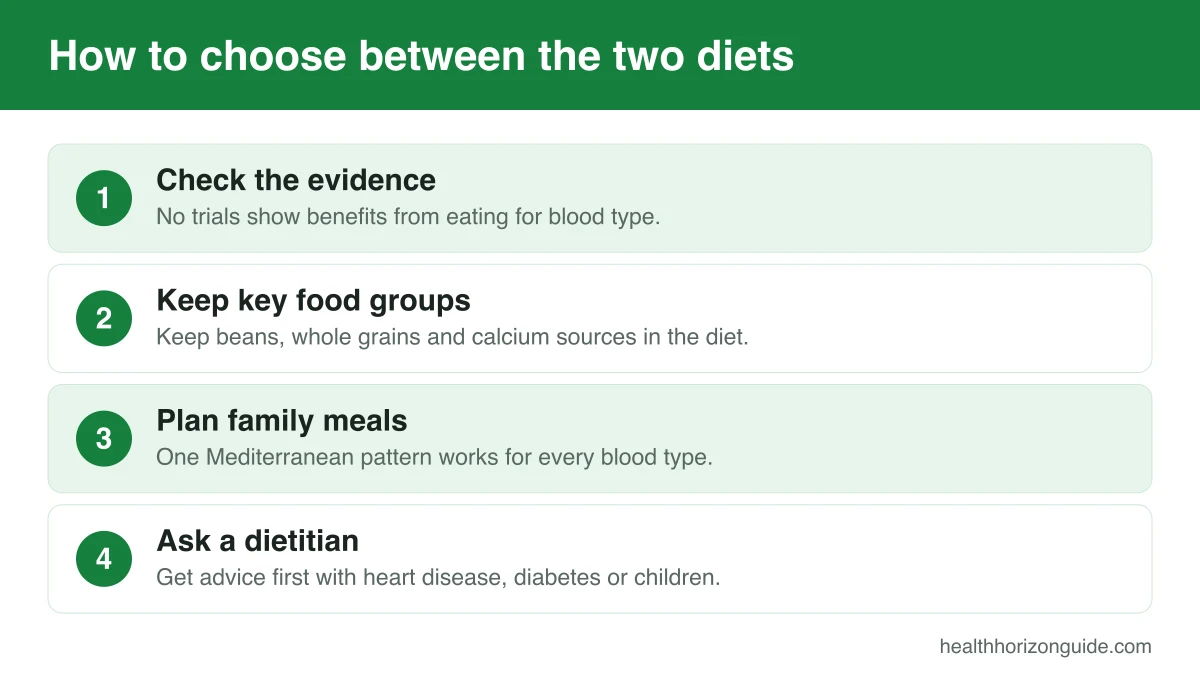
- Mediterranean diet vs blood type diet: which one should you choose?
- What are the risks of restricting food by blood type?
- When should you see a dietitian about the blood type diet?
- Mediterranean diet vs blood type diet: common questions
What is the difference between the Mediterranean diet and the blood type diet?
The difference between the Mediterranean diet and the blood type diet is that the blood type diet sets separate food rules for each blood type, while the Mediterranean diet uses one pattern for everyone. The Mediterranean diet centers on fruits, vegetables, whole grains, legumes, nuts and extra virgin olive oil, according to Mayo Clinic.
The 4 main differences between the Mediterranean diet and the blood type diet are listed below.
- Basis: the blood type diet rests on ABO blood type, while the Mediterranean diet rests on a traditional regional eating pattern.
- Food rules: the blood type diet gives four separate food lists, while the Mediterranean diet gives one.
- Evidence: the Mediterranean diet has large randomized trials behind it, while the blood type diet has no supporting trials.
- Effort: the blood type diet can mean separate meals for family members with different blood types.
What does the blood type diet claim?
The blood type diet claims that each ABO blood type digests and responds to food differently. Naturopathic doctor Peter D'Adamo set out the blood type diet in the 1996 book Eat Right 4 Your Type, according to WebMD.
D'Adamo links each blood type to an ancestral way of life. Type O is tied to hunter-gatherers, type A to early farmers and type B to nomadic herders. Type AB is described as a recent blend of farmers and nomads.
The blood type diet also claims that lectins, proteins found in some foods, react with blood type antigens and cause fatigue, headaches and digestive problems. Researchers have questioned the ancestral timeline, and some suggest type AB may have been the first blood group.
Foods by blood type vs Mediterranean diet foods
Foods by blood type differ mainly in protein, dairy and grains, while Mediterranean diet foods stay the same for every blood type. The table below compares the four blood type diet plans, as WebMD describes them, with the Mediterranean diet.
| Plan | Foods favored | Foods limited or avoided |
|---|---|---|
| Type O diet | Lean meat, poultry, fish, vegetables, fruit and olive oil | Grains, beans and dairy |
| Type A diet | Vegetables, fruit, tofu, beans, legumes and whole grains | Dairy, wheat, corn and kidney beans |
| Type B diet | Green vegetables, eggs, certain meats and low-fat dairy | Corn, wheat, buckwheat, lentils, tomatoes, peanuts and chicken |
| Type AB diet | Tofu, seafood, dairy, green vegetables, yogurt and kefir | Caffeine, alcohol and smoked or cured meats |
| Mediterranean diet, every blood type | Fruits, vegetables, whole grains, legumes, nuts and extra virgin olive oil | Saturated and trans fats, replaced by unsaturated fats |
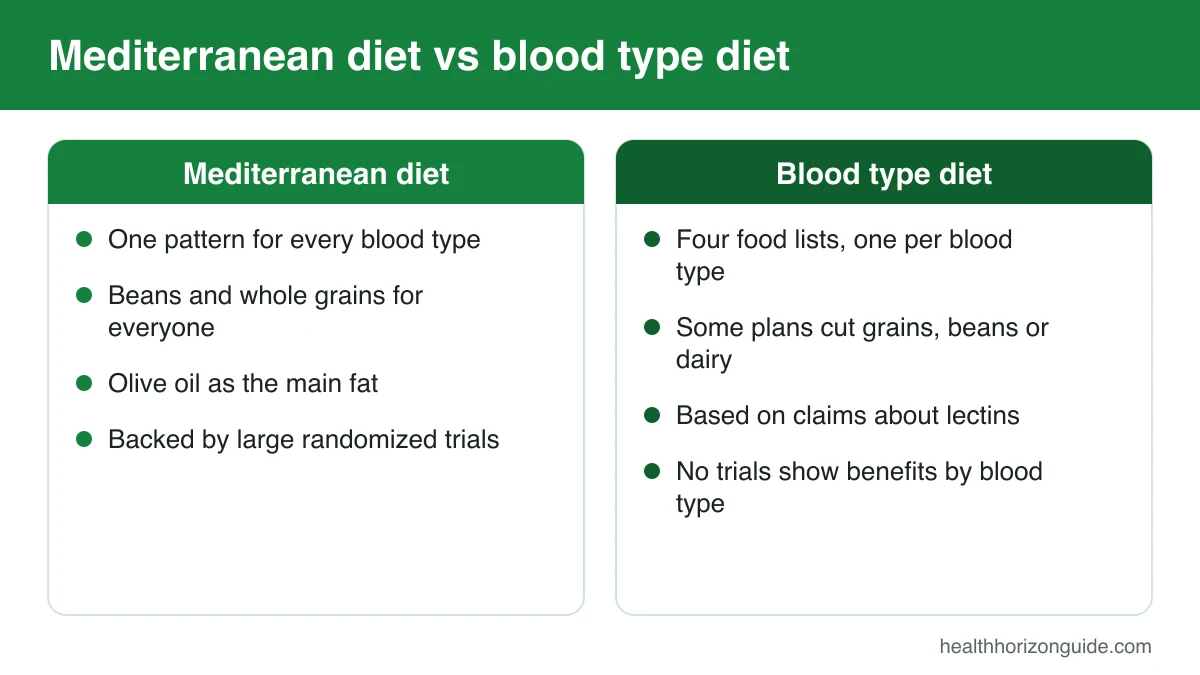
The Mediterranean diet keeps beans and whole grains on the plate for everyone, while the type O and type B plans cut some of them. Our Mediterranean diet food list sets out the foods in each group.
What does the evidence say about the blood type diet?
The evidence on the blood type diet shows no proof that eating for your blood type improves health. A 2013 systematic review in the American Journal of Clinical Nutrition searched for studies linking blood type diets to health outcomes.
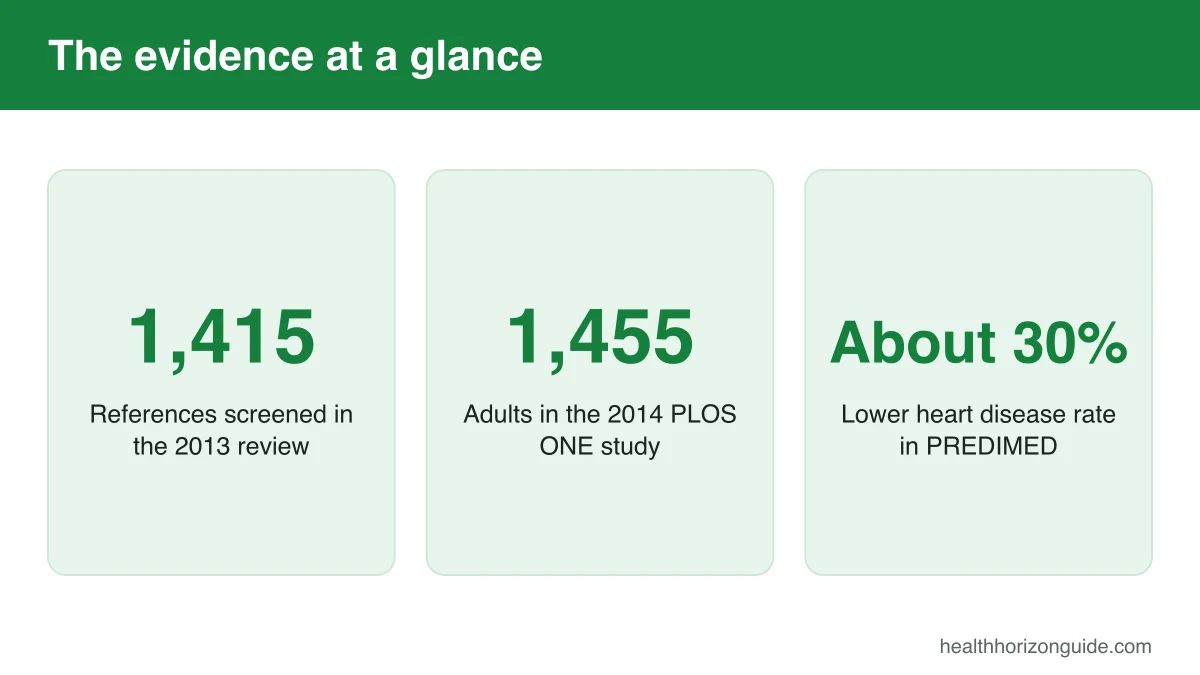
The reviewers screened 1,415 references, as WebMD reports, and found one relevant study that did not directly answer the question. The review concluded that no evidence exists to validate the claimed health benefits of blood type diets.
What did the 2014 PLOS ONE study on the blood type diet find?
The 2014 PLOS ONE study on the blood type diet found that some blood type diets were linked to better health markers in everyone, whatever their blood type. Researchers scored 1,455 mostly young, healthy adults on how closely they ate each of the four diets, as ScienceDaily reported.
Closer adherence to the type A diet was linked to better markers across the whole group, not only in people with type A blood. Matching a diet to a person's own blood type did not change the size of any link.
The study design was cross-sectional, so the results show links and not proof of cause. The senior author, Ahmed El-Sohemy, concluded that the blood type diet hypothesis is false.
Why do some people feel better on the blood type diet?
Some people feel better on the blood type diet because the plans cut processed food and add more whole foods. Registered dietitian Devon Peart told Cleveland Clinic that the results come from food choices and not from blood type.
The helpful choices on the blood type diet include more fruits and vegetables, good-quality grains, and less and leaner meat. The same changes sit at the heart of the Mediterranean diet.
The day-to-day experience of the blood type diet can be harder for families. Cleveland Clinic notes that a household with mixed blood types may end up cooking different meals for different people.
What is the evidence for the Mediterranean diet?
The evidence for the Mediterranean diet includes a large randomized trial with about 30% less cardiovascular disease. The PREDIMED trial randomized 7,447 adults at high cardiovascular risk to a Mediterranean diet with extra virgin olive oil, a Mediterranean diet with mixed nuts, or a reduced-fat control diet.
Cardiovascular disease incidence was about 30% lower in both Mediterranean diet groups than in the control group, according to the Harvard T.H. Chan School of Public Health. The original 2013 paper was retracted in 2018 over randomization errors, and the reanalyzed paper reached a largely unchanged conclusion.
Mayo Clinic links the Mediterranean diet with lower rates of high cholesterol and high blood pressure. Mayo Clinic adds that the heart benefit depends on following the Mediterranean diet over the long term.
Mediterranean diet vs blood type diet: which one should you choose?
The Mediterranean diet is the better choice for most people, whatever their blood type. The Mediterranean diet has trial evidence, works the same way for every family member, and keeps the beans and whole grains that some blood type plans remove.
Cleveland Clinic states that a proven anti-inflammatory diet such as the Mediterranean diet can give the same results as the blood type diet with less complexity. The best diet is a healthy pattern that a person can keep long term.
Readers who prefer a meat-forward plan can compare the Mediterranean diet and the paleo diet, since the type O plan is a low-carb, high-protein pattern. Our guide to the Mediterranean diet vs macrobiotic diet covers another plan with strict food rules.
What are the risks of restricting food by blood type?
The risks of restricting food by blood type are missed nutrients, extra saturated fat on some plans and added cost. The 5 main risks of the blood type diet, as WebMD describes them, are listed below.
- Saturated fat: the type B plan includes red meat and dairy, which are higher in saturated fat and may raise heart disease risk.
- Calcium and vitamin D: removing dairy may leave children short of calcium and vitamin D.
- Beans and whole grains: dropping beans and whole grains removes foods with useful nutrients.
- Lactose intolerance: the type B plan recommends dairy, which can be a problem for people who are lactose intolerant.
- Cost: specialty foods, organic produce and supplements can be expensive.
The blood type diet does not directly address heart disease, high blood pressure or high cholesterol. The Mediterranean diet carries fewer of these concerns, since it keeps legumes and whole grains for everyone.
When should you see a dietitian about the blood type diet?
A dietitian or doctor is worth seeing before starting the blood type diet with heart disease, diabetes or another long-term condition. WebMD advises anyone considering the blood type diet to speak with a doctor or registered dietitian first.
Children need extra care on the blood type diet, since a restrictive plan can miss their nutritional needs. A registered dietitian can also help fit the Mediterranean diet to food allergies, cultural foods and budget.
Unplanned weight loss, ongoing tiredness and digestive problems that last for weeks are reasons to see a doctor on any diet, including the Mediterranean diet. People weighing several structured plans can read our comparison of the Mediterranean diet and the Zone diet.
Mediterranean diet vs blood type diet: common questions
Is the blood type diet scientifically proven?
No, the blood type diet is not scientifically proven. The 2013 systematic review found no evidence for blood type diets, and the 2014 study found that diet effects did not depend on blood type.
Can people with type O blood follow the Mediterranean diet?
Yes, people with type O blood can follow the Mediterranean diet. The Mediterranean diet uses one pattern for every blood type, and the 2014 study found no added benefit from matching food to blood type.
Does blood type affect how you respond to a diet?
No, blood type does not appear to affect how a person responds to a diet. El-Sohemy stated that responses to the four blood type diets had nothing to do with blood type.