Mediterranean Diet vs High Protein Diet: Key Differences
Mediterranean diet vs high protein diet: compare foods, protein targets, weight loss, muscle, heart health, kidneys and diabetes, plus a sample menu.
The Mediterranean diet is a whole eating pattern built on vegetables, legumes, fish and olive oil, while a high-protein diet is defined by one nutrient, often 25 to 30% of calories from protein. The Harvard T.H. Chan School of Public Health states that the source of protein likely matters more for health than the amount. A Mediterranean diet can be high in protein when fish, legumes and yogurt fill the plate.
Action checklist
Building a high-protein Mediterranean diet
Use these steps from the article to compare and combine the Mediterranean diet and a high-protein diet.
0 of 9 done
In this article
- What is the difference between the Mediterranean diet and a high-protein diet?
- What counts as a high-protein diet?
- Can the Mediterranean diet be high in protein?
- High protein vs Mediterranean diet for weight loss and fullness
- Mediterranean diet vs high-protein diet for muscle and older adults
- Mediterranean diet vs high-protein diet for heart health
- Mediterranean diet vs high-protein diet for type 2 diabetes
- What should you check before choosing a high-protein diet?
- What does a high-protein Mediterranean day look like?
- When should you see a dietitian about a high-protein or Mediterranean diet?
- Mediterranean diet vs high-protein diet: common questions
What is the difference between the Mediterranean diet and a high-protein diet?
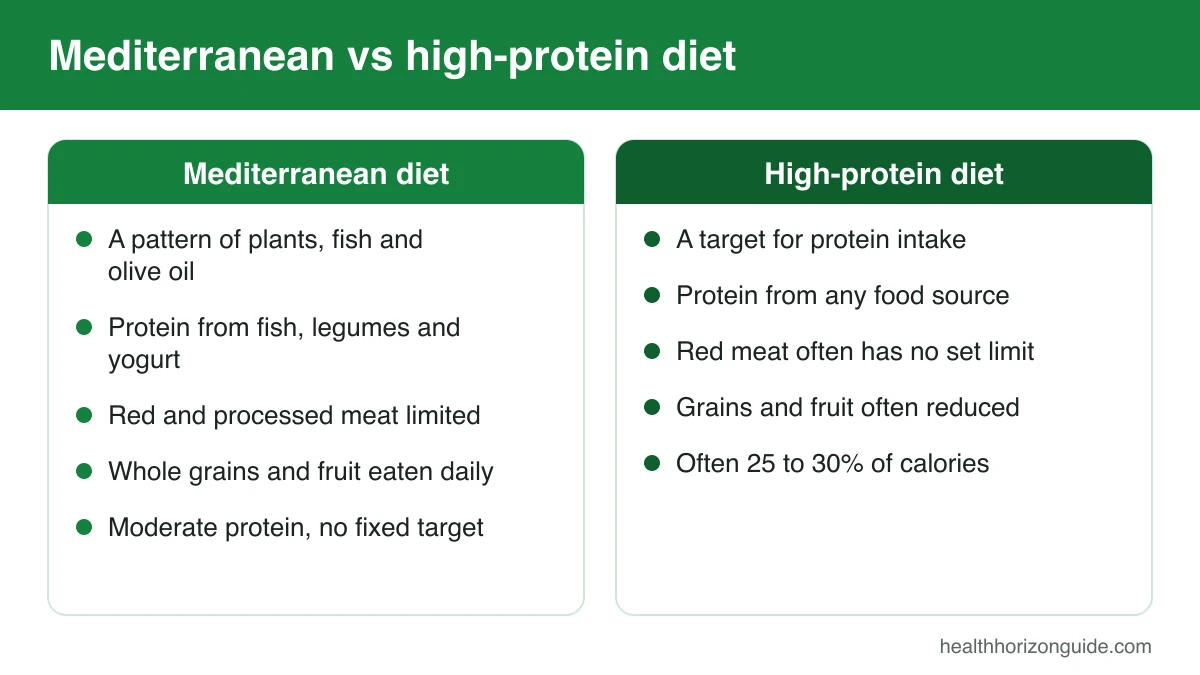
The difference between the Mediterranean diet and a high-protein diet is a food pattern versus a nutrient target. The Mediterranean diet describes which foods to eat and how often. A high-protein diet sets a protein amount and leaves the food choices open, so one version is built on steak and another on lentils.
The table below compares the Mediterranean diet and a typical high-protein diet across 6 features.
| Feature | Mediterranean diet | High-protein diet |
|---|---|---|
| Main rule | Mostly plant foods, fish and olive oil | A higher share of calories from protein |
| Main protein foods | Fish, seafood, legumes, yogurt, eggs, nuts and poultry | Any protein food, often meat, eggs, dairy and protein powder |
| Red and processed meat | Limited | Allowed, with no set limit in many plans |
| Whole grains and fruit | Eaten daily | Often reduced to make room for protein |
| Main fat | Olive oil | Not specified |
| Protein amount | Moderate, with no fixed target | A fixed target, often 25 to 30% of calories |
What counts as a high-protein diet?
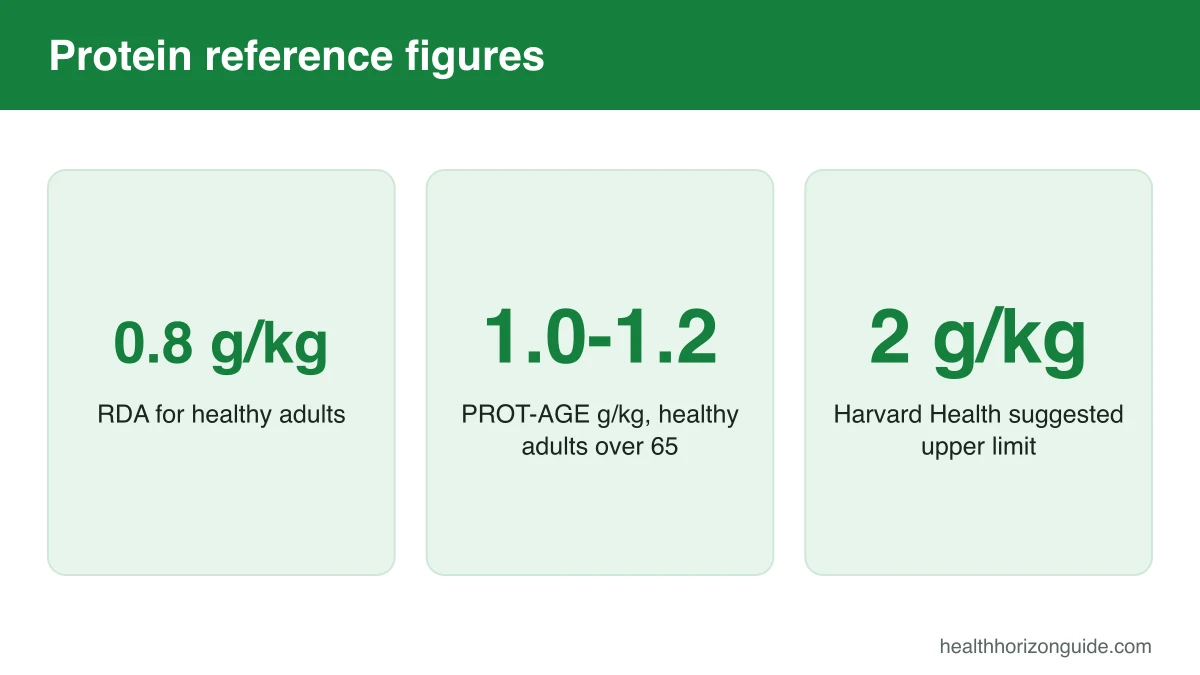
A high-protein diet counts as any diet that supplies clearly more protein than the official reference intake. Nutrition reviews note that experts have no agreed definition. Weight-loss trials often set protein near 25 to 30% of daily calories.
How much protein does the RDA set?
The RDA sets protein at 0.8 grams per kilogram of body weight per day for healthy adults. Harvard Health Publishing lists the common benchmark as 56 grams a day for men and 46 grams a day for women. The RDA is a minimum to prevent deficiency, not a personal target.
Harvard Health suggests that most healthy adults keep total protein below about 2 grams per kilogram of ideal body weight. A dietitian quoted in the same article notes that basing protein on current weight can overestimate needs in people with overweight.
Can the Mediterranean diet be high in protein?
Yes, the Mediterranean diet can be high in protein when protein foods appear at every meal. The traditional Mediterranean diet is moderate in protein and limits red meat. Fish, legumes and dairy raise the protein share without leaving the pattern.
The 6 Mediterranean protein foods that raise protein intake are listed below.
- Fish and seafood, such as salmon, sardines, tuna and shellfish.
- Beans, lentils and chickpeas, which add fiber with the protein.
- Greek yogurt and other plain yogurt.
- Eggs.
- Poultry, such as chicken and turkey.
- Nuts and seeds, including almonds, walnuts and tahini.
Our Mediterranean diet food list sorts every food group by how often to eat it. People on the r/mediterraneandiet forum often ask whether a very high protein intake still counts as Mediterranean. The answer depends on the source: a plate of fish and beans fits, while daily steak and bacon does not.
High protein vs Mediterranean diet for weight loss and fullness
A high-protein diet and the Mediterranean diet both support weight loss when total calories fall. Higher-protein diets have the stronger evidence for fullness. A review of protein in weight loss and maintenance found that higher-protein diets improved appetite control, body weight and body composition.
The size of the satiety effect is modest in feeding studies. Long-term trials beyond 12 months are limited for high-protein diets, so long-term results are less certain than for the Mediterranean diet.
Weight loss still depends on energy balance on either diet. Our daily calorie calculator estimates a daily calorie target as a starting point.
Mediterranean diet vs high-protein diet for muscle and older adults
A higher protein intake helps older adults keep muscle, and a Mediterranean diet can supply it. The PROT-AGE Study Group recommends 1.0 to 1.2 grams per kilogram per day for healthy adults over 65. The group considers the RDA of 0.8 grams too low for this age.
The PROT-AGE group sets 1.2 to 1.5 grams per kilogram for older adults with acute or chronic illness. The group excludes people with severe kidney disease from these higher figures. Exercise, especially strength training, works with protein to protect muscle.
A carer planning meals for an older parent often finds that a smaller appetite makes protein targets hard to reach. Yogurt, eggs, soft fish and lentil soup add protein in small portions within the Mediterranean diet.
Mediterranean diet vs high-protein diet for heart health
The Mediterranean diet is the better-supported choice for heart health, because heart risk follows the protein source. Harvard research links even small regular amounts of red meat, especially processed meat, to higher rates of heart disease and stroke.
The Harvard Nutrition Source reports that replacing red and processed meat with beans, soy, nuts, fish or poultry appears to lower these risks. A meta-analysis of trials cited on the same page found lower LDL cholesterol on diets with more legumes, soy and nuts than on diets with red meat.
The 2 protein patterns compare as follows.
- A high-protein diet built on red and processed meat carries a higher heart risk.
- A high-protein diet built on fish, legumes, nuts and poultry matches the Mediterranean diet on protein source.
A diet of meat alone sits at the far end of the scale, as our comparison of the Mediterranean diet vs carnivore diet explains. Our guide to the Mediterranean diet vs keto covers a high-fat plan that often raises meat intake as well.
Mediterranean diet vs high-protein diet for type 2 diabetes
The Mediterranean diet has stronger long-term evidence for lowering type 2 diabetes risk. A meta-analysis of 10 prospective studies with 136,846 participants linked close adherence to the Mediterranean diet with a 23% lower risk of type 2 diabetes. The studies were observational, so the result shows a link and not proof of cause.
High-protein evidence for diabetes is shorter term. A small crossover trial in women with insulin resistance found that a high-protein diet improved insulin resistance more than a Mediterranean diet. The trial was brief, and results over months or years are unknown.
The Zone diet is another structured plan with a fixed protein share, compared in our article on the Mediterranean diet vs Zone diet.
What should you check before choosing a high-protein diet?
The points to check before a high-protein diet are kidney health, the protein source and existing medical conditions. The Mediterranean diet needs fewer checks, because protein intake stays moderate.
Is a high-protein diet safe with kidney disease?
No, a high-protein diet is not advised for people with chronic kidney disease without medical guidance. Harvard Health states that eating too much protein may impair kidney function in moderate to severe kidney disease.
Cleveland Clinic estimates that more than 30 million Americans have kidney disease, and only about 10% of them know it. A Cleveland Clinic nephrologist advises talking with a healthcare professional before making large changes to protein intake.
Who should be careful with a high-protein diet?
The people who should be careful with a high-protein diet include those with kidney disease or a raised risk of it. The 4 groups below need medical advice before raising protein.
- People with chronic kidney disease.
- People with high blood pressure or diabetes, which strain the kidneys over time.
- People with a family history of kidney disease.
- People with a history of kidney stones, since diets very high in animal protein may raise stone risk in some people.
What does a high-protein Mediterranean day look like?
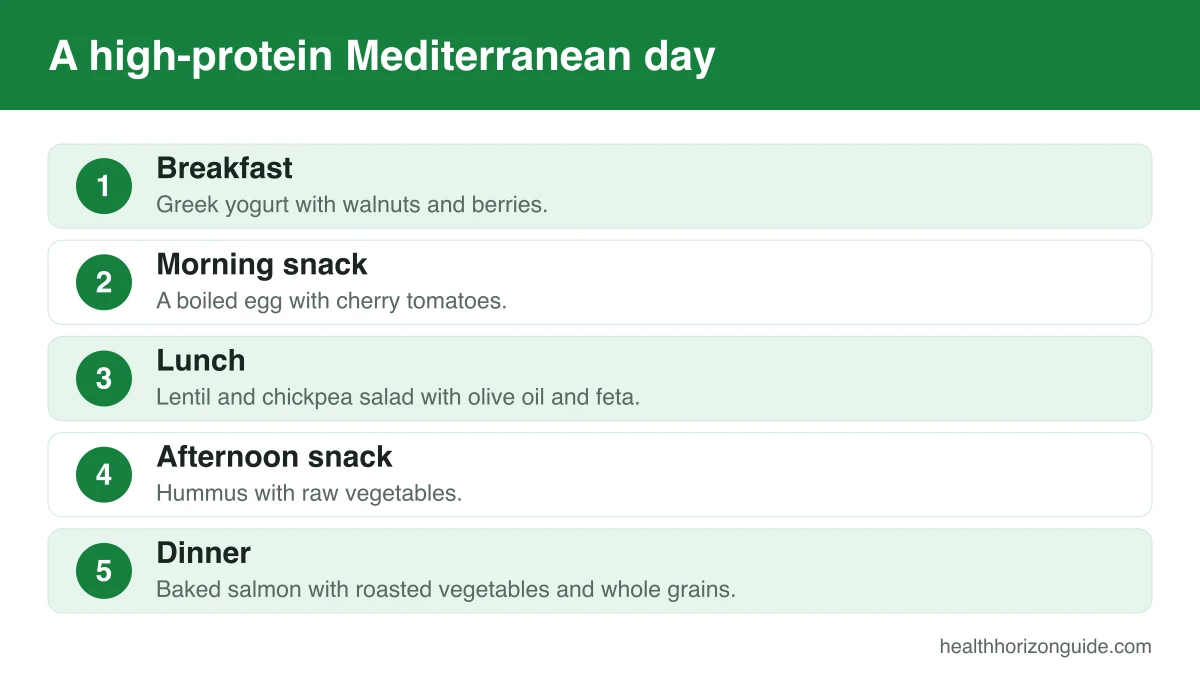
A high-protein Mediterranean day places a protein food at every meal and snack. The sample day below lists foods only, without portion sizes, in 5 steps.
- Breakfast: Greek yogurt with walnuts and berries.
- Morning snack: a boiled egg with cherry tomatoes.
- Lunch: lentil and chickpea salad with olive oil, cucumber and feta.
- Afternoon snack: hummus with raw vegetables.
- Dinner: baked salmon with roasted vegetables and a whole-grain side.
Cleveland Clinic notes that most people do not need protein powder. Whole foods supply protein along with fiber, healthy fats and vitamins that a powder lacks.
When should you see a dietitian about a high-protein or Mediterranean diet?
A dietitian is worth seeing before a high-protein diet with kidney disease, diabetes, high blood pressure or a planned large weight loss. A registered dietitian sets a protein amount that fits kidney function, age, activity and medicines.
Older adults who lose weight without trying, feel weaker or eat less than usual also benefit from a dietitian review. A doctor can order blood and urine tests to check kidney function before protein intake rises.
Mediterranean diet vs high-protein diet: common questions
Is the Mediterranean diet low in protein?
No, the Mediterranean diet is not low in protein. The Mediterranean diet supplies moderate protein from fish, legumes, dairy, eggs and nuts, and the share rises with more of those foods.
Is too much protein bad for you?
Too much protein is a concern mainly for people with kidney disease. Harvard Health suggests that healthy adults stay below about 2 grams per kilogram of ideal body weight, and excess protein adds calories.
Which is better, a high-protein diet or the Mediterranean diet?
The Mediterranean diet is the better long-term choice for most people, based on stronger evidence for heart health and diabetes risk. A high-protein Mediterranean diet combines the fullness of extra protein with the heart-healthy protein sources of the Mediterranean pattern.