
Ashwagandha Side Effects: What the Research Shows
Ashwagandha side effects are usually mild, but rare liver injury has been reported. See who should avoid it, which medicines interact and the warning signs.

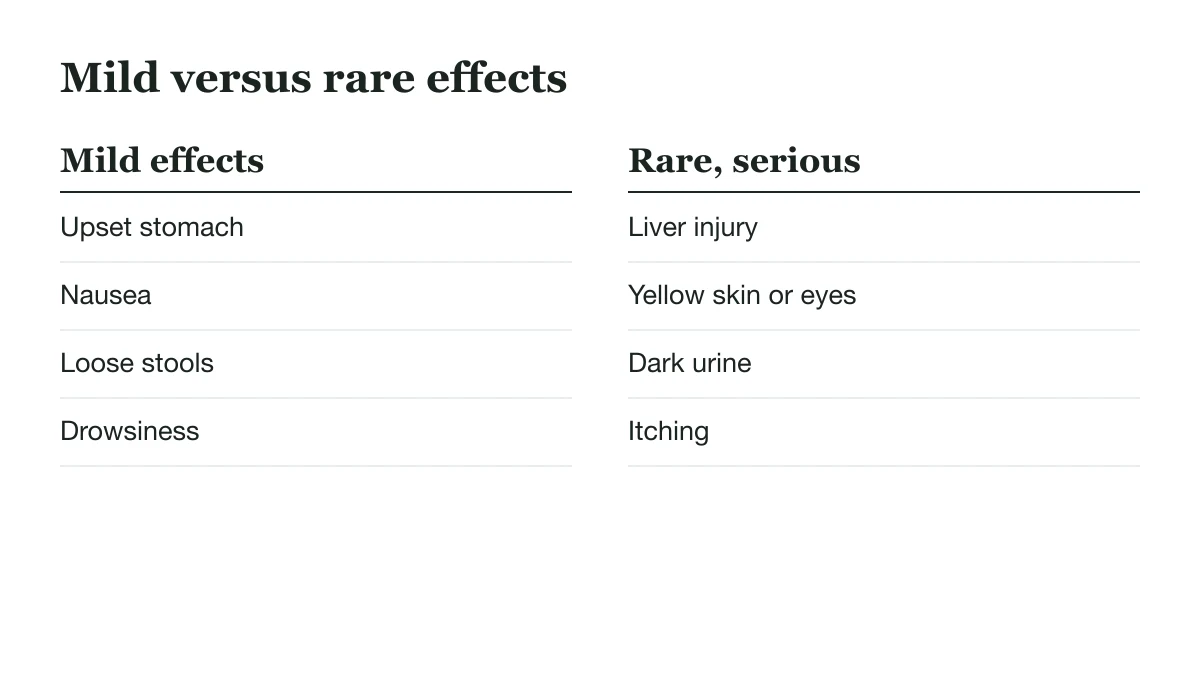
Ashwagandha side effects are usually mild and include stomach upset, loose stools, nausea and drowsiness, according to the NIH Office of Dietary Supplements. Liver injury is rare but recognized, and the long-term safety of the supplement is not established.
Readers who are pregnant, have a thyroid or autoimmune condition, have liver disease or take sedatives or thyroid medicine should speak with a doctor before use.
In this article
- What are the side effects of ashwagandha?
- What is ashwagandha?
- How common are ashwagandha side effects?
- Can ashwagandha cause liver injury?
- Who should avoid ashwagandha or check with a doctor first?
- Which medicines can interact with ashwagandha?
- Is ashwagandha regulated like a drug?
- What should readers know before taking any supplement?
- What are other ways to manage stress?
- Ashwagandha side effects FAQ
What are the side effects of ashwagandha?
The side effects of ashwagandha are usually mild and affect the digestive system and alertness, based on the NIH Office of Dietary Supplements and the National Center for Complementary and Integrative Health.
Here are the most common ashwagandha side effects named by these sources.
- Upset stomach and nausea.
- Loose stools or diarrhea.
- Vomiting in some people.
- Drowsiness.
Cleveland Clinic also lists increased thyroid activity and a low risk of uterine contractions. Rare liver injury is covered in its own section below.
Harvard Health adds that some people report feeling more anxious or stimulated on ashwagandha. A reader who notices this reaction can stop the supplement and talk to a clinician.
What is ashwagandha?
Ashwagandha is a plant used in traditional Ayurvedic medicine that is now sold as a dietary supplement. Its Latin name is Withania somnifera, and products are made from the root, the leaf or both.
Ashwagandha products are marketed for stress, sleep and general wellbeing. The NCCIH says research shows some preparations may help with insomnia and stress, while evidence on anxiety is unclear. The same source says there is not enough evidence to judge other uses.
Ashwagandha is not a cure for any condition. Products also differ in plant part, extract type and added ingredients, which makes results hard to compare.
How common are ashwagandha side effects?
Ashwagandha side effects are reported as uncommon and mostly mild in short trials, although exact rates differ by study and product.
Most research covers short periods. The NCCIH states that ashwagandha may be safe in the short term, up to about 3 months, and that long-term safety is not established. Harvard Health likewise says data beyond three months are limited.
The NCCIH also notes that many trials are small and use different ashwagandha preparations. Small, varied trials cannot show how often rare effects such as liver injury occur.
No single rate applies to all products.
Can ashwagandha cause liver injury?
Yes, ashwagandha has been linked to liver injury in a number of cases, and the NCCIH describes this as rare.
The NIH-hosted LiverTox database reports that cases involved commercial products labeled as containing ashwagandha. Onset was typically 2 to 12 weeks after starting the supplement. Most cases were mild to moderate and improved within 1 to 4 months after the product was stopped.
LiverTox also reports a few severe cases, including deaths and liver transplants, mostly in people with existing liver disease. The database advises people with cirrhosis or advanced chronic liver disease to avoid ashwagandha.
A published case series from Iceland and the US Drug-Induced Liver Injury Network described five patients with ashwagandha-related liver injury. Every patient developed jaundice, and liver tests normalized within about 1 to 5 months. Small series show a pattern, not how often it happens.
What are the signs of serious liver injury from ashwagandha?
The signs of serious liver injury from ashwagandha include yellow skin or eyes, dark urine and itching, as described in published case reports.
These are the warning signs seen in the case series and reports.
- Jaundice, meaning yellowing of the skin or the whites of the eyes.
- Dark-colored urine.
- Itching of the skin without a rash.
- Nausea and abdominal discomfort or pain.
- Unusual tiredness or lethargy.
A person with these signs who has taken ashwagandha should seek urgent medical care and tell the clinician about the supplement. Bringing the product label helps the clinician check the ingredients.
Who should avoid ashwagandha or check with a doctor first?
People who should avoid ashwagandha or check with a doctor first include pregnant people, people with thyroid, autoimmune or liver conditions, and people taking certain medicines.
The groups named by the NCCIH, Cleveland Clinic and Harvard Health are shown in the table below.
| Group | Reason given by sources |
|---|---|
| Pregnant people | The NCCIH advises avoiding ashwagandha, and Cleveland Clinic notes possible uterine contractions. |
| Breastfeeding people | The NCCIH advises against use. |
| Thyroid conditions | The NIH says ashwagandha may affect how the thyroid works. |
| Autoimmune disease | The NCCIH and Cleveland Clinic advise against use. |
| Liver disease | LiverTox advises avoiding it in cirrhosis or advanced chronic liver disease. |
| Hormone-sensitive prostate cancer | The NCCIH says it may raise testosterone levels. |
| Planned surgery | The NCCIH does not advise use before surgery. |
Many readers describe starting ashwagandha for stress or sleep and then wondering whether a new symptom comes from the supplement. A partner or family member can help by noting the start date, the product name and any new symptoms, so that a clinician sees the full timeline.
Which medicines can interact with ashwagandha?
Medicines that can interact with ashwagandha include sedatives, thyroid hormone medicine and immunosuppressants, according to the NCCIH.
The NCCIH also lists medicines for diabetes, high blood pressure and seizures. Cleveland Clinic names sleep and anxiety medicines.
Each interaction depends on the specific medicine and dose. A pharmacist or doctor can check a specific medicine list, and that check takes a few minutes.
Dark urine, itching or yellow eyes after starting a new supplement are never normal adjustment effects.
Is ashwagandha regulated like a drug?
No, ashwagandha is not regulated like a drug because oral herbal products are usually sold as dietary supplements.
The NCCIH explains that supplements face less strict rules than drugs. The FDA does not approve supplements before they are sold, and manufacturers are responsible for the safety and labeling of their products.
Harvard Health recommends choosing products that a third party such as USP, NSF International or ConsumerLab has verified. Verification checks quality, and it does not prove that a product is safe for a given person.
Ashwagandha labels may list a root extract, a leaf extract or a blend with other herbs. Multi-ingredient products make it harder for a clinician to find the cause of a reaction, so the full ingredient list is worth keeping.
What should readers know before taking any supplement?
Readers should treat any supplement, including ashwagandha, as a product with possible risks and a limited evidence base. Tell every doctor and pharmacist about any supplement, because products are not tested like medicines.
Stop the supplement and get medical help if a serious reaction appears. A clinician can help weigh each product against current medicines.
What are other ways to manage stress?
Other ways to manage stress do not carry the same supplement risks, and they can be used alongside medical care for ashwagandha-related concerns.
Our guide on how to lower cortisol covers sleep, movement and other habits with research behind them. Readers who are not sure how much worry is usual can score it with the free anxiety self-check and read the physical symptoms of anxiety. The guide to anxiety signs and how to get help covers treatments with better evidence.
Persistent stress, low mood or anxiety needs a conversation with a doctor, whatever supplements a person has tried.
Ashwagandha side effects FAQ
Is ashwagandha safe to take every day?
Ashwagandha safety for daily use is not established beyond the short term. The NCCIH says it may be safe up to about 3 months, and long-term effects are unknown.
Can ashwagandha make anxiety or mood worse?
Ashwagandha can make some people feel more anxious or stimulated, according to Harvard Health. A person who notices this should stop the product and speak with a clinician.
Does ashwagandha affect the thyroid?
Ashwagandha may affect how the thyroid works, according to the NIH, and it may interact with thyroid medicine. People with thyroid conditions should ask a doctor before use.
Should a person with liver problems take ashwagandha?
No, people with cirrhosis or advanced chronic liver disease should avoid ashwagandha, according to LiverTox. Any person with a liver condition should ask a doctor first.
Health Horizon Guide provides general education and not medical advice. Speak with a doctor or pharmacist about any supplement.
Action checklist
Before taking ashwagandha
Use these checks before deciding on any ashwagandha product.
0 of 8 done