Chiropractic Adjustment Benefits and Side Effects
Chiropractic adjustment benefits include modest relief for back pain, neck pain and some headaches. Learn the side effects, rare risks and warning signs.
Chiropractic adjustment benefits are best supported for low back pain, neck pain and some headaches, where research shows modest, short-term relief. The common side effects are soreness, stiffness, tiredness and headache, and most pass within 24 hours. Serious complications are very rare, yet neck manipulation carries a small stroke risk that every patient should know.
Action checklist
Chiropractic adjustment safety checklist
Use these steps from the article to prepare for a chiropractic adjustment and to respond to symptoms afterwards.
0 of 9 done
In this article
- What is a chiropractic adjustment?
- Chiropractic adjustment benefits and side effects at a glance
- What does a chiropractic adjustment do?
- What happens during a chiropractic adjustment?
- Which conditions have evidence of chiropractic adjustment benefits?
- What are the side effects of a chiropractic adjustment?
- Is going to a chiropractor safe?
- How often should you get a chiropractic adjustment?
- Warning signs and alternatives to a chiropractic adjustment
- Which symptoms after a chiropractic adjustment need urgent care?
- What are the alternatives to a chiropractic adjustment for back pain?
- Chiropractic adjustment FAQ
What is a chiropractic adjustment?
A chiropractic adjustment is a controlled thrust applied to a spinal joint by hand or with a device, which moves the joint farther than the joint would move on its own. The National Center for Complementary and Integrative Health (NCCIH) calls the procedure spinal manipulation. Chiropractors perform most spinal manipulations, although osteopathic physicians and physical therapists use the method too. Spinal mobilization is a gentler method that uses no thrust and stays within the natural range of the joint.
Chiropractic adjustment benefits and side effects at a glance
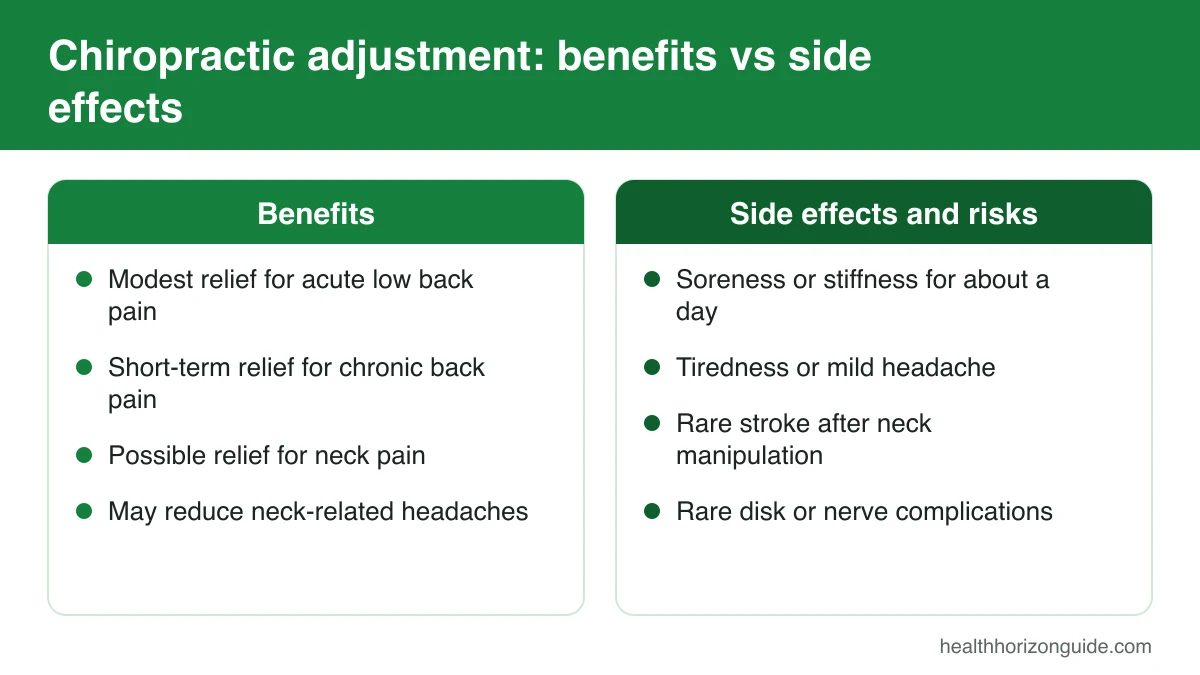
Chiropractic adjustment benefits and side effects come down to modest pain relief against mild, short-lived soreness for most people. The table below compares the benefits of a chiropractic adjustment with the side effects and risks that health sources report.
| Benefits with research support | Side effects and risks |
|---|---|
| Modest improvement in pain and function for acute low back pain (moderate-quality evidence) | Soreness, stiffness or increased pain, usually gone within 24 hours |
| Short-term relief for chronic low back pain, similar to exercise or medication | Tiredness or a mild headache after the visit |
| Possible pain reduction for neck pain (low to moderate quality evidence) | Rare stroke linked to small tears in a neck artery after neck manipulation |
| Possible reduction in neck-related headaches and migraine days (preliminary evidence) | Rare worsening of a herniated disk or pressure on nerves in the lower spine |
What does a chiropractic adjustment do?
A chiropractic adjustment moves a stiff or painful joint beyond its usual range with the aim of reducing pain and improving movement. The popping sound during a chiropractic adjustment is gas leaving the joint, which Cleveland Clinic compares to cracking the knuckles. The effect measured in studies is a modest change in pain and function.
What happens during a chiropractic adjustment?
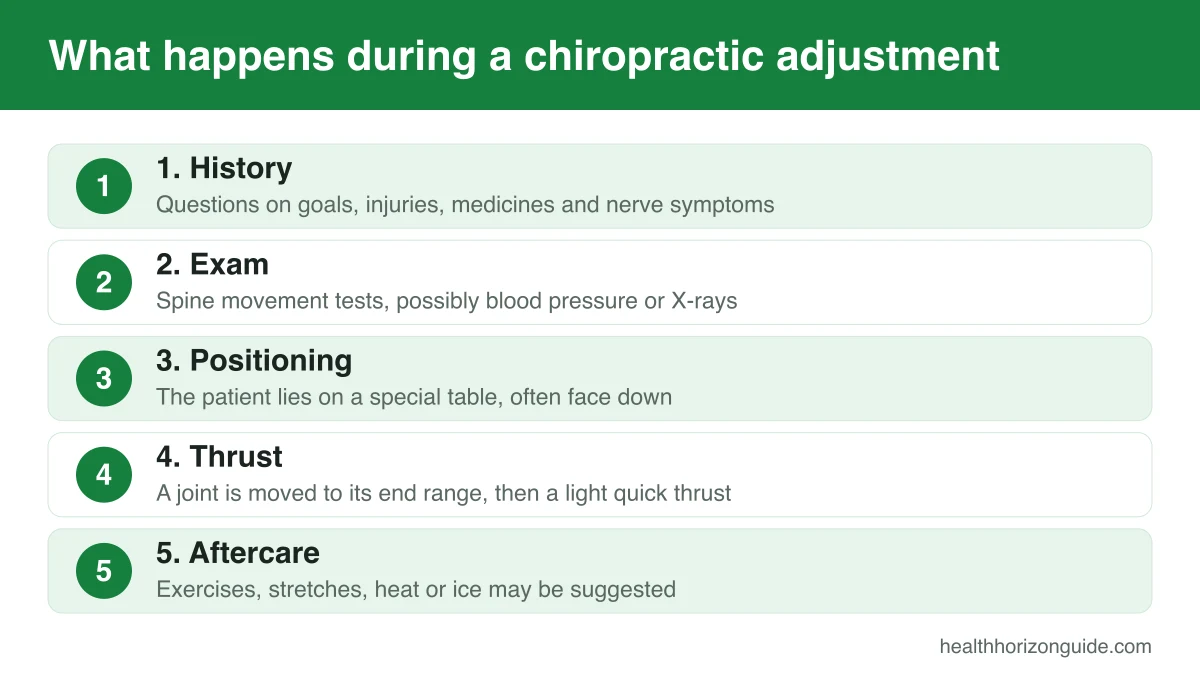
A chiropractic adjustment visit starts with a health history and a physical exam, and treatment usually begins at the first or second visit. MedlinePlus states that the first visit lasts about 30 to 60 minutes. The 5 stages of a typical visit are listed below.
- History: the chiropractor asks about goals, past injuries, medicines and any numbness, tingling or weakness.
- Exam: the chiropractor tests how well the spine moves and may check blood pressure or order X-rays.
- Positioning: the patient lies on a special table, often face down.
- Thrust: the chiropractor moves a joint to the end of its range and applies a light, quick thrust.
- Aftercare: the chiropractor may suggest exercises, stretches, heat or ice.
The manipulation itself should cause little to no pain.
Chiropractic adjustment gun or tool
A chiropractic adjustment tool is a small handheld instrument that applies a quick, controlled force to a joint in place of the hands. People often call the instrument an adjustment gun or an activator. NCCIH and Cleveland Clinic both describe a chiropractic adjustment as a thrust delivered by hand or by a device. Neither source rates instrument adjusting as safer or more effective than manual adjusting.
Which conditions have evidence of chiropractic adjustment benefits?
Chiropractic adjustment benefits have the most reliable evidence for low back pain, neck pain and certain headaches. The strength of the evidence differs for each condition, and no source describes a cure.
Low back pain
Low back pain has moderate-quality evidence of a modest benefit from a chiropractic adjustment. NCCIH reports that a 2017 analysis of 15 studies found a modest improvement in acute low back pain, similar to the effect of nonsteroidal anti-inflammatory drugs. A 2019 review of 47 studies found short-term relief in chronic low back pain that matched exercise or medication. The American College of Physicians lists spinal manipulation as one option for low back pain and grades the supporting evidence as low quality. Our guide to a chiropractor for lower back pain covers the condition in more detail.
Neck pain
Neck pain has low to moderate quality evidence of benefit from a chiropractic adjustment. NCCIH describes a 2021 analysis of 6 studies in which manipulation reduced acute neck pain, and the reviewers urged caution because the studies were small. Manipulation or mobilization may reduce pain and improve function in chronic neck pain. Our page on a chiropractor for neck pain explains the options.
Headaches
Headaches have preliminary evidence of benefit from a chiropractic adjustment, mainly for headaches that start in the neck. A 2020 review of 7 studies found that manipulation may reduce the frequency and intensity of cervicogenic headache. A 2019 review found possible reductions in migraine days, and the reviewers called the results preliminary.
Claims without reliable evidence: immune function, asthma and general wellness
Immune function, asthma and general wellness have no reliable evidence of benefit from a chiropractic adjustment. A 2021 systematic review in JAMA Network Open found no clinical evidence that spinal manipulation prevents infections or improves immune outcomes. A Cochrane review of manual therapy for asthma found no significant difference between chiropractic manipulation and a sham procedure. NCCIH adds that studies of high blood pressure and menstrual cramps showed no clear benefit. None of the sources reviewed here reports evidence that a chiropractic adjustment improves general wellness in people without symptoms.
What are the side effects of a chiropractic adjustment?
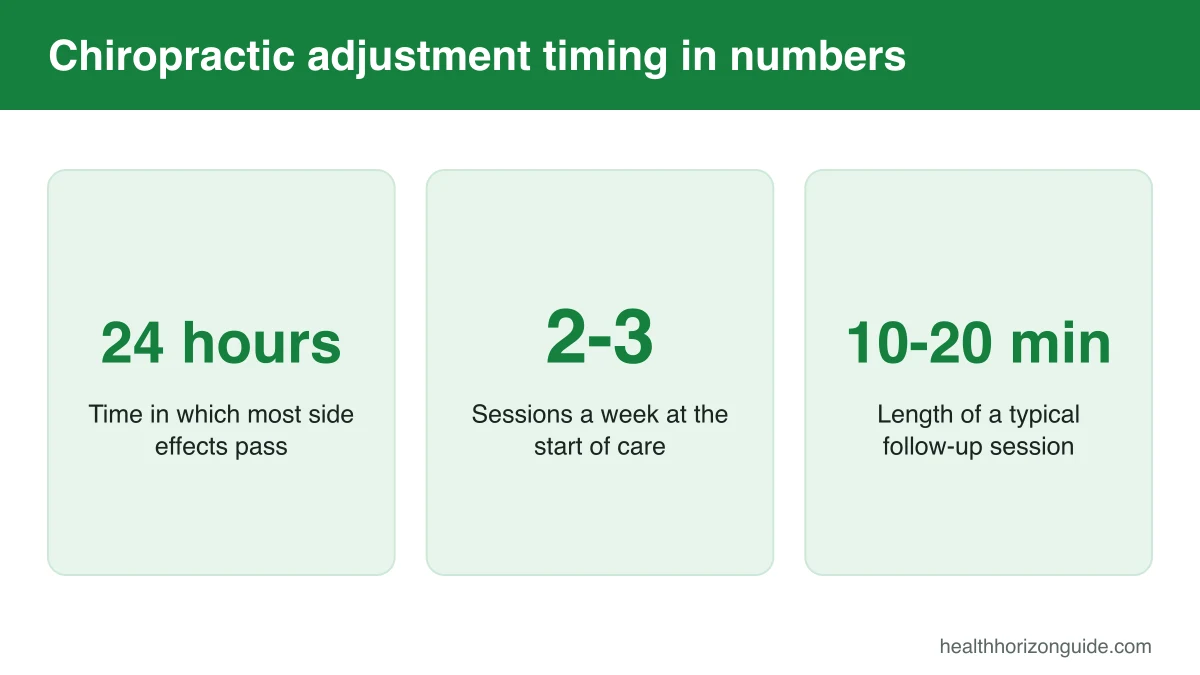
The side effects of a chiropractic adjustment are soreness, stiffness, increased pain, tiredness and mild headache. NCCIH cites a 2017 review of 250 publications, which found that these effects are common and that most go away within 24 hours. MedlinePlus notes that some people feel achy, stiff or tired for a few days. Our article on feeling tired after a chiropractic adjustment explains that reaction.
Is going to a chiropractor safe?
Going to a chiropractor is low risk for most adults, although rare serious complications have been reported. NCCIH states that strokes from neck artery tears and serious spinal or nerve problems are very rare, and that no reliable estimate of their frequency exists. Experts still debate whether a chiropractic adjustment of the neck causes these artery tears. Cleveland Clinic lists herniated disks, cauda equina syndrome and stroke as rare complications. The risk is higher when an untrained or unlicensed person performs the adjustment.
Who should avoid a chiropractic adjustment?
People with fragile bones, nerve damage or a raised stroke or bleeding risk should avoid a chiropractic adjustment or speak to a doctor first. The 6 groups named by MedlinePlus and the NHS are listed below.
- People with severe osteoporosis or very weak bones.
- People with a bone fracture or a bone tumor in the area.
- People with a bone or joint infection.
- People with severe arthritis in the area.
- People with severely pinched nerves or a nerve condition such as peripheral neuropathy.
- People who take blood thinning medicines or have a higher risk of bleeding or stroke.
Pregnant women should discuss the risks and benefits with a health care provider, because research in pregnancy is limited.
How often should you get a chiropractic adjustment?
Chiropractic adjustment frequency has no fixed schedule, and most plans last several weeks. MedlinePlus describes 2 or 3 short sessions a week at first, each about 10 to 20 minutes, which may drop to once a week as symptoms improve. Progress should be reviewed against the goals set at the first visit. Visit numbers affect the bill, as our guide to how much a chiropractor costs explains.
Maintenance care means scheduled visits that continue once the pain has settled. One randomized trial of 328 adults with recurrent low back pain found that maintenance care led to 12.8 fewer days of bothersome pain over 52 weeks than symptom-guided visits, with more treatments. The trial enrolled only people who had responded well to an initial course of care. No source reviewed here supports maintenance chiropractic adjustment for people without symptoms.
Warning signs and alternatives to a chiropractic adjustment
Chiropractic adjustment decisions also depend on which symptoms need urgent care and which other treatments have evidence.
Which symptoms after a chiropractic adjustment need urgent care?
Symptoms after a chiropractic adjustment that need urgent care are signs of stroke, severe new pain, numbness or weakness, and loss of bladder or bowel control. Cleveland Clinic advises contacting a health care provider immediately when weakness, numbness or worsening pain appears. The 4 warning signs are listed below.
- Signs of stroke, such as a drooping face, arm weakness, slurred speech, sudden severe headache or sudden dizziness. Call emergency services at once.
- Severe new pain, or pain that keeps getting worse.
- New numbness, tingling or weakness in an arm or leg.
- Loss of bladder or bowel control, which can signal pressure on the nerves of the lower spine. Go to an emergency department.
What are the alternatives to a chiropractic adjustment for back pain?
The alternatives to a chiropractic adjustment for back pain are heat, massage, acupuncture and exercise-based treatments. The American College of Physicians guideline lists these options beside spinal manipulation, and notes that most acute low back pain improves over time regardless of treatment. Yoga and tai chi are listed for chronic low back pain. Our posture and back pain self-check tool can help a reader describe symptoms to a clinician.
Chiropractic adjustment FAQ
Does a chiropractic adjustment hurt?
A chiropractic adjustment causes little to no pain for most people, according to Cleveland Clinic. Mild soreness in the treated area can follow.
How long do chiropractic adjustment side effects last?
Chiropractic adjustment side effects last about 24 hours in most cases, according to NCCIH. MedlinePlus notes that aches, stiffness or tiredness can last a few days.
Is feeling worse after the first chiropractic adjustment normal?
Feeling slightly worse after a first chiropractic adjustment is common and usually temporary, since increased pain and stiffness are known short-term side effects. Pain that is severe or lasts more than a few days needs a medical review.