Stiff Neck After Sleeping: Causes, Relief and Red Flags
See why sleep position and pillows cause a stiff neck after sleeping, how to ease it with movement, heat or ice, how long it lasts and when to seek urgent care.

A stiff neck after sleeping is usually a minor neck muscle strain from holding the head in an awkward position for hours, often on a pillow that does not support the neck well. Most sleep-related stiff necks improve within about a week with gentle movement, cold or heat, and simple pain relief, according to Spine-health. A stiff neck with fever and headache, arm numbness or weakness, or one that follows an injury needs urgent medical care.
Action checklist
Stiff neck after sleeping: what to do
Use these steps to ease a stiff neck from sleeping and lower the chance of it coming back.
0 of 9 done
In this article
Why do I wake up with a stiff neck?
Waking up with a stiff neck most often comes from a strained neck muscle that was held in one awkward position during sleep. The NHS lists sleeping with the neck in an awkward position as a common cause of neck pain and stiffness.
The 6 common causes of a stiff neck after sleeping are listed below:
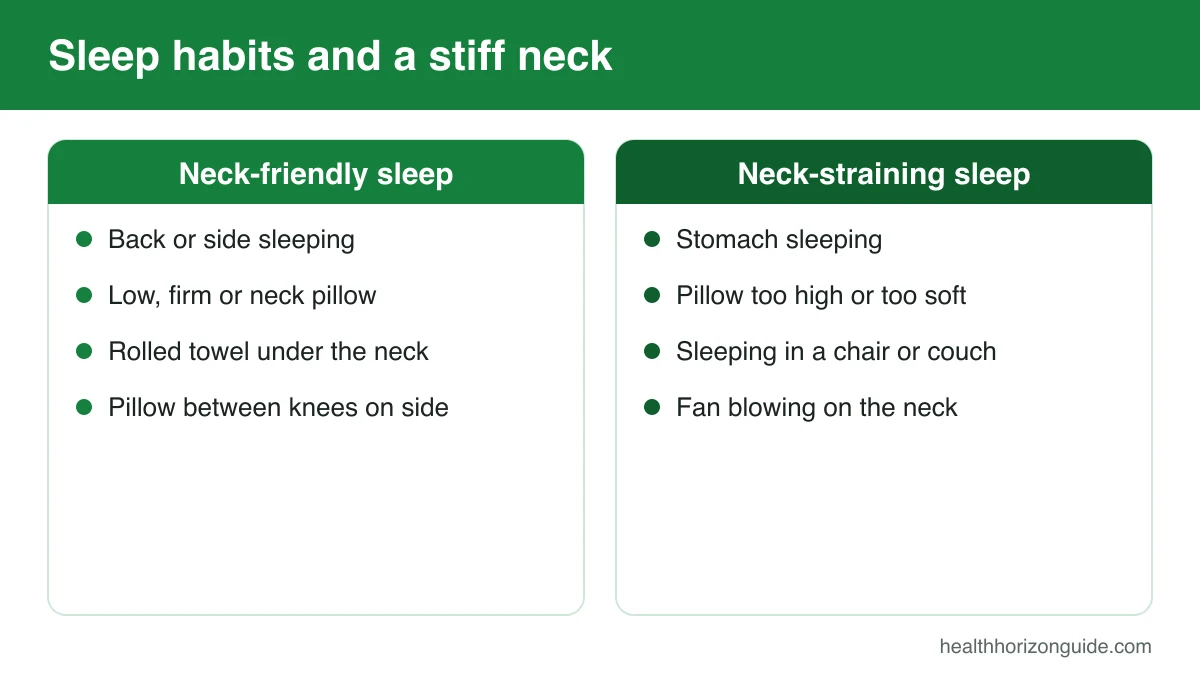
- Stomach sleeping: Lying face down keeps the head twisted to one side for long periods, which strains the neck.
- A pillow that does not fit: A pillow that is too high, too flat or too soft leaves the neck bent at an angle all night.
- Sudden movement in sleep: Rolling over quickly can strain a neck muscle that is already in an awkward position.
- Sleeping in a chair or on a couch: Upright or cramped sleep raises the chance of waking with a stiff neck.
- Cool air on the neck: A fan or open window blowing directly on the neck is a possible trigger.
- An existing neck condition: Facet joint osteoarthritis, degenerative disc disease or an earlier injury such as whiplash can show up as morning stiffness.
Cleveland Clinic singles out stomach sleeping because the head stays twisted for long periods. Spine-health names neck strain as the most common cause and lists the other triggers above.
Is a stiff neck after sleeping serious?
No, a stiff neck after sleeping is not serious in most cases. The NHS states that most neck pain only lasts a few weeks and can be eased at home. A small number of stiff necks point to infection, nerve pressure or injury, and those warning signs are covered in the red flags section below.
How to get rid of a stiff neck from sleeping wrong
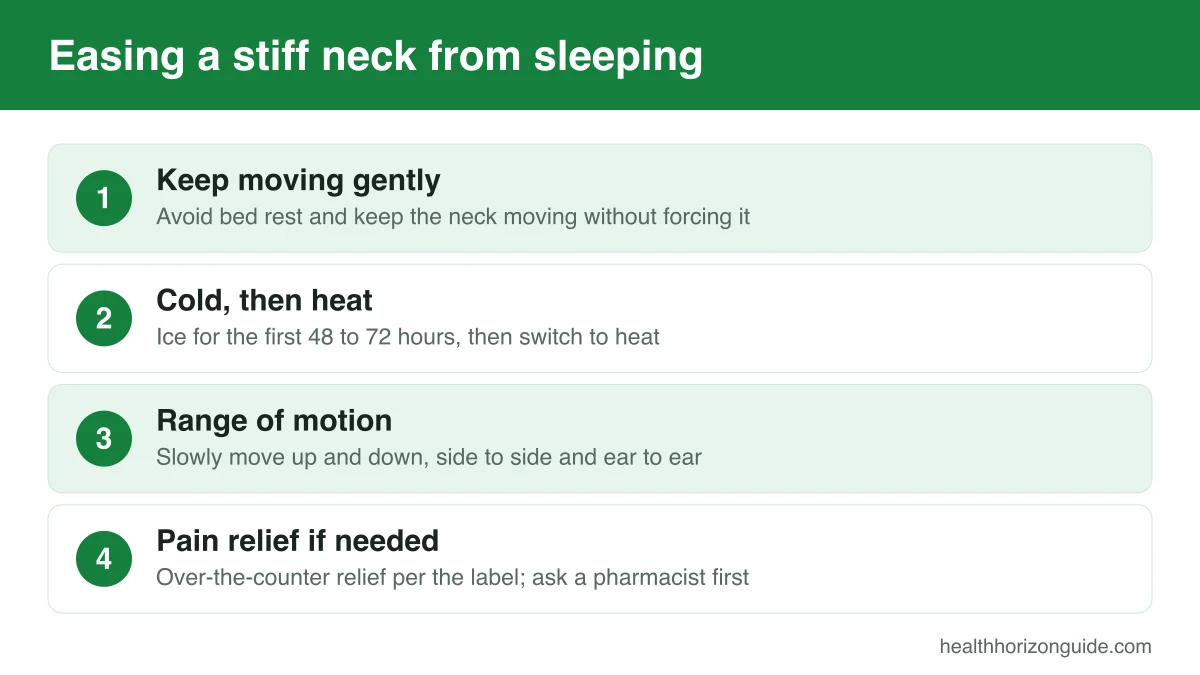
The best way to get rid of a stiff neck from sleeping wrong is gentle movement plus cold or heat, with simple pain relief when needed. The 6 self-care steps that medical sources support are listed below:
- Keep the neck moving gently. The NHS advises keeping the neck moving rather than wearing a collar, unless a doctor says otherwise. Full bed rest may make a stiff neck last longer.
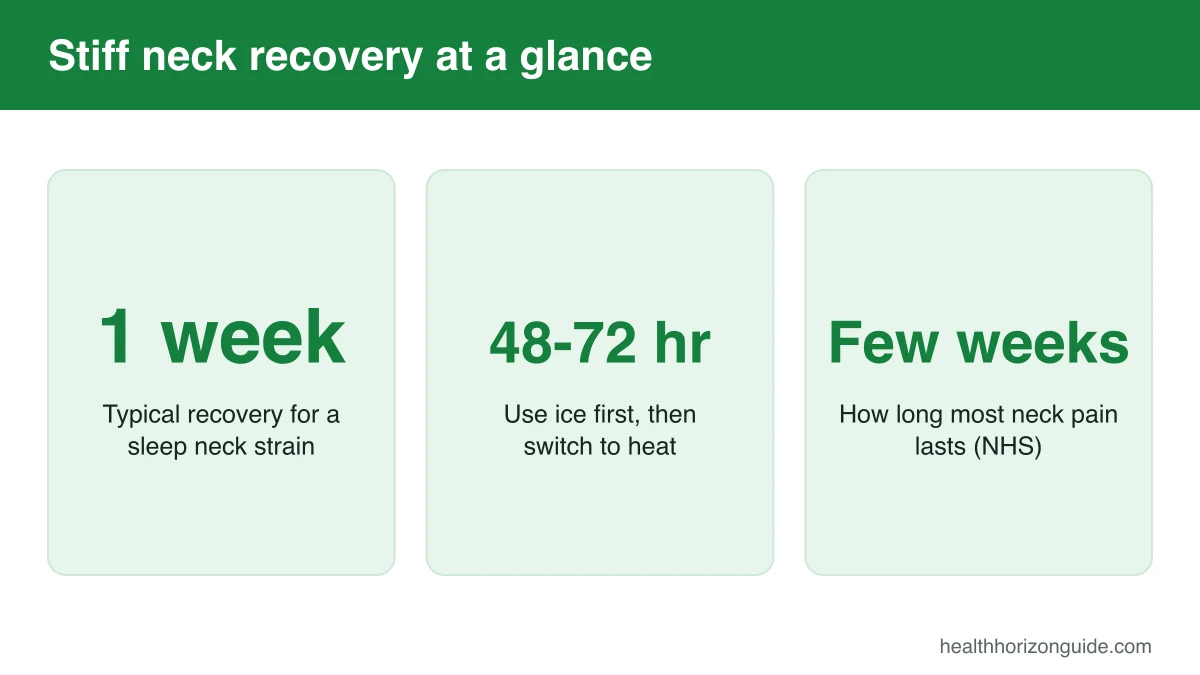
- Use cold first, then heat. MedlinePlus recommends ice for the first 48 to 72 hours, then heat from a warm shower, a hot compress or a heating pad.
- Do slow range-of-motion movements. Move the head up and down, side to side, and ear to ear. Stop any movement that sharply increases pain.
- Consider over-the-counter pain relief. The NHS lists paracetamol, ibuprofen tablets and ibuprofen gel. Follow the label and ask a pharmacist first when you take other medicines or have a health condition.
- Try gentle massage. Light self-massage or massage from a partner can ease tight neck muscles, as long as the pain does not increase.
- Avoid driving and cycling for now. The NHS advises against activities that could be dangerous when you cannot turn your neck fully.
A soft collar is rarely needed for a stiff neck. MedlinePlus notes that long-term collar use can weaken the neck muscles.
Should I use heat or ice for a stiff neck?
Ice suits the first 2 to 3 days of a stiff neck, and heat suits the days after that. Both MedlinePlus and Cleveland Clinic give this order.
The table below compares cold and heat for a stiff neck, using NHS and MedlinePlus advice.
| Option | When to use it | How to apply it | Safety note |
|---|---|---|---|
| Cold | First 48 to 72 hours | Frozen peas wrapped in a tea towel for up to 5 minutes, up to 3 times a day (NHS) | Never put ice straight on the skin |
| Heat | After the first 2 to 3 days | Hot water bottle wrapped in a tea towel for up to 20 minutes, 2 to 3 times a day (NHS), or a warm shower | Do not fall asleep with a heating pad on |
How long does a stiff neck from sleeping last?
A stiff neck from sleeping usually improves within about a week. Spine-health gives this timeline for a typical sleep-related neck strain, and some people feel relief within a day or two.
The NHS states that most neck pain lasts a few weeks. MedlinePlus advises contacting a provider when a stiff neck has not improved after 1 week of self-care.
How to prevent waking up with a stiff neck
Preventing a stiff neck depends mostly on pillow choice and sleep position. The 6 habits below come from NHS, MedlinePlus, Cleveland Clinic and Spine-health guidance:
- Sleep on your back or side, and avoid sleeping on your stomach.
- Use a low, firm pillow, as the NHS suggests, or a supportive neck pillow.
- Place a rolled towel or a cervical pillow under the neck when you sleep on your back.
- Put a pillow between your knees when you sleep on your side to keep the spine in line.
- Choose a mattress that is firm enough, and avoid falling asleep in a chair or on a couch.
- Keep fans and cold drafts from blowing directly on your neck.
Finding the right pillow height usually takes some trial and error. Our guide to the best sleeping position for lower back pain explains how pillow placement supports the whole spine at night.
Daytime posture affects morning stiffness too. Cleveland Clinic advises keeping screens at eye level and taking regular breaks from phones and driving. Our article on how to fix forward head posture covers exercises for a head that drifts forward, and the posture and back pain self-check can help you spot habits worth changing.
When a stiff neck needs more than self-care
Most stiff necks from sleeping settle at home, but a small number need a clinician. The next sections cover hands-on care for a stiff neck that lingers and the warning signs that need urgent attention.
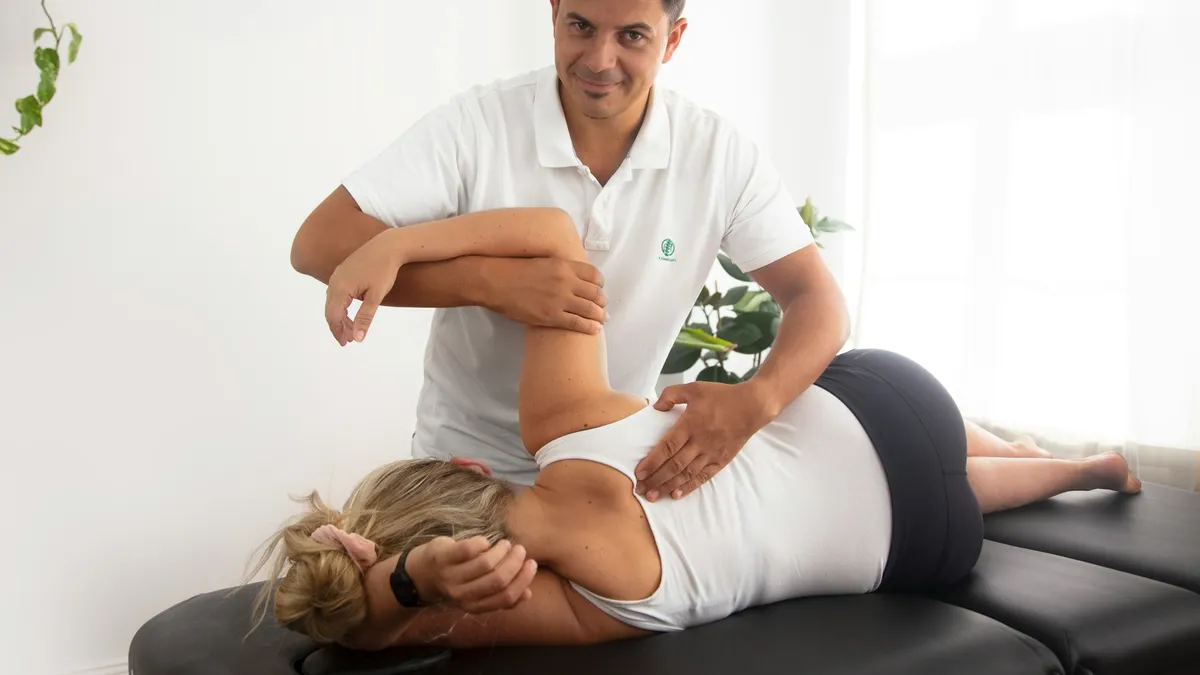
Can a chiropractor or physical therapist help a stiff neck?
Yes, a chiropractor or physical therapist can help some people with neck pain, though the evidence for a simple stiff neck from sleeping is limited. The National Center for Complementary and Integrative Health says spinal manipulation can be helpful for acute neck pain, based on a 2021 analysis of 6 studies.
The same NCCIH page says those results should be read with caution because the evidence is small and the studies varied. A 2012 randomized trial of 272 adults with neck pain found spinal manipulation worked better than medication, while home exercise with advice gave similar results to manipulation.
Safety matters too. NCCIH reports that mild soreness, stiffness or headache after manipulation is common and usually fades within 24 hours. Neck manipulation has been linked to rare tears in neck arteries that can lead to a stroke, so ask your practitioner about this risk.
A visit makes most sense for a stiff neck that has not improved after a week of self-care or keeps coming back. Our article on whether a chiropractor can help neck pain explains what a visit involves and when a physical therapist may suit you better.
Stiff neck red flags that need urgent care
A stiff neck needs urgent care when it comes with fever, nerve symptoms or a recent injury. The 5 red flags below come from MedlinePlus, the NHS and Spine-health:
- Fever and headache with a very stiff neck: A neck too stiff to touch the chin to the chest may signal meningitis. Call 911 or your local emergency number, or go to a hospital now.
- Neck pain after a fall, blow or car crash: Seek urgent care. Call 911 straight away when you cannot move an arm or hand.
- Numbness, tingling or weakness in an arm or hand: Seek urgent medical care, especially when symptoms affect both arms at once. A pinched nerve in the neck is one possible cause.
- Trouble walking, balancing, swallowing or breathing, or loss of bladder or bowel control: Seek emergency care right away.
- Neck pain with chest pain, shortness of breath, sweating, nausea, or arm or jaw pain: These can be heart attack symptoms. Call 911 or your local emergency number.
When to see a doctor for a stiff neck that is not an emergency
A stiff neck without red flags still deserves a doctor visit in some cases. MedlinePlus lists 4 reasons to book an appointment: no improvement after 1 week of self-care, pain that over-the-counter medicine does not relieve, pain that wakes you at night, and swollen glands or a lump in the neck.
Frequently asked questions
Why does my neck hurt every morning?
A stiff neck every morning often points to a pillow, mattress or sleep position that strains the neck night after night. Daily stiffness that persists despite changes to your sleep setup should be checked by a doctor.
Should I wear a neck collar for a stiff neck?
No, a neck collar is not usually needed for a stiff neck from sleeping. The NHS advises keeping the neck moving, and MedlinePlus warns that long-term collar use can weaken neck muscles.
Is it safe to drive with a stiff neck?
Driving with a stiff neck carries a risk when you cannot turn your head fully to check traffic. The NHS advises avoiding driving and cycling until neck movement returns.
Can I sleep on my stomach with a stiff neck?
Stomach sleeping is best avoided with a stiff neck because the head stays twisted to one side for hours. Back or side sleeping with a low, supportive pillow puts less strain on the neck.