Upper Back Pain Between Shoulder Blades: Causes and Relief
Upper back pain between the shoulder blades is usually muscular. See the causes, stretches, sleep tips and the chest pain red flags that need urgent care.

Upper back pain between the shoulder blades usually comes from irritated muscles and joints of the thoracic spine. Long static postures, strain and new activities are common triggers. Most episodes are not serious and improve with time, movement and simple self-care. Pain between the shoulder blades that arrives with chest pain, breathlessness, sweating or nausea needs emergency care.
Action checklist
Actions for Pain Between the Shoulder Blades
Use these steps from the article to ease upper back pain between the shoulder blades and to spot the signs that need care.
0 of 10 done
In this article
- What causes upper back pain between the shoulder blades?
- How to relieve upper back pain between the shoulder blades
- Upper back pain between the shoulder blades after sleeping
- Upper back pain between the shoulder blades with chest pain: which causes are urgent?
- Upper back pain between the shoulder blades in women
- When to see a doctor or chiropractor
- Upper back pain between the shoulder blades: common questions
What causes upper back pain between the shoulder blades?
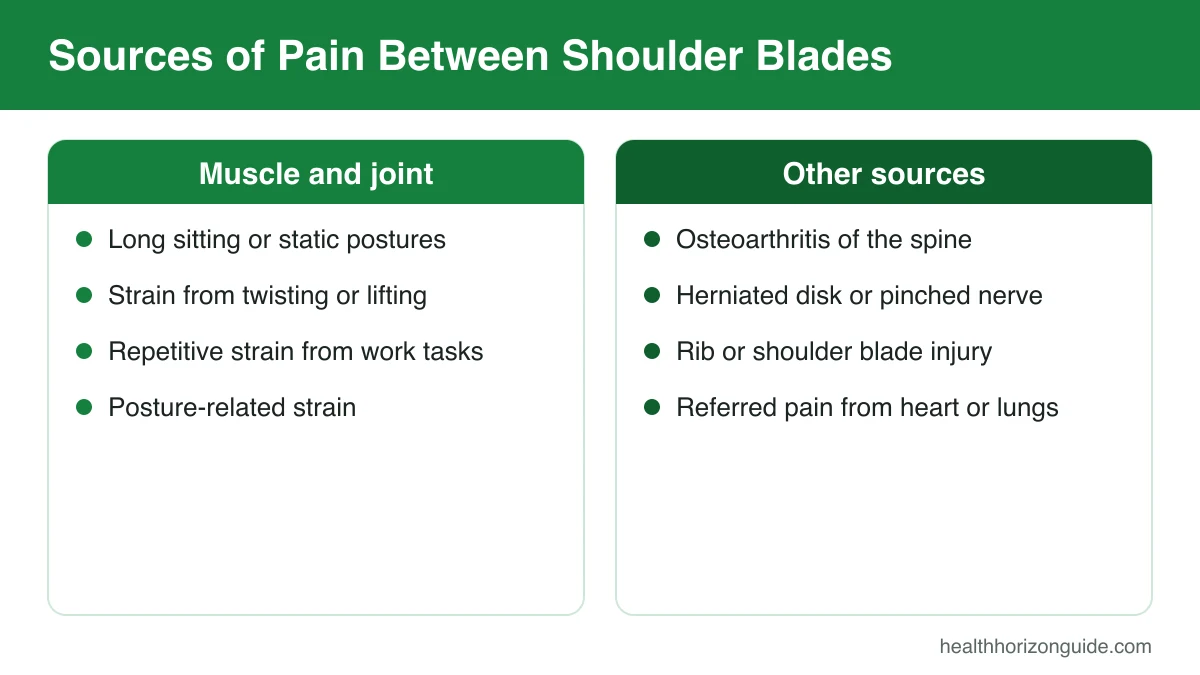
Upper back pain between the shoulder blades is caused most often by sensitive muscles, ligaments and joints in the thoracic spine, according to an NHS physiotherapy leaflet. The thoracic spine has 12 vertebrae, and the ribs attach to every one. That structure makes the area stable and less flexible than the neck or lower back.
Thoracic pain is less common than neck or low back pain, the same leaflet states. The exact cause of most episodes is hard to identify. The 6 common causes that the NHS leaflet and Cleveland Clinic describe are listed below.
- Long periods of sitting or other static postures.
- Muscle strain from twisting, lifting or a new activity the body is not used to.
- Repetitive strain from work tasks, in both manual jobs and desk jobs.
- Posture-related strain from sports, hobbies or daily activities.
- Spine conditions such as osteoarthritis, a herniated disk or a pinched nerve.
- Injuries to the ribs, shoulders or shoulder blades.
Cleveland Clinic describes upper back pain as sharp or dull, aching or burning. Pain from the heart, the lungs or the esophagus can be felt in the same area, and a later section covers those warning signs.
How long does upper back pain between the shoulder blades last?
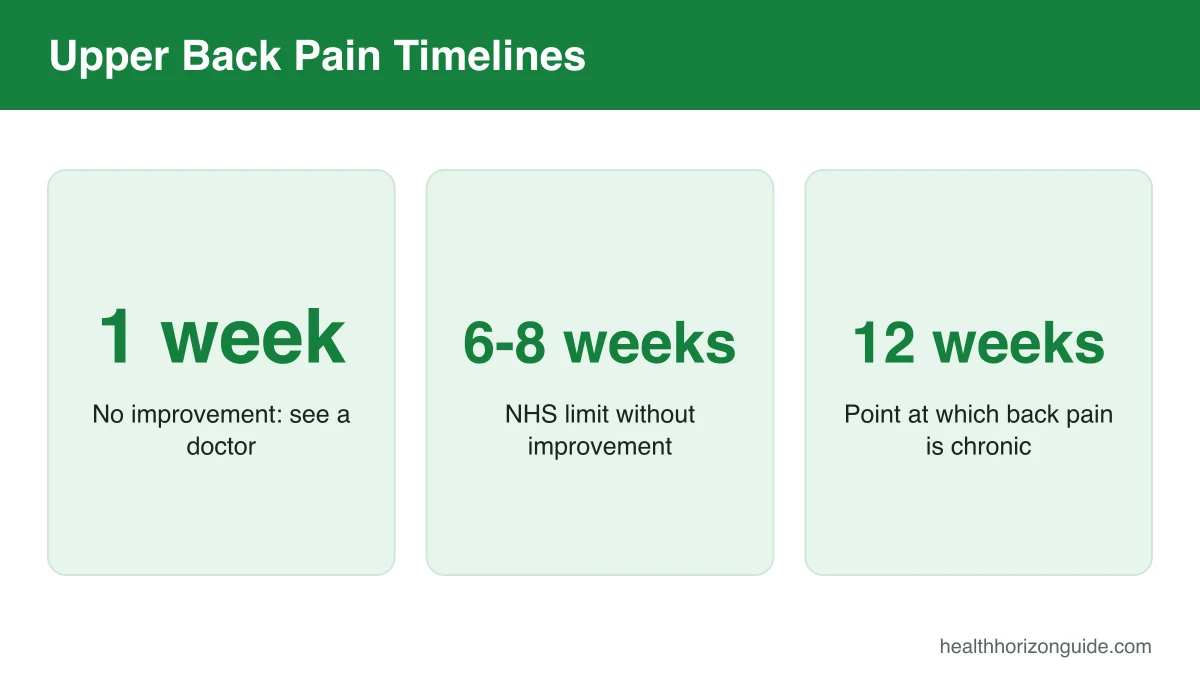
Upper back pain between the shoulder blades lasts several weeks to several months per episode, according to the NHS leaflet. Cleveland Clinic classes back pain as chronic when the pain lasts 12 weeks or more. The vast majority of persistent cases have no serious cause, the NHS leaflet states.
How to relieve upper back pain between the shoulder blades
Upper back pain between the shoulder blades is relieved mainly by staying active, controlling pain early and easing the tasks that aggravate the area. Most thoracic problems improve with time, the NHS leaflet states. The 5 self-care measures that the NHS leaflet and Cleveland Clinic describe are listed below.
- Stay active, since long periods without movement can slow recovery.
- Apply a heat pack or a cold pack to the sore area.
- Consider an over-the-counter pain reliever, which Cleveland Clinic lists as a treatment option.
- Build up general exercise gradually to 20 to 30 minutes every day.
- Practice relaxation or mindfulness techniques, since fear, anxiety and low mood can worsen pain.
Cleveland Clinic names posture and ergonomics as prevention points for upper back pain. Our guides on how to fix rounded shoulders and how to fix posture while sitting at a desk explain those changes in detail.
Stretches for upper back pain between the shoulder blades
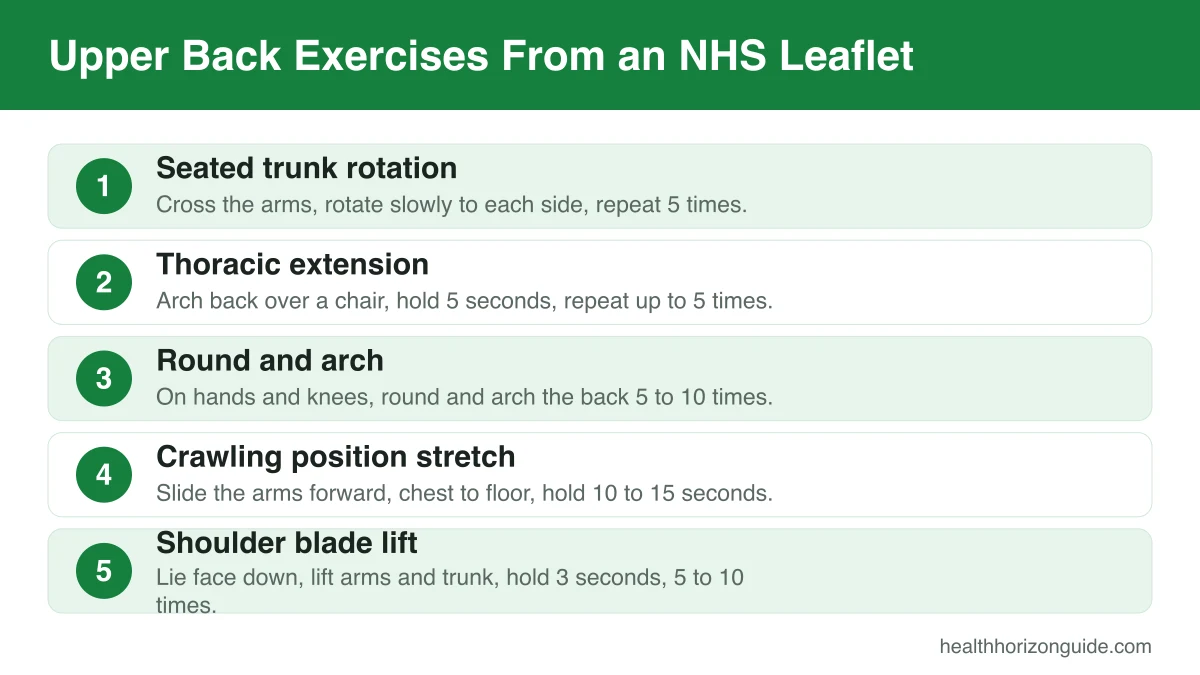
Stretches for upper back pain between the shoulder blades rotate and extend the thoracic spine and work the muscles between the shoulder blades. The NHS leaflet tells readers to choose the exercises that feel most comfortable. The 5 exercises from the NHS leaflet are listed below.
- Seated trunk rotation: sit with the arms crossed over the chest, rotate the trunk slowly to each side, and repeat 5 times.
- Thoracic extension: sit on a chair with a backrest, support the neck with the hands, and arch back over the chair. Hold for 5 seconds and repeat up to 5 times.
- Round and arch: kneel on the hands and knees, then round and arch the back 5 to 10 times.
- Crawling position stretch: slide the arms along the floor, push the bottom back and the chest toward the floor, and hold for 10 to 15 seconds.
- Shoulder blade lift: lie face down, tighten the muscles between the shoulder blades, and lift the arms and upper trunk. Hold for 3 seconds and repeat 5 to 10 times.
The NHS leaflet advises against any exercise for upper back pain that causes excessive, long-lasting pain.
Upper back pain between the shoulder blades after sleeping
Upper back pain between the shoulder blades after sleeping is linked to muscle tension, stiff spinal joints and an unsupportive pillow or mattress, according to physical therapists at Hinge Health. Osteoarthritis of the spinal joints can cause morning stiffness that often eases with movement. Muscles tightened by prolonged sitting or stress can stay tense overnight.
The 4 sleep adjustments that Hinge Health and the NHS leaflet describe are listed below.
- Place a pillow under the knees when sleeping on the back.
- Use a supportive neck pillow and a small firm cushion between the knees when sleeping on the side.
- Choose a smaller pillow when sleeping on the stomach.
- Try different pillow heights and firmness levels.
Hinge Health reports that many people prone to upper back pain prefer a medium-firm mattress. Severe upper back pain at night that prevents sleep is a symptom to discuss with a doctor, the NHS leaflet states.
Upper back pain between the shoulder blades with chest pain: which causes are urgent?
Upper back pain between the shoulder blades with chest pain is a reason to call emergency services. Heart and lung conditions can produce both symptoms. Cleveland Clinic tells readers to call 911 for symptoms of a heart attack or pulmonary embolism, including chest pain or trouble breathing.
The table below compares 4 urgent conditions that sources link to pain in the upper back or between the shoulder blades.
| Condition | Features the source describes | Action the source states |
|---|---|---|
| Heart attack | Chest pressure, squeezing or pain; upper back pressure; shortness of breath; cold sweat; nausea; lightheadedness | Call 911 and get to a hospital right away |
| Pulmonary embolism (blood clot in a lung) | Sudden difficulty breathing; chest pain that is worse on breathing in; coughing up blood; pain and swelling in a leg | Call emergency services for sudden breathing difficulty, chest or upper back pain, or fainting |
| Aortic dissection (tear in the wall of the aorta) | Sudden, severe chest pain, sharp or tearing, that moves under the shoulder blades or to the back | Call 911 or go to an emergency room as quickly as possible |
| Gallstone blocking a duct | Pain in the upper right abdomen, between the shoulder blades or in the right shoulder; nausea or vomiting | Seek immediate care for pain too intense to sit still, yellow skin or eyes, or high fever with chills |
The features in the table come from the American Heart Association, the NHS, MedlinePlus and Mayo Clinic. The table cannot diagnose upper back pain between the shoulder blades.
Upper back pain between the shoulder blades with neck pain
Upper back pain between the shoulder blades with neck pain is often tied to neck and upper back muscles tightened by prolonged sitting, which Hinge Health names as a cause. Cleveland Clinic lists pinched nerves among the causes of upper back pain. Numbness, weakness or tingling in the arms is a reason to seek medical attention.
Our related guides cover how to fix forward head posture and seeing a chiropractor for neck pain.
Upper back pain between the shoulder blades in women
Upper back pain between the shoulder blades in women can be a heart attack sign when the pain feels like pressure. The American Heart Association states that some women describe the pressure as squeezing or as a rope tied around them.
Less typical signs in women include anxiety, shortness of breath, an upset stomach and unusual tiredness. The American Heart Association advises calling 911 for any heart attack sign.
Mayo Clinic lists being female and being age 40 or older among the risk factors for gallstones. Muscle and joint causes remain the most likely source of upper back pain between the shoulder blades in women.
When to see a doctor or chiropractor
A doctor is the right first contact when upper back pain between the shoulder blades has not improved after a week, the point that Cleveland Clinic names. The NHS leaflet sets a limit of six to eight weeks without improvement despite the exercises.
The 6 symptoms that Cleveland Clinic and the NHS leaflet say need a medical assessment are listed below.
- Tingling or numbness in the buttocks, legs or feet.
- Fever, night sweats or feeling generally unwell.
- Unexplained weight loss.
- A history of cancer.
- Constant, severe pain despite painkillers.
- Severe pain at night that prevents sleep.
Urgent medical attention is needed for weakness in both legs, difficulty walking, or new changes in bladder or bowel control. Our posture and back pain self-check helps readers record everyday patterns before an appointment.
A chiropractor provides spinal manipulation, a hands-on treatment. The National Center for Complementary and Integrative Health reports evidence on spinal manipulation for low back pain and neck pain. The same page does not address upper or mid back pain.
Direct evidence for chiropractic care of upper back pain between the shoulder blades is therefore limited. Side effects such as increased pain, stiffness or headache usually resolve within 24 hours, and serious events are very rare.
Upper back pain between the shoulder blades: common questions
Is upper back pain between the shoulder blades serious?
No, upper back pain between the shoulder blades is not serious in most cases. Most thoracic pain improves with time and staying active, the NHS leaflet states.
Can stress cause upper back pain between the shoulder blades?
Yes, stress can contribute to upper back pain between the shoulder blades. Hinge Health states that the body may tense up more at night under stress. The NHS leaflet notes that anxiety and low mood can worsen pain.
Can gallbladder problems cause pain between the shoulder blades?
Yes, a gallstone that blocks a duct can cause back pain between the shoulder blades, according to Mayo Clinic. Gallstone pain can last several minutes to a few hours.