Mediterranean Diet vs Carnivore Diet: Which Is Better?
Mediterranean diet vs carnivore diet: compare foods, evidence, weight loss, LDL cholesterol, fibre and nutrient gaps, and learn who should avoid carnivore.

The Mediterranean diet has decades of trial evidence, while the carnivore diet allows only animal foods and has almost no controlled research. In the PREDIMED trial of 7,447 adults, a Mediterranean diet was linked to about 30% fewer major cardiovascular events over a median of 4.8 years. Most carnivore evidence comes from one self-reported survey of 2,029 followers.
Action checklist
Before you choose a carnivore or Mediterranean diet
Use these steps to compare the two diets safely and protect your heart, kidneys and gut.
0 of 9 done
In this article
- What is the difference between the Mediterranean diet and the carnivore diet?
- Mediterranean diet vs carnivore diet: which is better?
- Mediterranean diet vs carnivore diet for weight loss
- Mediterranean diet vs carnivore diet for heart health and LDL cholesterol
- Fibre and gut health on the carnivore diet
- Nutrients at risk on the carnivore diet
- Kidney and saturated fat concerns with the carnivore diet
- Why do people say they feel better on the carnivore diet?
- Who should avoid the carnivore diet?
- A middle ground between the Mediterranean and carnivore diets
- When to see a doctor about the carnivore diet
- Mediterranean diet vs carnivore diet: frequently asked questions
What is the difference between the Mediterranean diet and the carnivore diet?
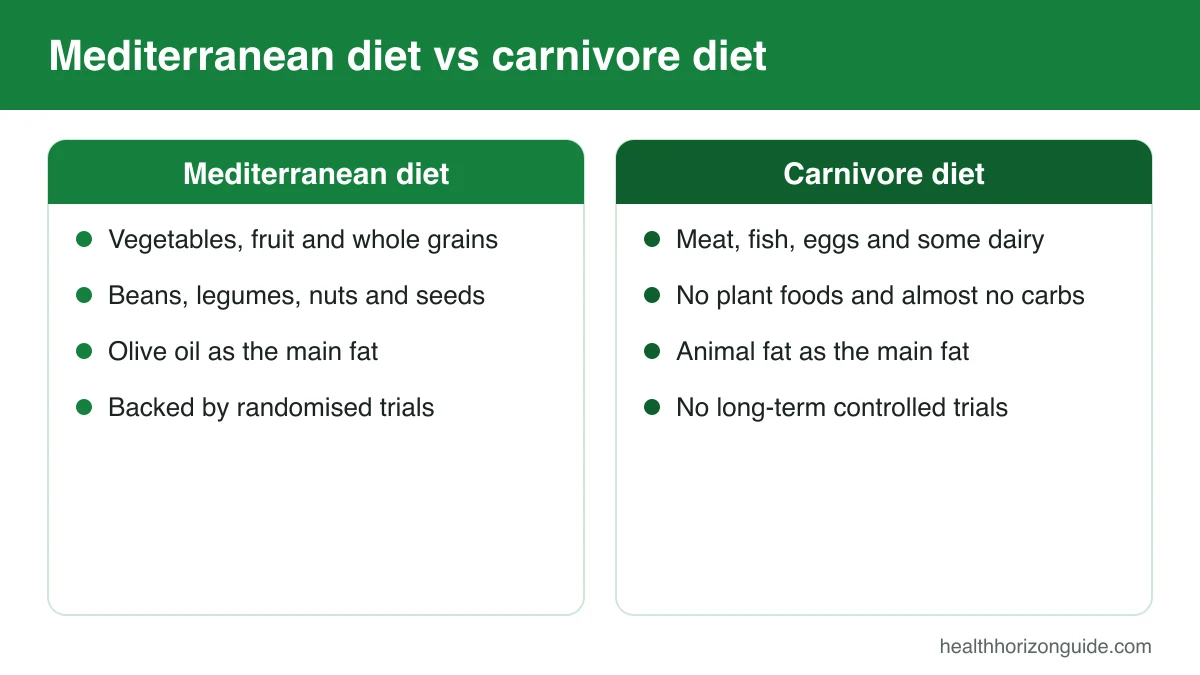
The difference between the Mediterranean diet and the carnivore diet is whether plant foods are eaten at all. The Mediterranean diet builds meals around vegetables, fruit, whole grains, legumes, nuts and olive oil. The carnivore diet removes every plant food and keeps meat, fish, eggs and some dairy.
Foods allowed on the Mediterranean diet vs the carnivore diet
Foods allowed on the Mediterranean diet and the carnivore diet overlap only on fish, eggs and some dairy. The table below compares the Mediterranean diet and the carnivore diet across 8 food groups.
| Food group | Mediterranean diet | Carnivore diet |
|---|---|---|
| Vegetables and fruit | Eaten at most meals | Excluded |
| Whole grains | Eaten regularly | Excluded |
| Beans and legumes | Eaten each week | Excluded |
| Nuts and seeds | Eaten regularly | Excluded |
| Fish and seafood | Eaten each week | Allowed |
| Red meat | Limited | The main food |
| Eggs and dairy | Eggs each week, dairy in moderation | Eggs allowed, some full-fat dairy allowed |
| Main fat | Extra virgin olive oil | Animal fat, such as butter |
What is the Mediterranean diet?
The Mediterranean diet is a plant-focused eating pattern based on the traditional foods of the Mediterranean region. Mayo Clinic describes extra virgin olive oil as the main fat, with fish, poultry, beans and eggs eaten each week. Red meat, added sugar and processed foods are limited.
Our Mediterranean diet food list sorts the everyday foods of the pattern into groups for shopping and meal planning.
What is the carnivore diet?
The carnivore diet is an all-animal, near zero-carbohydrate diet. Followers of the carnivore diet eat meat, poultry, fish, seafood, eggs, some dairy and water.
Mediterranean diet vs carnivore diet: which is better?
The Mediterranean diet is the better-supported choice for long-term health. Randomised trials support the Mediterranean diet's heart benefits. The carnivore diet has no long-term controlled trials, so the carnivore diet's benefits and risks remain largely unmeasured.
The British Heart Foundation states that the BHF does not recommend the carnivore diet. The BHF also states that the Mediterranean diet has consistently been shown to support long-term health.
What did the Harvard-led carnivore diet survey find?
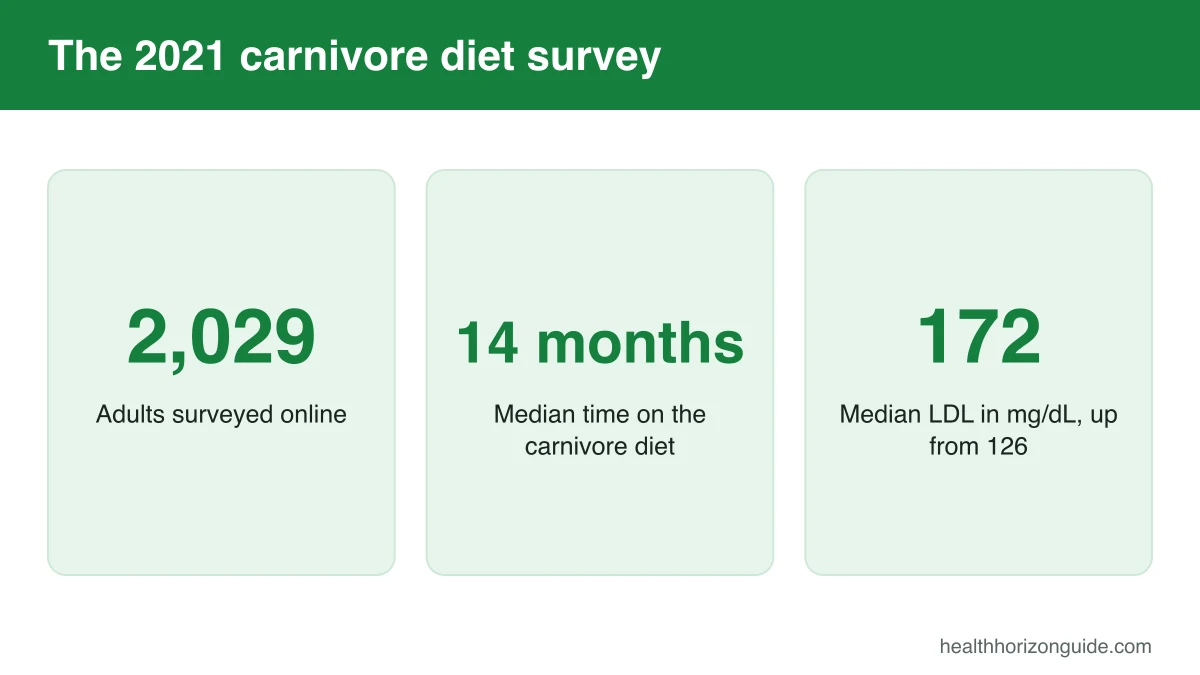
The Harvard-led carnivore diet survey found high self-reported satisfaction and markedly raised LDL cholesterol. The 2021 survey recruited 2,029 adults from online carnivore communities. Respondents had followed the diet for a median of 14 months, and 95% reported improved overall health.
Median body mass index fell from 27.2 to 24.3 in the survey. Reported side effects were uncommon, with diarrhoea at 5.5%, muscle cramps at 4.0% and constipation at 3.1%.
The 4 main limits of the carnivore survey are listed below.
- Self-report: diet, weight and blood results came from respondents, with no lab checks by researchers.
- Selection bias: people who quit because of side effects or no benefit were not captured.
- Community effect: members of online carnivore groups may report more benefit and better adherence.
- Unknown long-term safety: the survey cannot show what happens to heart, kidney or bone health over decades.
Mediterranean diet vs carnivore diet for weight loss
Mediterranean diet vs carnivore diet for weight loss shows no proven long-term winner. The BHF states that the carnivore diet can produce short-term weight loss. The BHF adds that no consistent evidence shows the carnivore diet works better than other approaches over the long term.
The BHF describes the carnivore diet as hard to stick to, and the Mediterranean diet as more practical to follow.
Mediterranean diet vs carnivore diet for heart health and LDL cholesterol
The Mediterranean diet is the safer diet for heart health and LDL cholesterol. Replacing butter or margarine with olive oil reduces LDL cholesterol, according to Mayo Clinic. The carnivore diet does the opposite and relies on animal fat, which is mostly saturated.
Self-reported LDL cholesterol in the carnivore survey rose from a median of 126 mg/dL before the diet to 172 mg/dL on the diet. Raised LDL cholesterol is a recognised risk factor for heart attack and stroke.
The PREDIMED trial compared two Mediterranean diets with a control diet in adults aged 55 to 80 at high cardiovascular risk. The Mediterranean diet groups had a lower rate of heart attack, stroke and cardiovascular death. Our Mediterranean diet vs keto comparison covers LDL results on a less extreme low-carb diet.
Fibre and gut health on the carnivore diet
Fibre and gut health on the carnivore diet are a clear weakness, since the carnivore diet contains virtually no fibre. Cleveland Clinic notes that the missing fibre and slower digestion of meat can lead to constipation.
The BHF states that fibre lowers bad cholesterol, aids digestion and is linked to a lower risk of heart and circulatory disease. Low fibre intake may also change the gut bacteria that support immune function. The Mediterranean diet supplies fibre from vegetables, fruit, legumes, whole grains and nuts.
Our science-backed gut health guide explains how fibre feeds the gut microbiome.
Nutrients at risk on the carnivore diet
Nutrients at risk on the carnivore diet include vitamin C, thiamin, calcium and magnesium. A 2024 analysis in Nutrients built 4 sample carnivore meal plans and compared them with nutrient reference values. The 8 nutrients that fell short in one or more of those carnivore plans are listed below.
- Vitamin C.
- Thiamin, a B vitamin.
- Calcium, which stayed below 1,000 mg a day even with dairy added.
- Magnesium.
- Folate, in some of the plans.
- Iron, in some of the plans.
- Iodine, in some of the plans.
- Potassium, in some of the plans.
The analysis used theoretical meal plans for single days, not measured intakes from real carnivore followers.
Kidney and saturated fat concerns with the carnivore diet
Kidney and saturated fat concerns with the carnivore diet come from very high animal protein and fat intake. Cleveland Clinic states that high animal protein adds stress to the kidneys and may contribute to kidney stones. Harvard Health lists kidney stones, gout and osteoporosis as increased risks.
Saturated fat raises LDL cholesterol, and Cleveland Clinic links large amounts of red meat to a higher risk of colorectal cancer. The NHS advice cited by the BHF is to eat 70 g or less of red or processed meat a day. Our Mediterranean diet vs high-protein diet page covers protein intake in more detail.
Why do people say they feel better on the carnivore diet?
People say they feel better on the carnivore diet for reasons that are real but mostly unproven. Cleveland Clinic notes that reported benefits are usually supported by anecdotal accounts. Part of any gain may come from cutting refined carbohydrates, such as white bread and baked goods, rather than from eating only meat.
The survey authors noted that people often start a new diet when unwell, so later improvement may partly reflect natural recovery.
The experience is not always smooth. Cleveland Clinic lists electrolyte imbalances, muscle cramps, dizziness and fatigue as possible effects of the carnivore diet. Family meals and eating out become harder when every plant food is off the plate.
Who should avoid the carnivore diet?
The carnivore diet should be avoided, or only tried with medical supervision, by people with existing heart, kidney or metabolic conditions. The 6 groups who should speak to a doctor before starting the carnivore diet are listed below.
- People with high LDL cholesterol or heart disease, since saturated fat raises LDL cholesterol.
- People with kidney disease or a history of kidney stones.
- People with gout.
- People with type 1 diabetes, who the BHF says should not follow a low-carb diet.
- People who take medication for type 2 diabetes, whose doses may need review when carbohydrate intake drops.
- People with a history of colorectal cancer or a strong family history of it.
A middle ground between the Mediterranean and carnivore diets
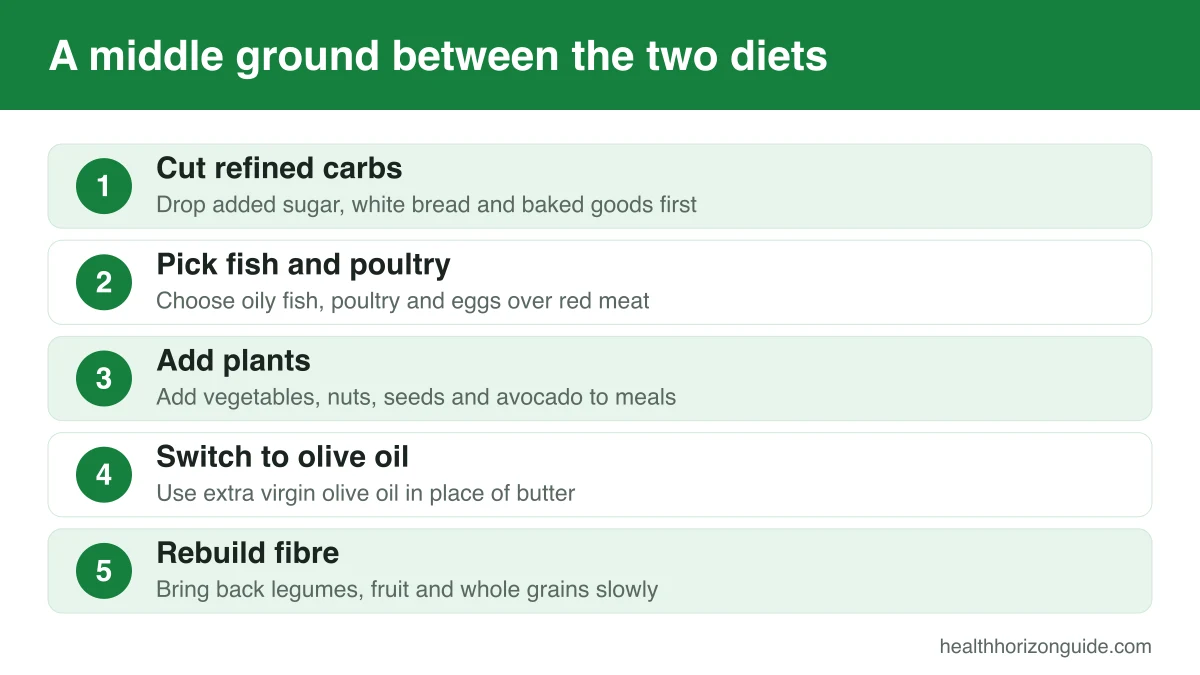
A middle ground between the Mediterranean and carnivore diets keeps quality animal protein and adds back fibre-rich plants. The BHF suggests that anyone still drawn to the carnivore diet choose lean meat, poultry, oily fish and eggs, and add nuts, seeds and avocados. The 5 steps toward a middle ground are listed below.
- Cut refined carbohydrates and added sugar first, since that change may explain much of the benefit people report.
- Choose oily fish, poultry and eggs more often than red or processed meat.
- Add non-starchy vegetables, nuts, seeds and avocado to meals.
- Use extra virgin olive oil in place of butter for cooking and dressing.
- Reintroduce legumes, fruit and whole grains slowly to build fibre intake.
Our Mediterranean diet vs paleo diet guide covers another meat-friendly pattern that keeps vegetables and fruit.
When to see a doctor about the carnivore diet
See a doctor about the carnivore diet before starting, and again within a few months, so a lipid panel and kidney tests can track the carnivore diet's effects. Seek medical advice promptly with any of the 5 symptoms listed below.
- Constipation that lasts more than a week or comes with pain.
- Sharp pain in the side or back, or blood in the urine, which can signal kidney stones.
- A hot, swollen, painful joint, which can signal gout.
- Dizziness, fainting, palpitations or severe muscle cramps.
- Chest pain or shortness of breath, which needs emergency care.
Mediterranean diet vs carnivore diet: frequently asked questions
Is the carnivore diet a type of keto diet?
Yes, the carnivore diet is a type of keto diet. Harvard Health calls the carnivore diet the most ketogenic option, since the carnivore diet allows almost no carbohydrate.
Does the carnivore diet have any fibre?
No, the carnivore diet has virtually no fibre, since fibre comes only from plant foods.
Can you eat meat on the Mediterranean diet?
Yes, you can eat meat on the Mediterranean diet. Fish and poultry are eaten each week, while red meat is kept to small, occasional portions.