Mediterranean Diet vs Egg-Free Diet: What Is the Difference?
Mediterranean diet vs egg-free diet: how the two differ, how many eggs the Mediterranean diet includes, and how to follow it safely without eggs.

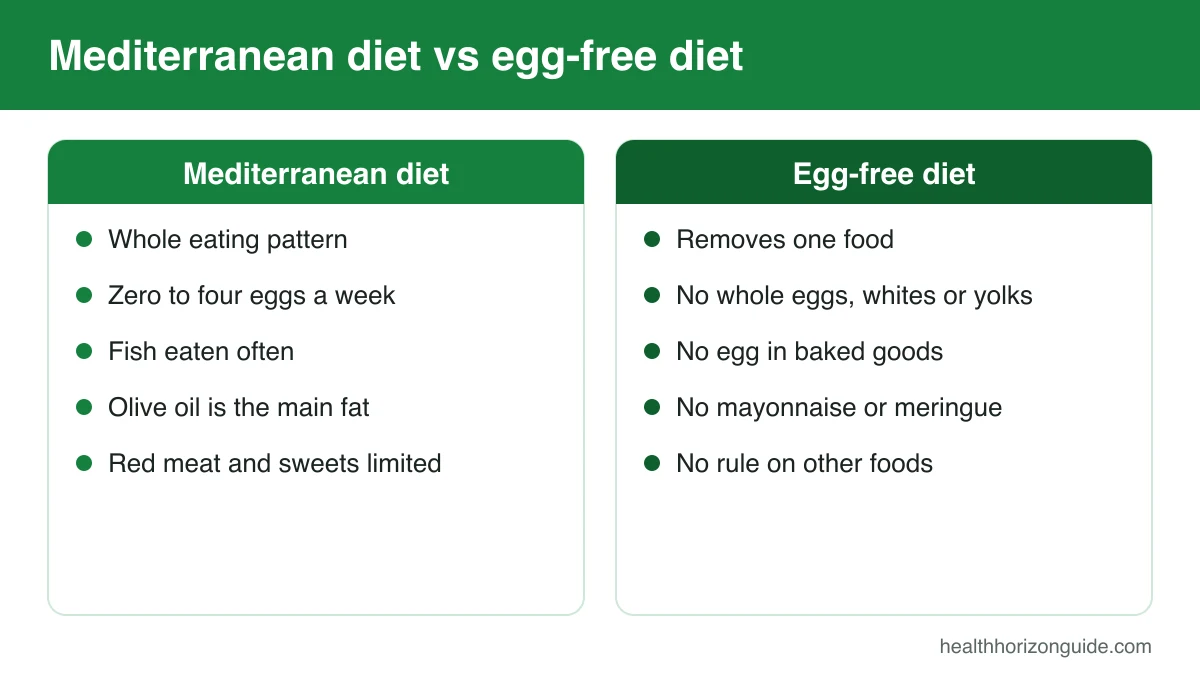
The Mediterranean diet is a whole eating pattern, and an egg-free diet removes one food. The original Mediterranean diet pyramid allows zero to four eggs a week, so eggs are optional in the pattern. Yes, you can follow the Mediterranean diet without eggs by relying on its fish, beans, nuts and whole grains.
Action checklist
Following the Mediterranean diet without eggs
Use these steps from the article to follow an egg-free Mediterranean diet safely.
0 of 10 done
In this article
- What is the difference between the Mediterranean diet and an egg-free diet?
- How many eggs does the Mediterranean diet include?
- Is the Mediterranean diet egg-free?
- Can you follow the Mediterranean diet without eggs?
- Who needs an egg-free diet?
- How do you spot hidden egg on food labels?
- Which nutrients do eggs provide on the Mediterranean diet?
- Eggs and cholesterol on the Mediterranean diet
- Mediterranean diet vs egg-free diet: which is better for heart health?
- When should you see a doctor about an egg-free diet?
- Mediterranean diet vs egg-free diet: common questions
What is the difference between the Mediterranean diet and an egg-free diet?
The difference between the Mediterranean diet and an egg-free diet is that one sets rules for every food group and the other excludes eggs only. The Mediterranean diet describes what to eat most, what to eat in moderation and what to limit. An egg-free diet says nothing about vegetables, sugar or fat.
What is the Mediterranean diet?
The Mediterranean diet is a plant-forward eating pattern based on the traditional food of countries around the Mediterranean Sea. Vegetables, fruit, beans, whole grains, nuts and olive oil form the base. Fish comes next, then poultry, eggs, cheese and yogurt in moderate amounts. Red meat and sweets sit at the top as occasional foods.
What is an egg-free diet?
An egg-free diet is a diet that avoids whole eggs and every ingredient made from egg. People follow an egg-free diet mainly because of an egg allergy, and some follow one as part of a vegan diet.
Mediterranean diet vs egg-free diet foods
Mediterranean diet and egg-free diet foods overlap everywhere except eggs. The table below compares the Mediterranean diet and an egg-free diet across 7 food groups.
| Food group | Mediterranean diet | Egg-free diet |
|---|---|---|
| Vegetables and fruit | Eaten at every meal | Allowed, with no rule set |
| Beans, whole grains and nuts | Daily staples | Allowed, with no rule set |
| Olive oil | Main added fat | Allowed; mayonnaise is excluded |
| Fish and seafood | Eaten often, several times a week | Allowed, with no rule set |
| Eggs | Zero to four a week | Excluded, including egg in baked goods |
| Cheese and yogurt | Moderate amounts | Allowed |
| Red meat and sweets | Occasional | Allowed; many cakes and desserts contain egg |
Our Mediterranean diet food list covers every food group in the pattern in more detail.
How many eggs does the Mediterranean diet include?
The Mediterranean diet includes zero to four eggs a week, according to the 1995 paper that introduced the Mediterranean diet pyramid. Eggs share the middle tier of the pyramid with poultry, cheese and yogurt.
Is the Mediterranean diet egg-free?
No, the Mediterranean diet is not egg-free. The Mediterranean diet allows eggs in moderation, and the lower end of its range is zero, so an egg-free version still fits the pattern.
Can you follow the Mediterranean diet without eggs?
Yes, you can follow the Mediterranean diet without eggs, because eggs are an optional food in the pattern. The main protein foods of the Mediterranean diet are fish, beans, lentils and nuts, and none of them contain egg.
Egg-free swaps for breakfast on the Mediterranean diet
Egg-free swaps for breakfast on the Mediterranean diet replace eggs with beans, tofu or yogurt. The table below lists 5 common egg breakfasts and an egg-free Mediterranean diet option for each.
| Egg breakfast | Egg-free Mediterranean option |
|---|---|
| Scrambled eggs | Tofu scrambled with spinach, tomato and olive oil |
| Omelet or frittata | Chickpea flour pancake with peppers and herbs |
| Boiled egg snack | Hummus with raw vegetables |
| Eggs in tomato sauce | White beans or chickpeas simmered in spiced tomato sauce |
| Egg on toast | Whole grain toast with mashed avocado or smoked fish |
Egg substitutes for baking on the Mediterranean diet
Egg substitutes for baking on the Mediterranean diet work as binders or as whipped whites. Cleveland Clinic describes several plant-based options for home cooks. The 4 common egg substitutes for one egg are listed below.
- Flax egg: 1 tablespoon of ground flaxseed mixed with 3 tablespoons of water, suited to muffins, quick breads and pancakes.
- Aquafaba: 3 tablespoons of the liquid from canned chickpeas, suited to recipes that use only egg whites.
- Applesauce: a quarter cup of unsweetened applesauce, with a little extra baking powder when the bake needs to rise.
- Commercial egg replacer: a powder mixed with water, checked first for soy, wheat or other allergens.
Swaps change the calories in a recipe. Our daily calorie calculator estimates a daily calorie target for an egg-free Mediterranean diet.
Who needs an egg-free diet?
People who need an egg-free diet are mainly children and adults with an egg allergy. Egg allergy is one of the most common food allergies in children, according to Mayo Clinic.
Egg allergy in children
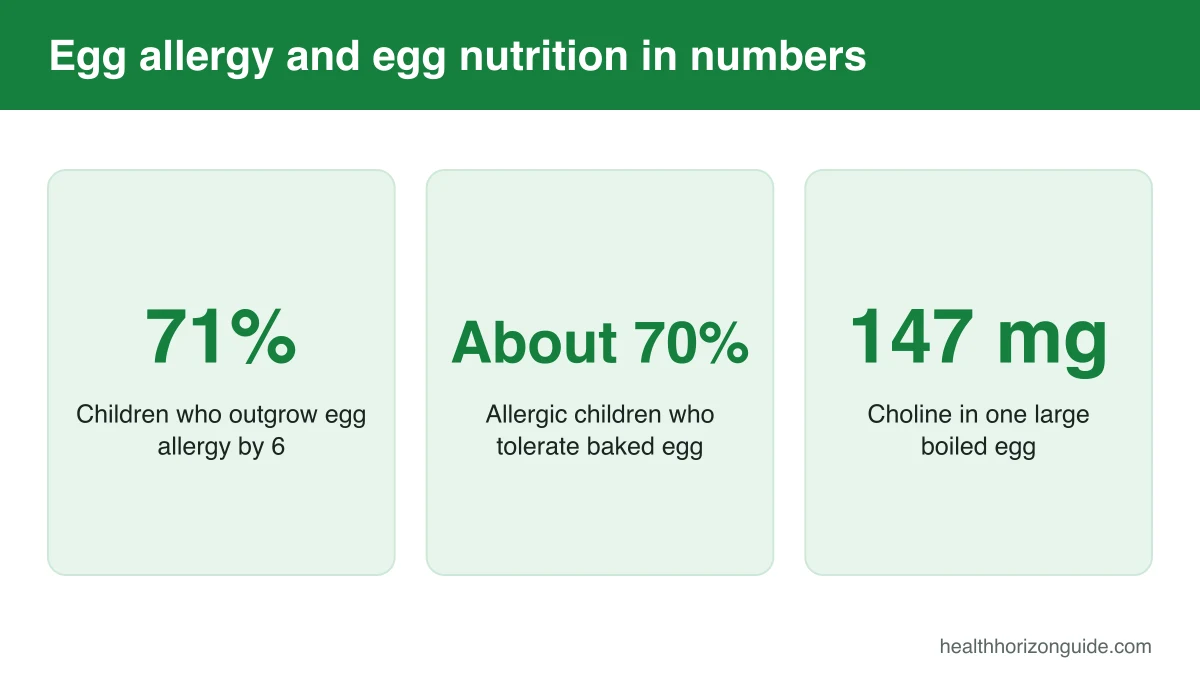
Egg allergy in children usually appears in infancy and often fades with age. Food Allergy Research and Education (FARE) reports that 71% of children outgrow an egg allergy by age 6. FARE also reports that about 70% of children with egg allergy tolerate egg baked into foods, because heat changes the protein.
Baked egg should only be tried on an allergist's advice. Parents often describe label reading and party food as the hardest daily part of an egg allergy, so an egg-free Mediterranean diet built on whole foods reduces that work.
Egg allergy in adults
Egg allergy in adults is less common and often continues from childhood. FARE notes that some people stay allergic to egg throughout life.
Egg allergy vs egg intolerance
Egg allergy and egg intolerance differ in the body system they involve. An egg allergy is an immune reaction to egg protein and can cause hives, breathing problems or anaphylaxis. An egg intolerance is a digestive reaction that causes discomfort such as bloating or nausea and does not trigger the immune system.
A doctor can confirm which one is present. The diagnosis sets how strict an egg-free Mediterranean diet needs to be.
Egg-free for vegan reasons
An egg-free diet for vegan reasons also removes fish, meat, dairy and honey. A vegan Mediterranean diet keeps the plant base of the pattern and replaces fish and eggs with beans, lentils, tofu and nuts. Our Mediterranean diet vs dairy-free diet guide explains how to replace cheese and yogurt as well.
How do you spot hidden egg on food labels?
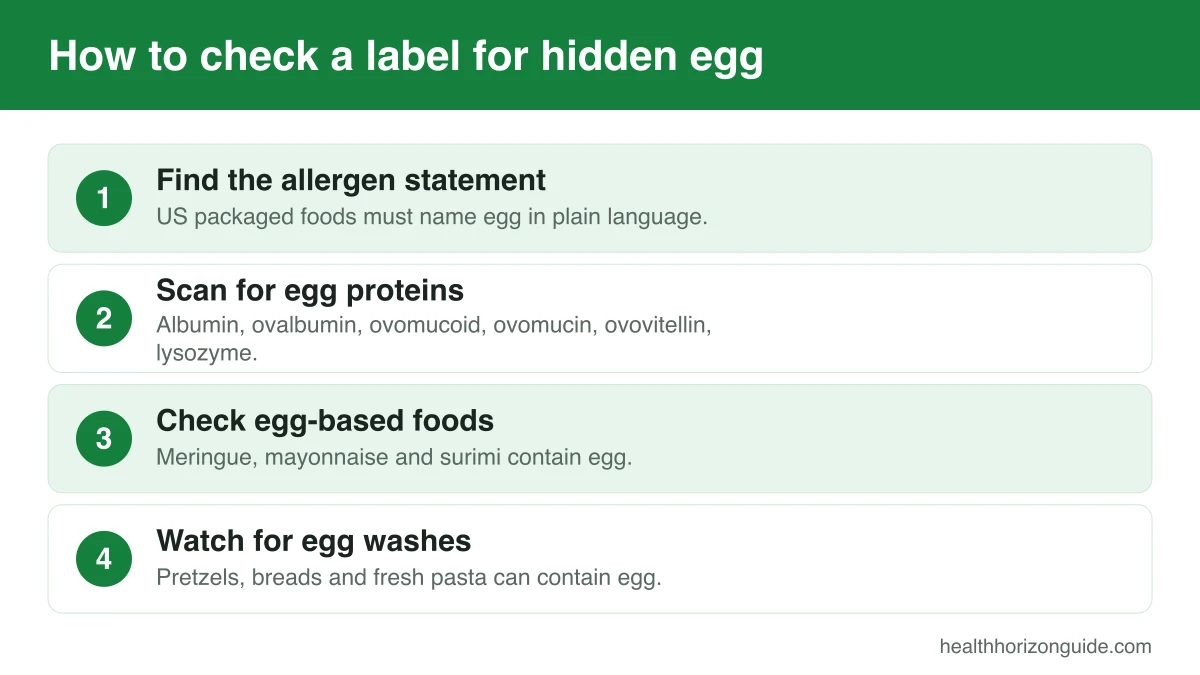
Spotting hidden egg on food labels means checking the ingredient list for egg-derived terms. United States law requires packaged foods to name egg in plain language, and some products also list egg proteins by their technical names. The 9 terms below signal egg in a product, according to FARE.
- Albumin
- Ovalbumin
- Ovomucoid
- Ovomucin
- Ovovitellin
- Lysozyme
- Meringue
- Mayonnaise
- Surimi
Pretzels, fresh pasta, salad dressings and some breads can contain egg or an egg wash, so packaged Mediterranean diet foods still need a label check.
Which nutrients do eggs provide on the Mediterranean diet?
The nutrients eggs provide on the Mediterranean diet are protein, choline, vitamin B12, vitamin D and selenium. The 5 nutrients and their non-egg sources are listed below.
- Protein: fish, beans, lentils, chickpeas, nuts, yogurt and poultry.
- Choline: one large boiled egg holds about 147 mg, and meat, poultry, fish, dairy and beans also supply choline, according to the NIH Office of Dietary Supplements.
- Vitamin B12: fish, shellfish, poultry, meat and dairy, or fortified foods on a vegan diet.
- Vitamin D: oily fish such as salmon and sardines, and fortified foods.
- Selenium: fish, seafood, whole grains and nuts.
An egg-free Mediterranean diet that keeps fish and dairy covers all 5 nutrients from food. A vegan egg-free diet needs a planned source of vitamin B12.
Eggs and cholesterol on the Mediterranean diet
Eggs and cholesterol on the Mediterranean diet are less of a concern than older advice suggested. The American Heart Association states that healthy people can eat one whole egg a day as part of a healthy diet. The AHA's 2019 science advisory shifted the focus from single foods to the overall eating pattern.
People with high blood cholesterol, diabetes or heart disease should ask a doctor how many eggs suit them. The Mediterranean diet range of up to four eggs a week sits below the AHA figure for healthy people.
Mediterranean diet vs egg-free diet: which is better for heart health?
The Mediterranean diet is better supported for heart health than an egg-free diet. Large trials have tested the Mediterranean diet for heart outcomes, and our research found no trials of an egg-free diet for heart health in people without an allergy.
The benefit of the Mediterranean diet comes from the whole pattern, including olive oil, fish, nuts and fiber. Our Mediterranean diet vs keto comparison looks at an eating plan that uses far more eggs and fat.
Do vaccines matter on an egg-free diet?
Vaccines matter on an egg-free diet only for a few specific vaccines. Mayo Clinic states that people with a mild or serious egg allergy can get any flu vaccine. The yellow fever vaccine is usually not recommended for people with egg allergy, according to Mayo Clinic.
When should you see a doctor about an egg-free diet?
You should see a doctor about an egg-free diet whenever an egg allergy is suspected and before removing eggs from a child's diet. Mayo Clinic notes that egg allergy symptoms usually start soon after eating egg. The 4 common symptom groups are listed below.
- Skin: hives, redness or swelling, often around the mouth.
- Nose: congestion, a runny nose or sneezing.
- Digestion: cramps, nausea or vomiting.
- Breathing: coughing, wheezing or chest tightness.
Anaphylaxis is a medical emergency. Trouble breathing, throat swelling, a rapid pulse or dizziness after egg needs epinephrine right away and a call to emergency services, according to Mayo Clinic.
A doctor or dietitian can plan an egg-free Mediterranean diet for a child that meets protein and choline needs. Our Mediterranean diet vs nut-free diet guide helps families managing more than one food allergy.
Mediterranean diet vs egg-free diet: common questions
Are egg whites allowed on an egg-free diet?
No, egg whites are not allowed on an egg-free diet. FARE advises avoiding both white and yolk, because the two cannot be separated completely.
Is mayonnaise egg-free?
No, standard mayonnaise is not egg-free, because egg yolk is a main ingredient. Olive oil with lemon, or tahini, replaces mayonnaise on an egg-free Mediterranean diet.